Archaeological study
New LED technology helps archaeologists uncover details invisible to the naked eye
Instead of using standard white light to illuminate the soil, the Danish prototype uses LEDs set to 16 different wavelengths, ranging from near-ultraviolet to near-infrared.


Ancient wildfires in the Levant may have inspired Neolithic pottery-making, Israeli study suggests

Israeli researchers use ancient stone tools to trace hunter-gatherer migrations

Prehistoric hunter-gatherers stayed connected across 200 kilometers, Israeli study finds
Neanderthals who lived in Siberian cave millenia apart were distant relatives, study finds
Further analysis of the genetic similarity showed that Neanderthals in the Altai region likely lived in groups of fewer than 50 people.

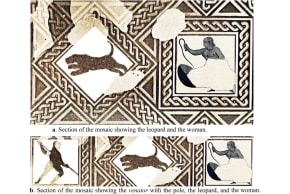
Lost mosaic shows first visual depiction of women fighting beasts in Roman arenas - study
The mosaic, recovered in 1860s Reims, France and dated to the third century CE, shows about 35 different gladiatorial and hunting scenes, each surrounded by diamond or square-shaped decorations.
China's largest artifact made of meteorite iron found in Bronze Age ritual site - study
To date, a total of 13 meteoritic iron artifacts have been identified in China, with most found in the country’s north.

Israel’s 'Stonehenge’ not alone with near 30 similar sites, satellite imagery reveals - study
The newly discovered sites all share a similar design: large circular structures, between approximately 50 to 250 meters in diameter, built with stones taken from local basalt fields.

Stone handaxes found in Galilee show early humans valued aesthetics of their tools - study
The axes were dated to the Pleistocene, likely made by Homo erectus, the first human species to evolve to have a humanlike body shape and gait, who had lived in the region thousands of years ago.

Polish archaeologists find evidence of legendary king hidden in south Sudan - study
Despite its origin, the decree is seemingly ordinary. Written by a royal scribe named Hamad, it instructs an individual named Khidr to exchange textiles for livestock.

Dressed for the afterlife: What 7,000-year-old grave soil reveals about Stone Age clothing - study
The study uses the technique of microarchaeology to examine the soil collected from 35 graves at the Skateholm I and II cemeteries in southern Sweden.

Ancient clay beads found in northern Israel rewrite timeline of cultural expression in the region
Researchers identified 19 different types of beads, whose shapes are reminiscent of plants that were harvested by Natufians, and were vital to their lives, such as wild barley, lentils, and peas.
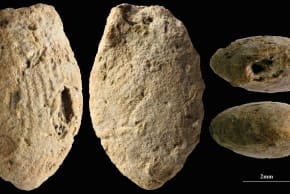
Lesson learned: First inscribed Hellenistic sling bullet found in Golan Heights' ancient Hippos
The sling bullet found in 2025 at Hippos is the first inscribed bullet to be discovered at the site in 26 years of excavations.

Ancient Polish 'princess' burial date revealed after decades of archaeological mystery - study
In 1899, the young woman’s coffin, made of a hollowed-out oak log, had tumbled from an eroding cliff above the Baltic coast village. She was nicknamed by locals as the “Princess of Bagicz.”
