
In recent years, kale has become a superstar of the health world. It can be found in green smoothies, salads, stir-fries, there is even such a thing as "kale chips", and it also appears in the ingredients of "superfood" powders and decorates posts on Instagram.
In every reality show related to health, I see the participants preparing "kale" as a symbol of the fact that they are eating healthy. For some reason, it is not very common in our refrigerator, even though it can actually be obtained without a problem in almost all vegetable stalls, in online supermarkets, and certainly in chains that sell fruits and vegetables directly from the farmers.
On the other hand – perhaps a more common vegetable, spinach, the older and simpler one, has been left a bit behind in terms of public relations – even though it too is very rich in vitamins, minerals, and antioxidants.
So is kale really healthier? And where exactly does spinach win? Here is the interesting comparison between the two most famous greens in the health world.

Health value and antioxidants
First of all, let us check what we are talking about. It looks like leaves but is actually called "kale cabbage". A dark green leafy vegetable from the cruciferous family – the same important nutritional family that also includes broccoli, cauliflower, Brussels sprouts, and the classic cabbage.
A scientific review published in Molecules emphasized the high nutritional values of kale and its health potential, mainly due to the content of phytochemicals from the glucosinolate family, which can affect processes related to cancer prevention. Here are examples:
The kale is considered one of the richest vegetables in natural antioxidants, especially of types known for their contribution to eye health and reducing inflammation in the body. Among the most prominent of them: Lutein and zeaxanthin, which were found essential in maintaining our eye health and also in reducing the risk of macular degeneration (which usually happens with age).
Another important active substance – quercetin, which is a powerful flavonoid with an anti-inflammatory, anti-viral, and even anti-cancer effect.
The kale is rich in glucosinolates – these are known for their activity as neutralizers of carcinogens.
Also, the high vitamin C content of kale contributes to the stability of antioxidants in the body and strengthens protection against oxidative damage.
Fresh kale provides:
Vitamin K – a vitamin essential for normal blood clotting and bone health.
Vitamin A – mainly in the form of beta-carotene, which is converted in the body to active vitamin A.
Vitamin C – in a portion of 2 cups of kale, there is more than in a medium-sized orange!
Minerals: The calcium content in kale (about 100 mg per cup) competes with that of dairy products, and it also provides iron (1 mg), magnesium, and potassium, which are essential for normal muscle and nerve activity.
Dietary fiber: Almost 3 grams per cup, which contribute to a feeling of satiety, digestive system function, and blood sugar and cholesterol balance.
The kale is very low in calories – only about 33 calories per cup – and therefore it is an ideal choice for anyone interested in improving the quality of the menu without weighing down the calorie balance.
Why kale became a "superfood" and spinach less so?
Perhaps because spinach has been known for decades as a healthy food, and therefore it is almost "taken for granted". Kale, on the other hand, entered the health world relatively late, mainly from the United States, where it became a symbol of a healthy, vegan, and organic lifestyle.
The dark green color, the tough texture, and its "healthy" appearance helped marketing very much. For years, it was even used in the US mainly as a decoration for plates in restaurants – and only afterward did they actually start eating it.
Nutritionally, both are very impressive:
Antioxidants for brain health
Both kale and spinach are very rich in lutein – an antioxidant from the carotenoid family, which has been studied in recent years in the context of brain health, memory, and word retrieval. Studies found that lutein is one of the few antioxidants that accumulate right in the brain tissue, mainly in areas related to memory and learning.
In terms of quantity, kale is generally considered richer in lutein compared to spinach, but spinach is also found very high on the list.
Mineral absorption
In spinach, there is a relatively high amount of oxalates, natural substances that may reduce the absorption of some minerals. In kale, there are fewer oxalates, and therefore some of the minerals in it, mainly calcium and iron, may be absorbed better.
Who contains more calcium?
Although most people think of milk first when talking about calcium, dark greens also contain a nice amount of it.
The kale is considered one of the impressive plant sources of calcium, and its big advantage is, as mentioned, a relatively low oxalate content.
In spinach, there is indeed calcium, but a large part of it is less available for absorption because of the oxalates.
Eye health
Both vegetables excel here too. Both kale and spinach are rich in lutein and zeaxanthin, two carotenoids that accumulate in the retina of the eye and are considered important for protection against light and oxidative damage.
In any case, it is important to remember that studies found that a diet rich in dark greens is associated with a lower risk of macular degeneration at an older age.
Thyroid gland
Both kale and spinach belong to the group of vegetables studied in the context of goitrogenic substances, which may under certain conditions affect thyroid function, and more precisely the utilization of iodine in the body. In practice, for most people who eat a normal and varied amount of vegetables, there is no problem with this.
Cooking also reduces a large part of this effect, so in healthy people, there is usually no reason to fear kale or spinach as part of a regular menu.
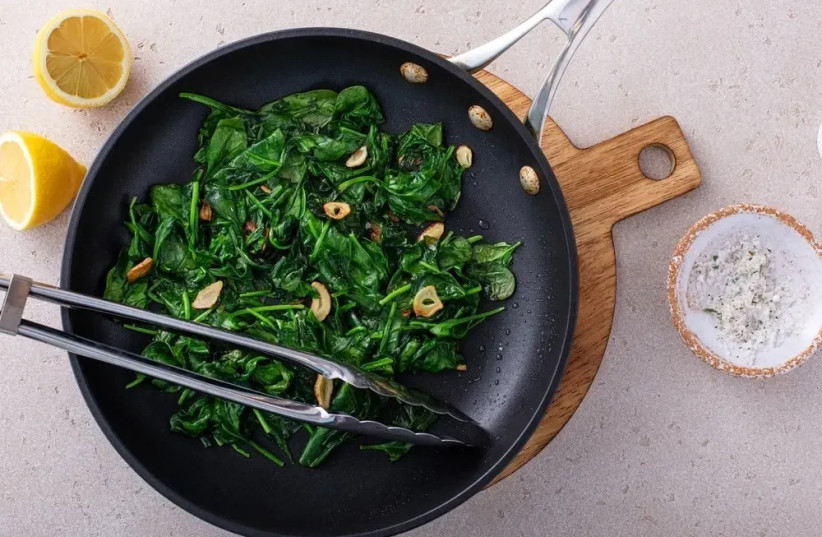
For whom is it advisable to be careful with a high consumption of kale or spinach?
Although both greens are considered very healthy, there are situations in which it is advisable to pay attention to the quantities and the method of consumption:
• People taking blood-thinning medications such as Coumadin (warfarin) should take into account that both kale and spinach are very rich in vitamin K, which affects the activity of the medication.
The recommendation is usually not to avoid them completely, but to maintain a consistent and stable intake and not to make sharp changes in the amount of greens in the menu.
• People with a tendency to oxalate-type kidney stones should be especially careful with a high consumption of spinach, which is considered very rich in oxalates. In kale, there is a lower amount of oxalates, and therefore it is considered less problematic in this context.
• It is recommended to thoroughly wash leafy greens like kale and spinach, especially if eating them fresh, because the leaves can accumulate pesticide residues and dirt between the folds.
So what is better, spinach or kale?
Although kale wins in most things we checked, the recommendation is that you do not have to choose! Combine both.
Kale and spinach are two of the healthiest vegetables that can be included in the menu. Each of them has slightly different advantages, and the best way to enjoy them is simply to vary. Spinach integrates wonderfully into omelets, quiches, salads, and smoothies. Kale is more suitable for crunchy salads, soups, stews, and baked kale chips in the oven.
In the bottom line, if you are looking for a simple way to add more lutein, antioxidants, fiber, and vitamins to the menu – these two greens are an excellent place to start from.