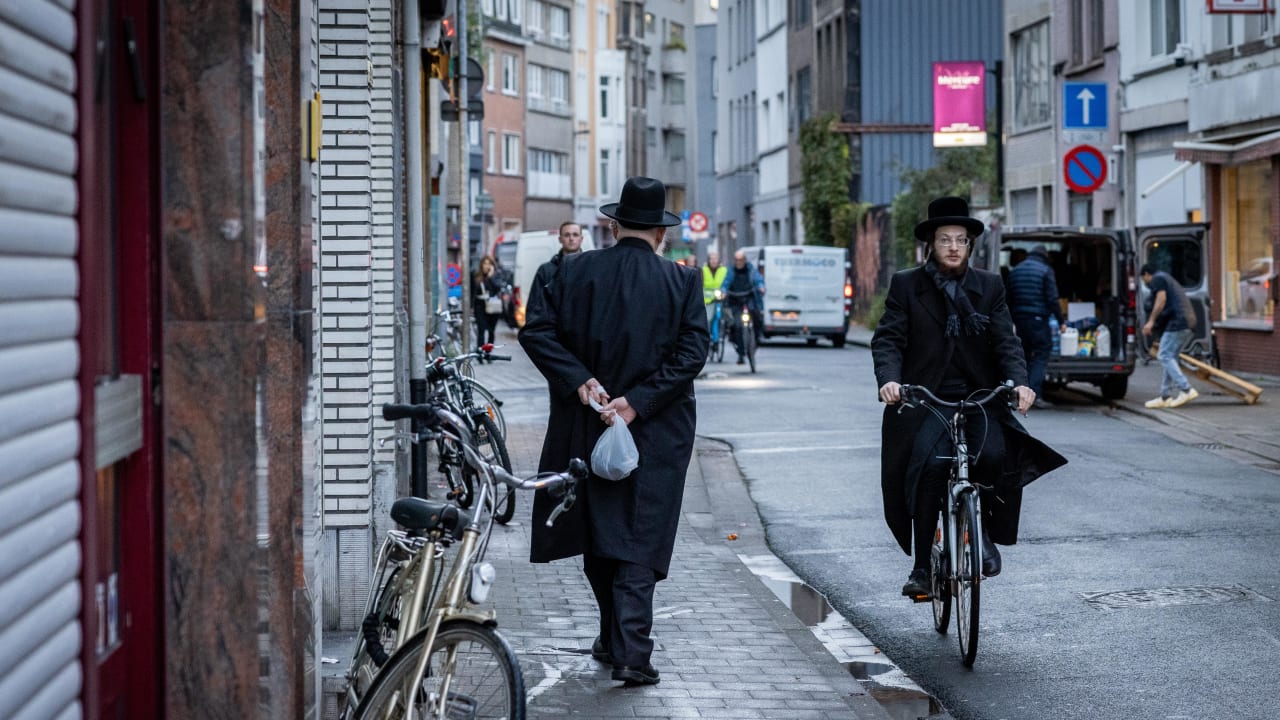
Two Antwerp rabbis facing criminal charges for performing Jewish ritual circumcisions appeared before the Antwerp Court of Appeal on Monday, challenging a judge’s refusal to allow further investigation into the legal and religious grounds for their prosecution.
The highly controversial case involving Rabbi Aharon Eckstein and Rabbi Moshe David Landau began 18 months ago when Belgian authorities raided multiple sites, including two in Antwerp’s Jewish Quarter, at the outset of an investigation into illegal circumcisions.
The Antwerp raids were prompted by a complaint from a member of the Jewish community named Moshe Friedman, who filed a police complaint against six mohels who practice metzitzah b’peh, a custom in which the circumciser cleans the circumcision wound using a suctioning, straw-like barrier.
The ensuing inquest has led to mass outrage from the Jewish community, who have accused the Antwerp Public Prosecutor’s Office of “effectively criminalizing the act of circumcision” and infringing on religious freedom.
In May 2026, the office told The Jerusalem Post that there was “sufficient evidence to request that the case be referred to the criminal court for two men.”

The prosecution is accusing the mohels of two specific offenses. The first is intentional, premeditated assault and battery of a minor “several times, on unspecified dates,” by circumcising unidentified male babies in Antwerp and elsewhere in Belgium between August 3, 2024, and March 10, 2025.
Unlawful practice of medicine under the Coordinated Law of May 10, 2015, on the exercise of the healthcare professions, encompasses the second accusation.
Belgian authorities maintain that qualified medical practitioners must perform circumcisions, although the country’s legislation does not explicitly address religious circumcision.
The two mohels are not licensed physicians.
Mohels demand independent brit milah expert, clarification on victims
Landau and Eckstein are currently challenging a July 15 decision by the Antwerp investigating judge, Paul Van Santvliet, refusing three defense requests for further investigation.
The first request sought an independent expert to establish how the Royal Decree of June 20, 1820, which authorizes mohels to perform brit milahs, has been applied since 1830, and whether any mohel has ever before been prosecuted for performing a ritual circumcision.
As for the second request, it asked an independent expert to explain what brit milah is, why Jewish law requires a mohel to perform it, and how the Belgian Constitution and international law protect it.
The third request asked for clarification of the prosecution’s list of 47 alleged victims, in which names are repeated or attributed to different mohels at the same time.
After the judge rejected all three requests, the defense then asked on Monday that the Indictment Chamber reverse its decision.