
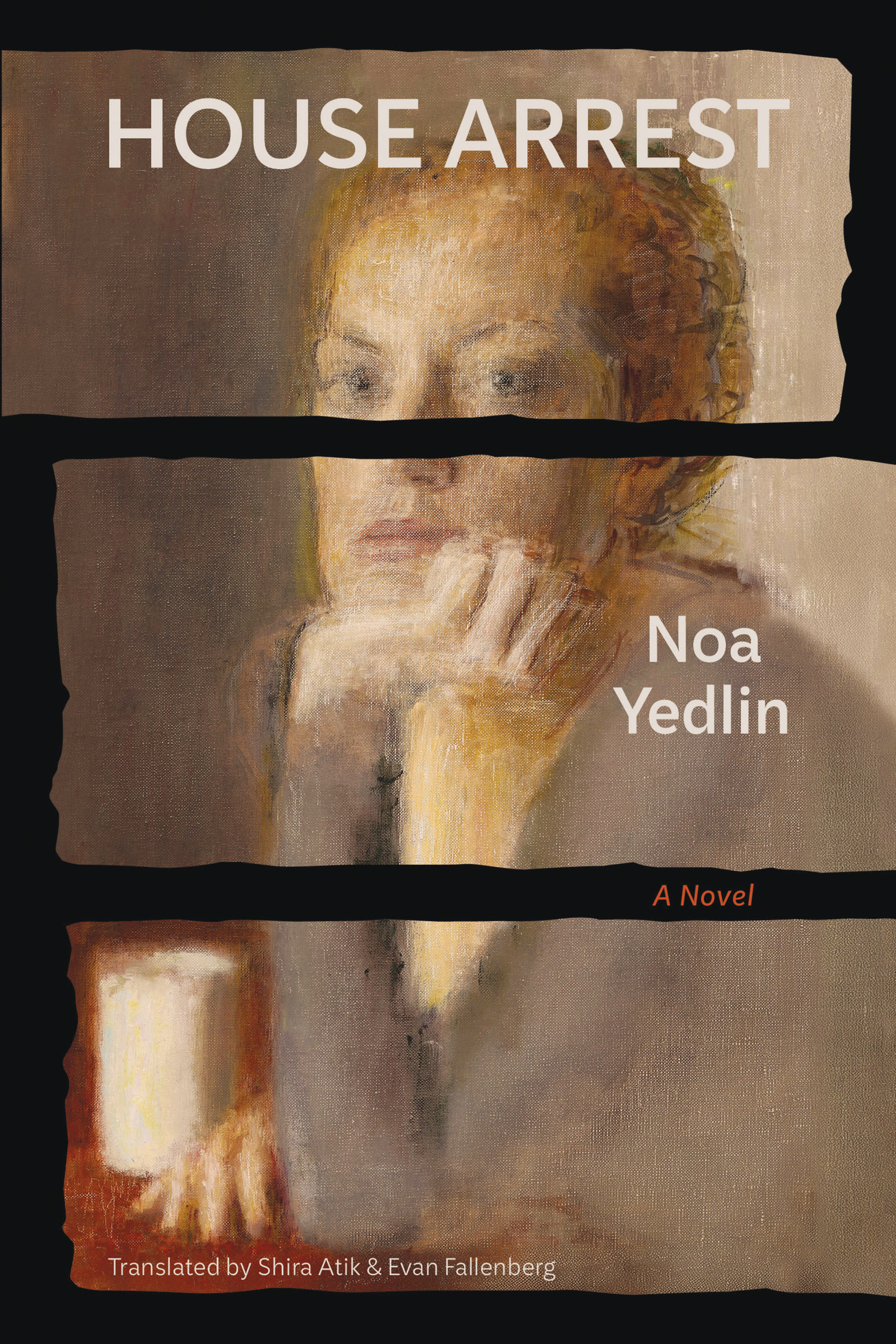
Published in 2013 in Hebrew under the title Ba’alat Habayit, this novel was released in English on October 13. I suggest you get yourself a copy.
Even in translation, Noa Yedlin’s writing grabs you from the first sentence and never lets go.
The plot revolves around an investigation of Elisheva Fogel, a respected resident of Rehavia who stands accused of accepting bribes, laundering money, and falsifying documents in her capacity as vice-chair of the Hirsch Center for Peace.
'A profound reverence for Jerusalem'
Elisheva and her husband, Ben-Ami, “shared a profound reverence for Jerusalem: its architecture, its art, its texture, its weather – a purely aesthetic admiration, without a trace of nationalism, of course, since both of them were, in principle, strong proponents of peace... They loved Jerusalem with all their soul – as much as one could love it and still be a leftist.”
Elisheva’s alleged wrongdoing is the engine that drives the real story of how this shocking turn of events, and the resulting media frenzy, affect the grown Fogel children: Daphna, Barak, and Eitan.
This story is told from the third-person perspective of classically middle child Barak, who at 40 still struggles to find his place in his accomplished family, in academia, and in his relationship with his estranged wife and young daughter.
Barak needs to believe his “virtuous, wrongfully persecuted” mother is innocent of the charges because the alternative is terrifying. Blind allegiance makes him feel naïve; creeping doubts make him feel guilty.
Conversations with his siblings that further complicate Barak’s tortured calculus, as well as bombshells dropped by his mother, wife, and new love interest, yield a magnificent novel with an undertone of satirical social commentary.
In a scene at the National Library, Barak discovers his mother’s 30-year-old doctoral thesis on Zionist thinker David Wolfson.
'Dazzling, glitzy, fast-paced'
“The dissertation was like his mother, and why should he be surprised, really: dazzling, glitzy, fast-paced, skipping over anything that didn’t work in her favor...
“But without his mother actually standing there, reading it out loud, bringing it to life, padding the paragraphs with that soft tone of hers, everything was just sitting there on the page like tattered puppets lying on an abandoned stage, worthless, with nobody to breathe life back into them.”
Yedlin’s sentences are long and full of subclauses, and her dialogue lacks quotation marks. For example, this exchange between Barak and his wife: She said, How are you, and he said, You tell me. She said, Are you angry at me? And he said, Should I be angry at you? And she said, I don’t know, you’re acting like you’re angry at me.
When I asked co-translator Fallenberg about this style, he confirmed my suspicion: “We mimicked Noa’s method of eschewing traditional punctuation to give it that manic, dense flow of thoughts,” he said. That’s exactly what this method accomplishes, mirroring the constant word salad tumbling through one’s mind.
It’s not for nothing that Yedlin won the 2013 Sapir Prize and the 2021 Prime Minister’s Prize for Hebrew Literary Works. She also created an award-winning television series based on her novel Stockholm.
I cannot express Yedlin’s talent any better than did Jessica Cohen, translator of Stockholm. In a note at the end of that novel, Cohen describes the extraordinary extent to which Yedlin gets into her characters’ heads:
“She tracks their every thought and second thought, their regrets and doubts, their visceral responses to things other characters say and do, even the way they tamp down and modulate those responses before they speak – or, in some cases, the way they fail to. She does so with such virtuosity and fluency that it’s easy to forget that the characters on the page are fictional.”
At its core, House Arrest is a study in family dynamics and how these dynamics can shift in the crucible of a crisis – albeit from the viewpoint of only one character in that crisis. The reader’s acquaintance with the other family members is limited to their interactions with and around Barak.
Will Barak have to shed his childlike understanding of his parents? Will his envy of Eitan and dependence on Daphna, and his shallow bonds with their spouses, thwart or aid his reluctant attempts at self-reliance?
Barak, writes Yedlin, “wanted to be consoled by his siblings but couldn’t; he had no idea how either of his siblings felt toward him or each other; it was like trying to compare pain, to compare a person’s role as a son, as a child.
“And lately, he had felt alone on more than one occasion, as if this whole affair had driven them apart instead of pulling them together like it was supposed to, had intensified the competition, which could now be measured, and as a result sharpened their instincts: who would persevere, who would draw a card that would allow him to stay in the game, that would strengthen his resolve.”
Running throughout is the thread of the legal case and what it reveals behind the curtain of “coexistence” NGOs. Is Elisheva Fogel guilty as charged? Yedlin keeps us, and Barak, guessing until the last page.■
HOUSE ARREST
By Noa Yedlin
Translated by Shira Atika and Evan Fallenberg
New Vessel Press
424 pages, $20