
Israel’s 78-year-old political system is like an old, inherited pair of shoes: they pinch painfully whenever you stand up and walk, offer little protection when you step in the mud, and you aren’t sure whether they can be repaired or whether you can afford a new pair.
Why is it so difficult to reform a political system when so many people agree that it needs reform? More than ever, the 2026 Knesset elections have shown how dysfunctional and ill-suited it is to the country’s unique governance challenges.
Improving government function and solidarity in Israeli society
For 35 years, the Israel Democracy Institute (IDI) has been studying, warning, proposing, and recommending on the basis of its research, which it has presented to politicians, academics, and the public. Yet the distance between identifying what is wrong with Israel’s system of government and persuading those who operate it to change it remains enormous.
It was founded in 1991 by one of Israel’s foremost experts on political reform, Dr. Arye Carmon, who was its president until 2014 and received an Israel Prize in 2009. He aimed to strengthen the structural and normative foundations of Israeli democracy with an independent think tank known for its non-partisanship, professionalism, and actionable policy recommendations.
The institute partners with government, policy and decision makers, society, and the civil service to improve the functioning of the government and its institutions, confront security threats while preserving civil liberties, and foster solidarity within Israeli society.
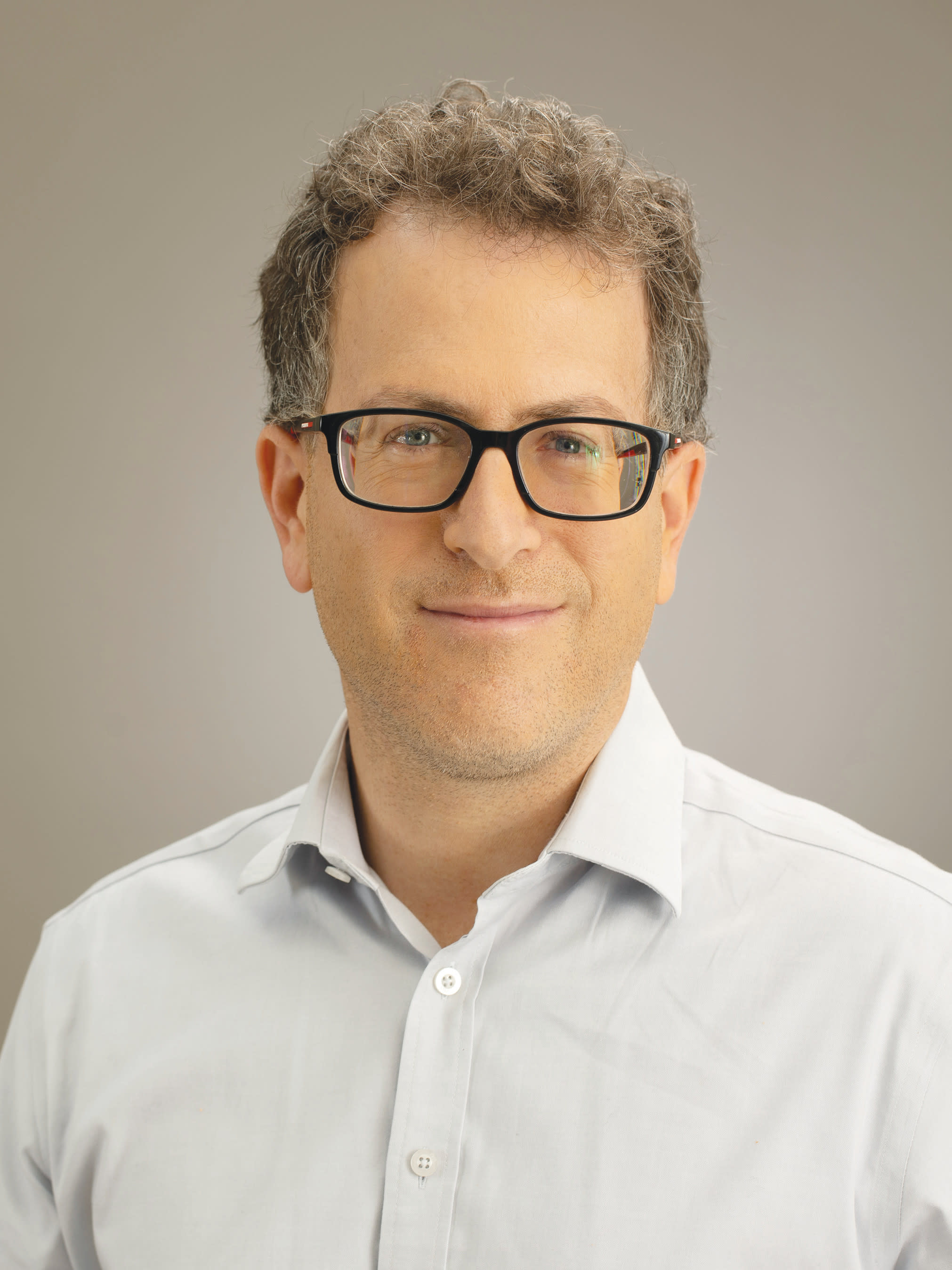
Dr. Assaf Shapira, who heads the IDI’s Political Reform Program, agreed to be interviewed by The Jerusalem Post about this seemingly unsolvable and baffling problem.
He received his doctoral degree in political science from the Hebrew University of Jerusalem and was a postdoctoral fellow at the Leonard Davis Institute for International Relations at the Center for European Studies at the Paris Institute of Political Studies.
His research largely focuses on political representation, political parties, the role of money in politics, and reforms, and an exploration of Israel as a case study for ethnic democracies, in comparison to liberal democracies.
A week before the October 27 elections, Shapira said in an interview with the online edition of Davar that voters don’t know exactly what the parties stand for.
“Party platforms have clearly declined in status over recent decades, and not only in Israel. This is a global process. In every country, in different ways and to varying degrees, platforms are less important than they used to be ... Politics has become less ideological and more personal. We feel this especially in Israel, but it is happening all over the world,” he said.
“There is more focus on individuals, particularly party leaders, and less on parties and their ideologies. It’s not that ideological debates have disappeared entirely, but they are significantly less important and less clearly defined than they used to be. This is especially true in the economic sphere.
“In the past, the ideological divide was between socialist left-wing parties and capitalist right-wing parties. When you look at past platforms, or even at parties and countries where platforms still play some role today, you see this reflected in economic policy: welfare, education, housing, and healthcare. Once these issues became less central, policy and platforms declined in importance accordingly.”
As for security and diplomatic policy, he commented that it’s hard to say that the differences between the opposition and the coalition are sharp and clear there either. Neither side has a clear plan.
'Israeli politics has always been tribal'
BEYOND THE erosion of participatory institutions within parties and the rise of personality-driven politics, social media influences voters’ views – especially of young people who don’t watch serious news broadcasts – with candidates trying to explain complex issues and persuade voters in a few seconds, he stated.
A week after the election, Shapira shared that although personality-driven politics exist around the world, the phenomenon is worse here because of sector-based voting, with characteristics unique to Israel.
“Israeli politics has always been tribal,” he said. “But in recent years, the tribal dimension has become stronger than ever, and it’s much more difficult to persuade voters to change their minds.”
What has caused this development, and what can be done to reverse it?
“Personal politics is largely due to social media and the decline of ideologies. It’s hard to fight this. In Belgium, for example, and elsewhere, politics is also personal, but it’s less focused on leaders. People can vote for others too. Israeli society has been so divided, even before 1948. It’s gotten worse because of demographic changes. One can no longer say that liberal-minded secular voters are in control. I don’t know how we can fight tribal politics.”
Asked what the most serious structural weaknesses in Israel’s current political system are, Shapira listed the lack of checks and balances over the government; the lack of midterm elections for voters to express their approval or disapproval and limited opportunities for Israelis to express their views through voting; and the lack of two legislative houses that balance each other out and of a formal constitution.
“Accountability doesn’t exist in Israel,” he said. “Everything is political, and there is no culture of the prime minister and his cabinet taking responsibility for their failures.”
Spanish Transport Minister Óscar Puente resigned on November 3, 2026, following a deadly high-speed train crash that killed 69 people. He said he had decided to resign within minutes of learning about the accident, but remained in office until emergency measures, preliminary investigations, and initial compensation arrangements were underway.
His resignation demonstrated acceptance of political responsibility. He did not bear direct responsibility for causing the accident.
“Some Japanese ministers have resigned and even committed suicide when they failed. We need better ministers. We have to start somewhere,” Shapira said.
Basic laws can be changed by a vote of 61 MKs or even with a simple majority, he continued. “There is no federal system. We have a strong but fractured society, even compared to other societies. We do have an independent media to some degree,” he said.
“But our judicial system has been under major attack from the government; it’s the only effective institution that can limit the government. We vote directly only for mayors of local authorities who don’t have a lot of power compared to others and Knesset elections,” he continued.
“Even Knesset elections give us only limited opportunities to express our views because the parties, and not the general public, choose the party lists. Many Likud voters wanted more moderate and liberal positions, but they couldn’t influence it on Election Day.
“In Scandinavia, for example, one can express support for specific candidates. In addition, there is a real chance here that no government may be formed. In a presidential system, the president is elected and automatically takes charge.”
So how can Israel make its political system more governable, more accountable, and more representative without weakening democratic checks and balances?
SHAPIRA HAS strongly advocated the “semi-open ballot” to reform our electoral system by introducing a personalized component to the elections, strengthening voter influence, and increasing accountability of those voted into power.
This is an electoral system that allows voters to choose not only a party list but also specific candidates.
In Israel’s multi-party parliamentary system, Israelis vote only for a political party on Election Day. Each party builds a list of candidates to run on their party list, and the parties are allocated a number of seats in the Knesset proportionate to that party’s share of the national vote.
Under the proposed system, the ballot slip for each party list would include the names and order of its candidates, allowing the voters to mark the names of several candidates he or she would like to see in the Knesset. When the party votes are counted, the personal votes for candidates would also be tallied.
A candidate who receives a substantial number of personal votes could move up to a higher spot on the list. The semi-open list system is the most common electoral model among developed democracies, and exists in countries such as the Netherlands, Belgium, Sweden, Austria, Iceland, the Czech Republic, Slovenia, and others.
Shapira warned that “if Israel continues with its present political arrangements for another 10 years, it will affect the quality of its democracy and its ability to govern itself effectively. There’s a universal crisis of democracy, especially in the US but also in many European countries, including veteran democracies like France. We see instability, a radical Left and a radical Right.
“To blame are social media, AI, and also France’s immigration crisis. We are not alone, but structural factors in Israel might make it harder for us to deal with the universal crisis. The populist agenda in the US and Europe might cause more damage in Israel than elsewhere because we don’t have checks and balances. If the judicial system falls, there will be no checks and balances.”
'Any law can be changed'
Asked if Israel should introduce term limits for prime ministers to improve democratic accountability, Shapira said this is common in presidential and semi-presidential systems like France.
“I’m not against it, but I don’t think it’s very important. Any law can be changed. If a prime minister nears his term limit, he could change the law. We need a constitution. There are better ways than term limits,” he said.
He advocated the requirement that amendments to Basic Laws need a special majority, perhaps 70 or 80 MKs, rather than the ordinary majority used for much legislation. “This is very important, because both the opposition and coalition have amended political basic laws for their own benefit. It’s not healthy to change rules of the game.”
SHAPIRA DOESN’T despair that Israel can’t encourage talented people from outside established poli tical circles to enter politics. “Many new and experienced people who were senior professionals in the public service ran for office. They didn’t regard politics as ‘too dirty’ for them to get involved.”
Since many of the politicians who would have to approve political reforms benefit from the existing system, why would they agree to change it?
“This is the paradox of electoral reform,” Shapira said. “They were elected in a system, so why change it? Some want to work for the public good, especially in times of crisis like these when there is real public pressure to make changes. They might go for reforms not because they personally benefit but because they want public support. But unfortunately, I don’t see such pressure in Israel right now.”
Asked whether minority governments could function without automatically triggering another election, Shapira said that this is common in Denmark and Spain.
“It can work if parties not in coalition give their permanent support. If Yashar leader Gadi Eisenkot has the support of Arab parties for passing the budget, an agreement that they would vote no confidence in the government even when another military operation must be carried out, it could work, but it’s very difficult in Israel,” he said.
“In the meantime, Eisenkot can control the Knesset by bringing in a new speaker and abolishing some of the Likud’s problematic laws. As for a unity government that would be headed by (Prime Minister) Benjamin Netanyahu, he won’t agree to be second in command. The prime minister can fire any minister in a minute.”
He blames the moderate Right for political polarization and suggests that, in earlier years, moderates on the Right would not have agreed to cooperate with extremists. In fact, Avinadav Begin, grandson of Likud founder and former prime minister Menachem Begin, has publicly said that his grandfather would have resigned from the Likud under today’s circumstances.
The IDI has been proposing reforms for 35 years, yet very few of its recommendations have actually been implemented.
“We have made mistakes. We were for raising the election threshold beyond 3.25%, but we realized this wouldn’t help, because it would lead to parties headed only by the rich. This is a big problem in the US, where one needs a lot of money to enter politics,” Shapira said.
He conceded that “it’s true our major proposals for reforms and a constitution have not been adopted. We were more successful explaining to the public and politicians about the dangers of what the government wanted to force on the public, including judicial reform and its plan for only a political committee of inquiry into October 7. It’s very difficult to persuade politicians to do something that is not part of their immediate political interests.”
Still, he is not totally pessimistic.
“Our economy is quite stable, but potential damage is not irreversible. However, four more years of illiberal government will make the damage more serious. If the government changes, it could improve our image, but some things we can’t change.”