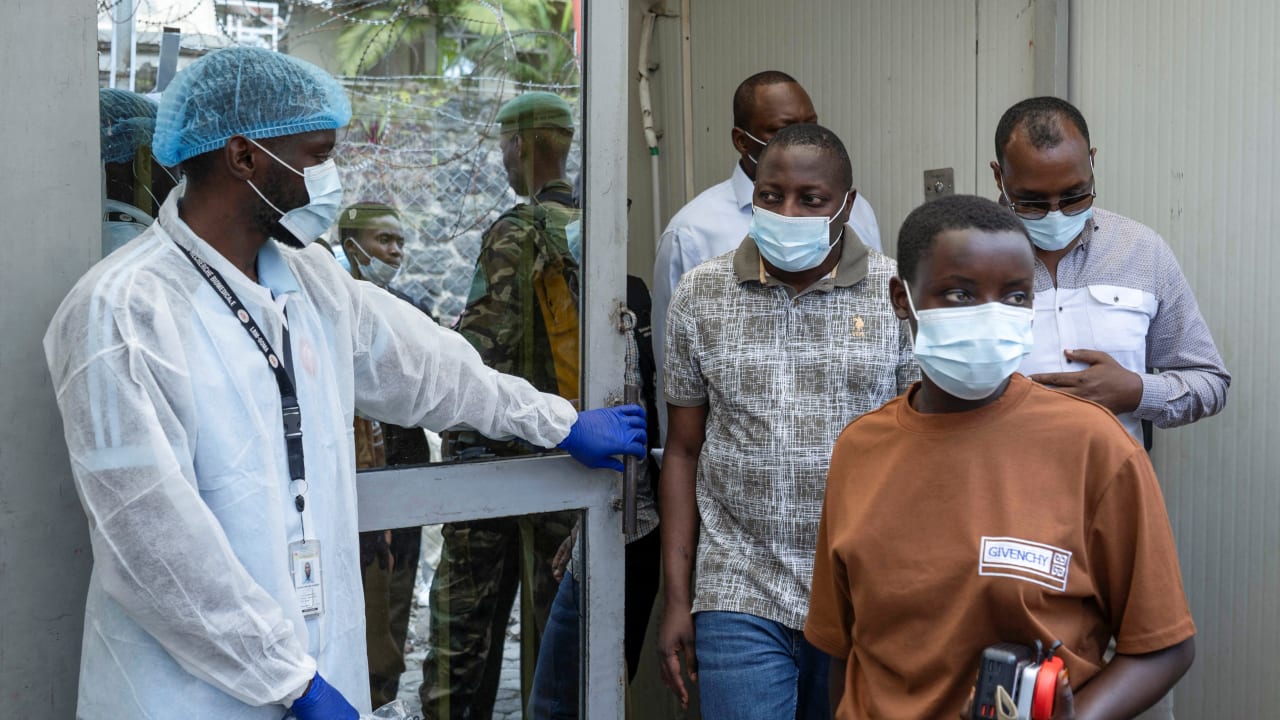
An outbreak of a rare, lethal strain of Ebola virus has killed 131 people in the Democratic Republic of the Congo (DRC) and Uganda, as the World Health Organization (WHO) declares a global health emergency.
DRC and WHO officials have identified over 500 cases in the DRC and recorded one confirmed death from the disease in neighboring Uganda as of Wednesday.
Dr. Anne Ancia, a WHO senior emergency officer, told the BBC in an interview that the more the agency investigates the outbreak in Central Africa, the more apparent it is that the virus has spread to other areas.
The London-based MRC Center for Global Infectious Disease Analysis published models indicating a “substantial” under-detection of initial cases and noting that it could not rule out the possibility of over 1,000 cases already.
A statement on the group’s findings suggested that the current Ebola outbreak is "larger than currently ascertained" and that its "true magnitude remains uncertain.”

The type of Ebola virus causing the latest outbreak is a rarer strain known as Bundibugyo. The relative novelty of the Bundibuyo strain has resulted in far fewer field tests, and no vaccine or targeted treatment currently exists.
WHO officials fear the scarcity of test kits and treatments could compound the difficulty of containing the outbreak.
Headaches, muscle soreness, fatigue, and internal bleeding
Ebola is an illness caused by a group of viruses known as orthoebolaviruses, with the first cases recorded in 1976 in modern-day South Sudan and the DRC, according to health experts at the WHO.
There are multiple strains of the Ebola virus, but the Zaire strain is the most common, which is what makes this current outbreak more difficult to treat and contain, analysts from the New York Times reported.
Ebola is among a group of diseases characterized as hemorrhagic fevers. Symptoms begin with headache, muscle soreness, and fatigue, and can later worsen to internal bleeding and failure of the liver and kidneys, according to the Centers for Disease Control (CDC).
Strains of the Ebola virus can be contracted through contact with an infected person's bodily fluids, such as blood or vomit.
The Bundibugyo Ebola strain behind the latest outbreak in the DRC is much rarer than the Zaire strain, which infected over 28,000 people between 2014 and 2016. The Bundibugyo strain has only caused two other outbreaks before now and has a mortality rate of 30-50% according to the WHO.