Ancient wildfires in the Levant may have inspired Neolithic pottery-making, Israeli study suggests
Pottery appeared in the region during roughly the same broad period in which fires, erosion and clay deposition reached their peak.

Pottery appeared in the region during roughly the same broad period in which fires, erosion and clay deposition reached their peak.


Alongside the statue fragments, a pink granite block bearing several hieroglyphic inscriptions, including two of Ramesses’ titles: “Nesu-Bity,” meaning “King of Upper and Lower Egypt,” and "Sa Ra."

Gnadental convent was built outside Basel's city wall for Franciscans around 1231, later becoming a temporary home for several orders.
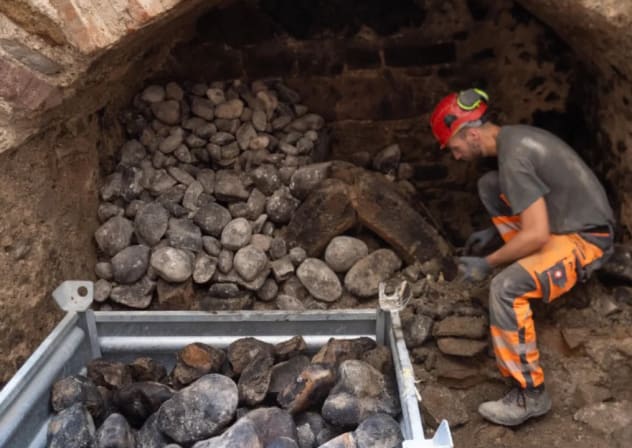
The aqueduct was part of a sophisticated ancient water system that carried spring water from the Gush Etzion area to the Temple Mount in Jerusalem through Solomon’s Pools.

During the time of the German Democratic Republic (GDR), the shelter was partially back-filled through the ventilation shafts, before a playground was built over it and the structure below forgotten.

Alongside the temple’s remains, archaeologists found inscribed two votive stones, a statuette of the goddess Victoria, and additional statue fragments, at the site.

Sukkot, echoing Smotrich’s words, calling the neglect of Herod’s Pools “an injustice,” noting that he is pleased with Smotrich’s and the Settlement Administration’s “swift response.”

Its 19-lines of ancient Greek text is written in red ink, dedicated to a person named "Pesikhtis," who, according to preliminary study, may have held the position of judge.

According to AA, an initial survey of the necropolis identified at least 30 rock-cut tombs and chest-type graves scattered across the site. As of now, only 10 have been fully uncovered.
The coins are of the pre-1916 denga denomination, and were found hidden within a small, ceramic jug decorated with engobe buried in a shallow pit near the city’s trading district.

Researchers say new radar scans reveal features they believe could indicate a man-made structure beneath the controversial Durupinar Formation, claimed to host the remains of the biblical Ark.
