
The illusion that a charismatic, unbound leader is the sole guarantor of national security and stability is collapsing under the weight of reality. From the shattering of security paradigms in Jerusalem and institutional struggles in Washington to political earthquakes in Serbia, the democratic world is sobering up from the cult of personality. In its place, a new paradigm is emerging: the power of decentralized, professional, and institutional leadership.
For nearly two decades, global political consciousness was captivated by the doctrine of the "strongman." Proponents argued that in a world fraught with existential threats, terrorism, and volatility, democratic checks and balances were cumbersome hindrances. Salvation, they claimed, could only come from a dominant figure who centralizes decision-making, cuts personal deals over the heads of civil servants, and projects himself as the nation’s sole defender.
Today, the steep price of this illusion is undeniable. Power concentration has not produced enduring stability. Instead, it has created a dangerous single point of failure – a fragile structure where the blind spots, survival instincts, or strategic errors of one individual can drag an entire nation to the brink.
Lessons from Jerusalem and Washington
In Israel, the aftermath of October 7 intensified the debate surrounding this model. Critics of Prime Minister Benjamin Netanyahu argue that branding a single leader as the only figure capable of managing complex dynamics vis-à-vis Hamas, Iran, and global superpowers – while repeatedly clashing with professional state institutions – led to systemic blindness and institutional paralysis.
The lesson for many was clear: Overwhelming concentration of authority does not generate true deterrence; it exposes critical vulnerabilities.
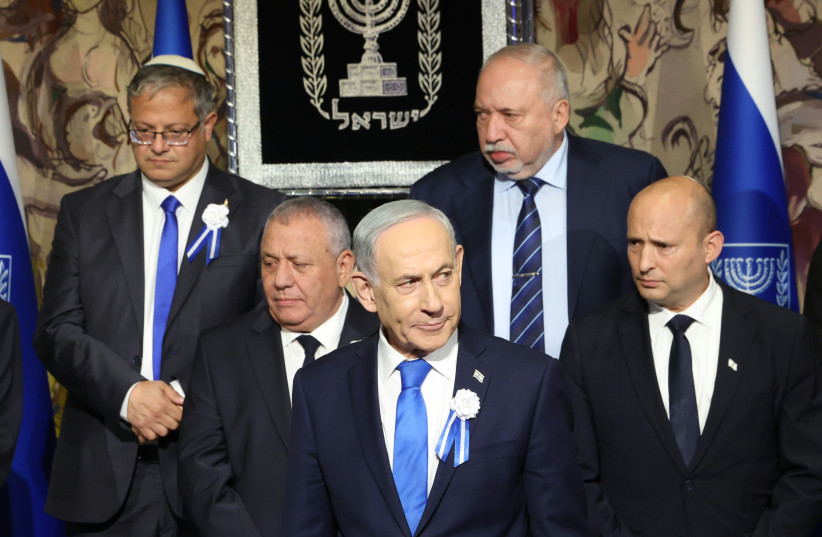
In response, opposition forces have begun articulating an alternative worldview. Rather than proposing a rival strongman, they advocate for a cabinet of experts: a coalition of seasoned military commanders, public administrators, and civil leaders.
This demand goes beyond a mere change of personnel. It represents an urgent call to restore strategic weight to professional state bodies, guarantee transparency, and anchor national resilience in collective responsibility.
Across the Atlantic, a remarkably similar dynamic is unfolding around President Donald Trump. Critics within the American foreign policy establishment argue that converting national security into a series of personal transactions – where personal loyalty supersedes institutional protocol – undermines long-term superpower stability. When alliance strategy hinges on unmediated personal relationships with foreign leaders, historic commitments become volatile.
In turn, American institutionalists are championing a model of governance anchored in strong executive departments, state governors, and the rule of law rather than individual charisma.
Civic awakening in the Balkans
The convergence of the Israeli and American debates highlights a broader Western realization: National survival relies on resilient systems, not personal promises. Recent events in Serbia demonstrate that this shift is not confined to major Western capitals but is actively reshaping the political landscape of the Balkans.
For over a decade, Aleksandar Vucic governed in Belgrade using the classic strongman playbook: centralizing power, controlling media, and positioning himself as the indispensable force for Balkan stability. Internationally, Vucic balanced conflicting interests – supplying ammunition to Western partners and Israel while simultaneously deepening ties with Moscow and accepting opaque Chinese infrastructure investments.
Yet the catalyst for political upheaval in Serbia was not a rival politician but a civic awakening triggered by tragedy. The collapse of a railway station canopy in Novi Sad, which claimed 16 lives, exposed the lethal nexus between autocratic corruption, unchecked Chinese contracts, and a total lack of regulatory oversight.
Crucially, the opposition movement did not demand a new savior. Instead, a decentralized coalition of students, academics, legal experts, and civil servants pushed for systemic accountability. Serbia offered a clear demonstration that organized, professional networks can dismantle entrenched autocratic machinery.
A resilient strategic triangle
For policymakers in Jerusalem, these developments carry vital strategic implications. Israel can no longer afford to rely on fragile personal alliances with centralized rulers across Eastern Europe and the Middle East. Such leaders continuously shift allegiances to maintain domestic power, leaving diplomatic agreements vulnerable the moment their internal leverage erodes.
Conversely, transitions toward governance rooted in transparency and professional standards upgrade Israel’s international partnerships. Ultimately, political transitions in Washington and Belgrade need not signal a cooling of relations with Jerusalem.
On the contrary, the United States, Israel, and Serbia have important strategic interests in common, ranging from regional security and defense cooperation to technological innovation, economic resilience, and the protection of democratic stability. Their different geopolitical positions need not be an obstacle; they can become a source of complementary strengths and strategic opportunities.
This creates an opportunity to forge a newly defined strategic triangle, built not on unpredictable personal relationships or the political fortunes of individual leaders but on institutional integrity, professional expertise, and enduring national interests.
Its strength must rest on something more substantial than the personalities occupying positions of power. Because strong leaders may shape history, but only strong institutions can secure their future.
Dr. Vladimir Krulj is a fellow at the Institute of Economic Affairs (IEA) in London, former chief economist to Serbia's EU negotiating team, and a lecturer at ESCP Business School and the University of Tours.
Tom Wegner is an Israeli strategic consultant, author, founder of the Abrahamic Movement, and an expert in political campaigns and geopolitical crisis management.