A ceasefire has paused the Iran war, but whether it marks an end or merely an interlude remains unclear. What is clear is this: The US and Israel may damage the regime but not topple it. Worse, they may produce something more dangerous – a weakened but more hardline Iran, more militarized at home and more threatening abroad.
Some still hope mass protests could trigger a color revolution. But that hope runs up against a harder reality: the resilience of the Islamic Revolutionary Guard Corps, the regime’s true center of gravity.
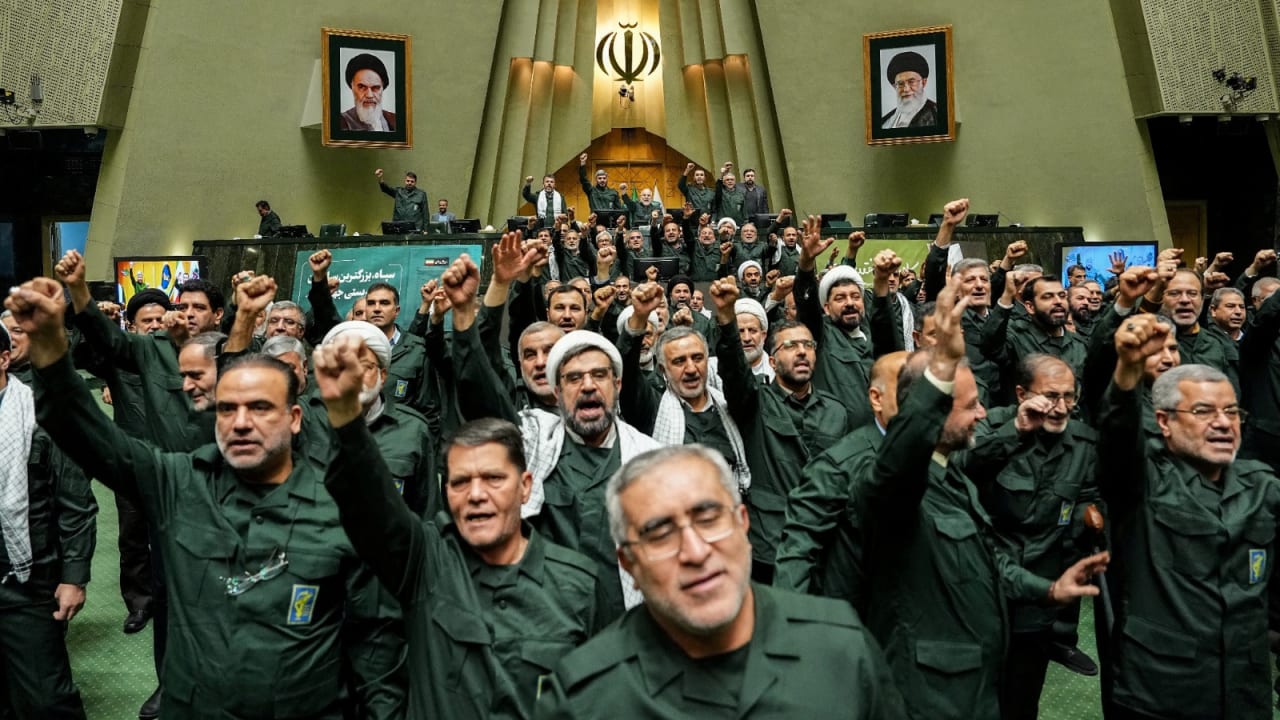
The IRGC is not just a military force. It is a parallel state. It spans Iran’s security services, dominates key sectors of the economy, and drives foreign policy through its regional networks. Even battlefield losses do little to dislodge it.
The IRGC system
The IRGC was built for regime survival, not conventional victory. Its doctrine prioritizes internal control, counter-coup capability, and endurance. In the aftermath of war, those attributes matter most.
It is also structured to survive shocks. Iran’s “mosaic defense” model disperses authority across semi-autonomous units. Leaders can be killed, headquarters destroyed, and the organization still functions. Decapitation does not lead to collapse.

The IRGC’s strength is also social and economic. It has built a patronage network tying much of the elite – and some ordinary citizens – to the regime’s survival. Jobs, contracts, and access flow through IRGC-linked channels. Loyalty is not only enforced; it is rewarded.
Iran’s regional strategy has become more networked and less centralized. Its allied militias and proxy forces can absorb losses and regenerate. The system bends without breaking.
War sidelines civilian authority and empowers those who control force. Iran’s political system is fragmented, its economy damaged, and its clerical establishment weakened. The IRGC, by contrast, remains cohesive, armed, and organized.
It also controls the tools that ultimately decide power struggles: guns, intelligence, and internal security. Through forces like the Basij militia, it can monitor, intimidate, and crush dissent at scale. In a crisis environment, those tools are decisive.
The result is likely to be an “IRGC state” – a system in which military-security institutions dominate political life, even if religious authority remains as a facade. Such a regime will be more authoritarian at home, relying more on repression. Abroad, it will be more dangerous – threatening Persian Gulf shipping, intimidating its neighbors, and leaning into asymmetric warfare.
Authoritarian regimes do not fall because they are weak. They fall when they lose control of coercion. As long as Iran’s regime retains cohesion, capacity, and a decisive advantage in organized violence, it can survive, even in dire conditions. Its leaders have shown they will use force – deploying domestic units and allied militias from Iraq and elsewhere to suppress unrest.
Lessons from other regimes
We have seen this before. Deeply damaged regimes such as Cuba, North Korea, and Myanmar have endured for decades by crushing dissent and holding their security apparatus together. Iran fits that pattern. A weakened regime is not necessarily a vulnerable one.
If the US or Israel seek to move beyond military success to regime change, they will need a strategy grounded in this reality.
Sustained pressure will matter, especially efforts to constrain Iran’s economic recovery and ability to rebuild. But pressure alone is not enough.
Political strategy matters just as much. The opposition must become more unified and credible. Fragmented movements rarely defeat cohesive authoritarian systems. Figures such as Reza Pahlavi and initiatives like the Iran Freedom Congress are steps in that direction, but much work remains.
Encouraging defections from within the regime – particularly among military and security forces – is essential. Authoritarian systems often collapse when loyalty fractures from within.
Yet even this is unlikely to be sufficient.
Strategies for toppling Iran's regime
Regimes like Iran’s rarely fall without a force capable of confronting them directly – as seen in Gaza. As long as the IRGC and its affiliated forces retain a monopoly on organized violence, it can suppress even large-scale uprisings.
That implies a more difficult requirement: the emergence of an opposition capable not only of mobilizing protests but of defending itself and confronting regime forces.
Ideally, such a force would grow out of defections within the military or security services. But that outcome is uncertain. In its absence, alternative capabilities must be built.
At a minimum, this means developing both a force able to capture and hold territory and a network of cells able to operate across the country, mobilize populations, and challenge regime control.
Syria’s government did not fall simply because it was weak. It fell because its security forces became beleaguered, and an armed opposition exploited that weakness. Without such capabilities, opposition movements remain vulnerable to repression.
The more cohesive and homegrown such forces are, the greater their chances of success – and of governing effectively afterward. Where they do not exist, entrenched regimes persist.
None of this is an attractive prescription. It is difficult, risky, and unlikely to be clean. But confronting a system as entrenched and heavily armed as Iran’s requires confronting reality as it is.
The IRGC was built to survive this kind of pressure. Whether the ceasefire holds or fighting resumes will matter less than whether a viable alternative emerges to challenge it in organization, cohesion, and force.
The writer teaches political risk at Johns Hopkins University’s School of Advanced International Studies and writes about and works on fragile states and political transitions.