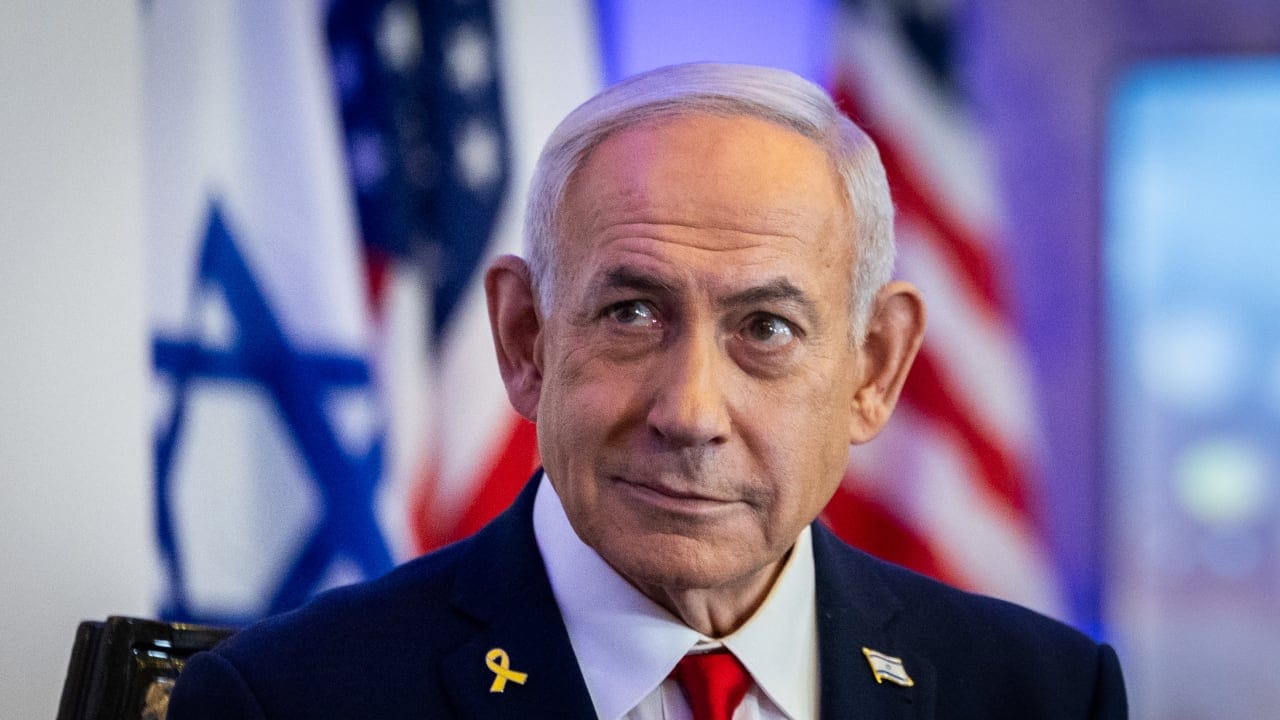
It is no secret that Israelis have very strong opinions about Prime Minister Benjamin Netanyahu. Roughly half the country is in the “only Bibi” camp, and roughly half is in the “anyone but Bibi” one.
After the last two-and-a-half years – and especially after the last week – no matter what camp one is in, however, there is no denying the historic role Netanyahu has played in helping shape a safer and more secure Israel.
I am aware that this sentence makes some people uncomfortable. But it should not, because acknowledging strategic achievement is not the granting of absolution for mistakes and failures.
Israel’s problem over the last two-and-a-half years has been the insistence by too many – on both sides – that Netanyahu must be judged per one dimension alone: either as the exclusive source of every disaster or as the sole author of every success. This perspective is wrong. Leadership is not a buffet where one only chooses the dishes one likes.
Strategically, the way this war is being prosecuted – the US and Israel fighting together – creates a new level of cooperation that is an asset of unbelievable proportions.

Back in June, during the 12 Day War, it initially appeared that Netanyahu had just convinced US President Donald Trump to allow Israel to strike Iran’s nuclear program. Matters then escalated to a new level when Trump sent B-2 stealth bombers to attack the hardened nuclear sites that were beyond Israel’s independent capabilities.
At the time, it felt as though the alliance had reached a height that could not be surpassed. That was until Saturday.
The beginning of this operation was not just “coordination” or “support” – it was a merged alliance.
Would this have happened under a different American president? Probably not. Trump deserves major credit for making a decision no US president was willing to make before him. But when Israelis look up, they see Netanyahu, and it is he who, as prime minister, deserves the credit for creating this partnership in which Israel functions like a NATO-style ally of the United States, fighting hand-in-hand and side-by-side against a common enemy.
People like to debate the politics – was it Netanyahu who dragged Trump into this, or did Trump decide on his own?
Was the threat imminent, as both leaders claim, or was the timing political?
Those arguments will continue long after the sirens stop. The fact that matters, though, is that the region is safer today, Iran is on the defensive, and America and Israel have shown what happens when two powerful militaries join forces against a regime that has exported terror for decades.
This reality would have been hard to imagine back on October 7, when 1,200 people were murdered, and 251 more were kidnapped. It would have been almost impossible to predict that, two-and-a-half years later, the region would look so different and that Israel would be in a stronger strategic position.
And Netanyahu deserves credit for this – the strategic changes in the region and the victories over Israel’s enemies that unfolded on his watch. But in the same breath, he is also responsible for the policies that led to October 7.
Containing Hamas was his strategy, as were the assumptions that underpinned it. His political decisions shaped the environment that made October 7 possible.
And this is the problem. October 7 has long been a coin with two sides. Yet, Netanyahu and his followers want to take credit for only one side. They want nothing to do with taking responsibility for the failures.
Netanyahu should receive praise and criticism
But here is the truth – it is a mixed bag. Netanyahu deserves credit for the good and should be held accountable for the bad. That is leadership, and that is the nuance Israelis will need to hold onto as elections approach.
This war has exposed something else that is being missed amid the political shouting – something even more basic than the debate over credit and blame: the way Israel’s political and military leadership engages with the Israeli public.
On the one hand, this is not new, and it has long defined the last two-and-a-half years. But for the first time, Israel has real-time comparisons – other states under similar pressure that still understand the value of transparency and presence.
To this end, in the United Arab Emirates, for example, Sheikh Mohamed bin Zayed recently chose one of the most public stages imaginable: the Dubai Mall. Walking among the people, he provided a psychological anchor that the state is stable and the leadership is not hiding.
In Washington, the defense secretary and the chairman of the Joint Chiefs of Staff maintain the grueling ritual of almost daily, detailed press briefings. They stand in front of cameras, take questions, explain what they can, acknowledge what they cannot, and project steadiness. These briefings are not just about information. They are about trust and signal to the American people that the machinery of state is transparent and operational.
And in Israel? The silence is deafening.
While the nation lives inside the fog of war, its leadership has retreated into a digital bunker. Netanyahu, rather than facing the Israeli press corps, gave one interview, not to the Israeli media but to Sean Hannity on Fox News. This is a tactical retreat from domestic accountability – choosing an audience that offers a monologue instead of a country that demands a dialogue.
The vacuum does not stop there. IDF Spokesperson Effie Defrin does not hold real press conferences; IDF Chief of Staff Lt.-Gen. Eyal Zamir releases polished clips that feel more like corporate marketing than military leadership. The defense minister, meanwhile, is largely absent.
Responsibility is a two-way street, and wartime leadership is not a luxury. It is not enough to visit a missile site for a curated photo or to issue a prepackaged threat on social media. True leadership demands the courage to be questioned. It requires standing before the public – before parents, reservists – and projecting confidence that can only be earned through transparency.
Israel needs more presence. It is time for the leadership – political and military – to step out of the edit room, return to the podium, and own the entirety of its record, failures, and triumphs. This includes the decisions that paved the way for October 7 and the choices that have reshaped the region since.
The writer is a co-founder of the MEAD policy forum, a senior fellow at JPPI, and a former editor-in-chief of The Jerusalem Post. His newest book is While Israel Slept.