
Four years after Mahsa Amini was murdered by the Islamic Republic, sparking Iran’s ‘Woman, Life, Freedom’ protests, survivors of that 2022 uprising spoke to The Jerusalem Post about the young Kurdish woman’s enduring memory, what they witnessed during the crackdown, and how those events changed their lives.
Amini, a 22-year-old Kurdish-Iranian woman from Sanandaj in western Iran, was arrested by Tehran’s morality police on September 13, 2022, for allegedly wearing her hijab improperly. She collapsed at the Vozara Detention Center shortly afterward and fell into a coma. She died three days later, on September 16.
Iran’s Police Information Center claimed that Amini suffered a cardiac seizure while in custody. However, a UN human rights expert later said evidence indicated that Amini died “as a result of beatings,” and the UN Fact-Finding Mission on Iran said it had “established the existence of evidence of trauma to Ms. Amini’s body, inflicted while in the custody of the morality police,” which it said had demonstrated clear “patterns of violence.”
Outraged by Amini’s death, protesters took to the streets in at least 134 cities and towns and 132 universities across 26 of Iran’s 31 provinces. The Islamic Republic brutally suppressed the “Woman, Life, Freedom” protests, firing live ammunition into crowds and forcibly disappearing thousands of people. At least 49 women and 68 children were killed in the streets, according to United Nations estimates.
Iranian regime's security forces confirmed to have killed 551 people during protests after Amini's death
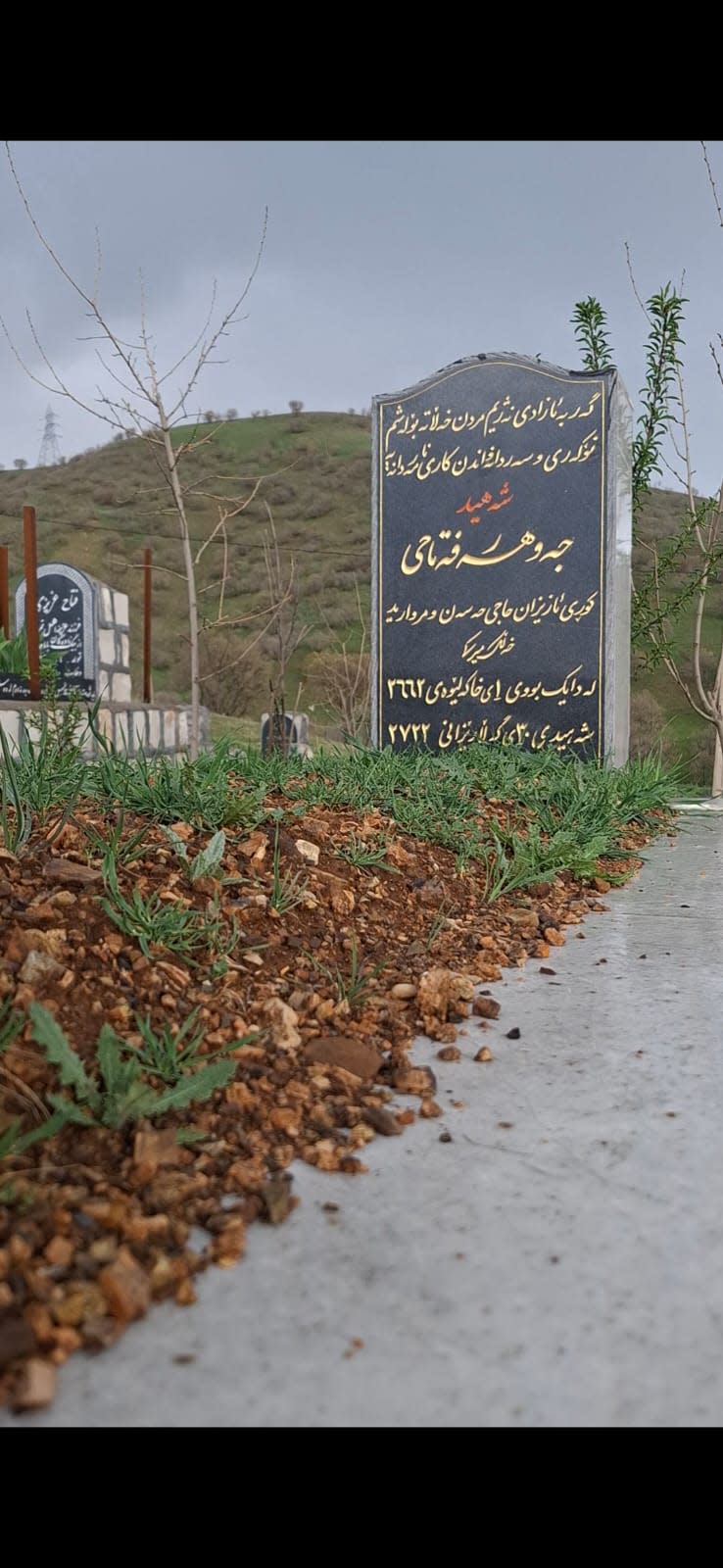
Yasser Fattahi’s father, Jowhar Fattahi, was among the 551 Iranians confirmed to have been killed by the regime’s security forces.
The son told the Post that on November 21, 2022, his 60-year-old father decided to join a march in their hometown of Javanrud, in Kermanshah Province, after Bahaeddin Vaisi and Erfan Kakayi, two members of their extended family from the town, were killed by security forces.
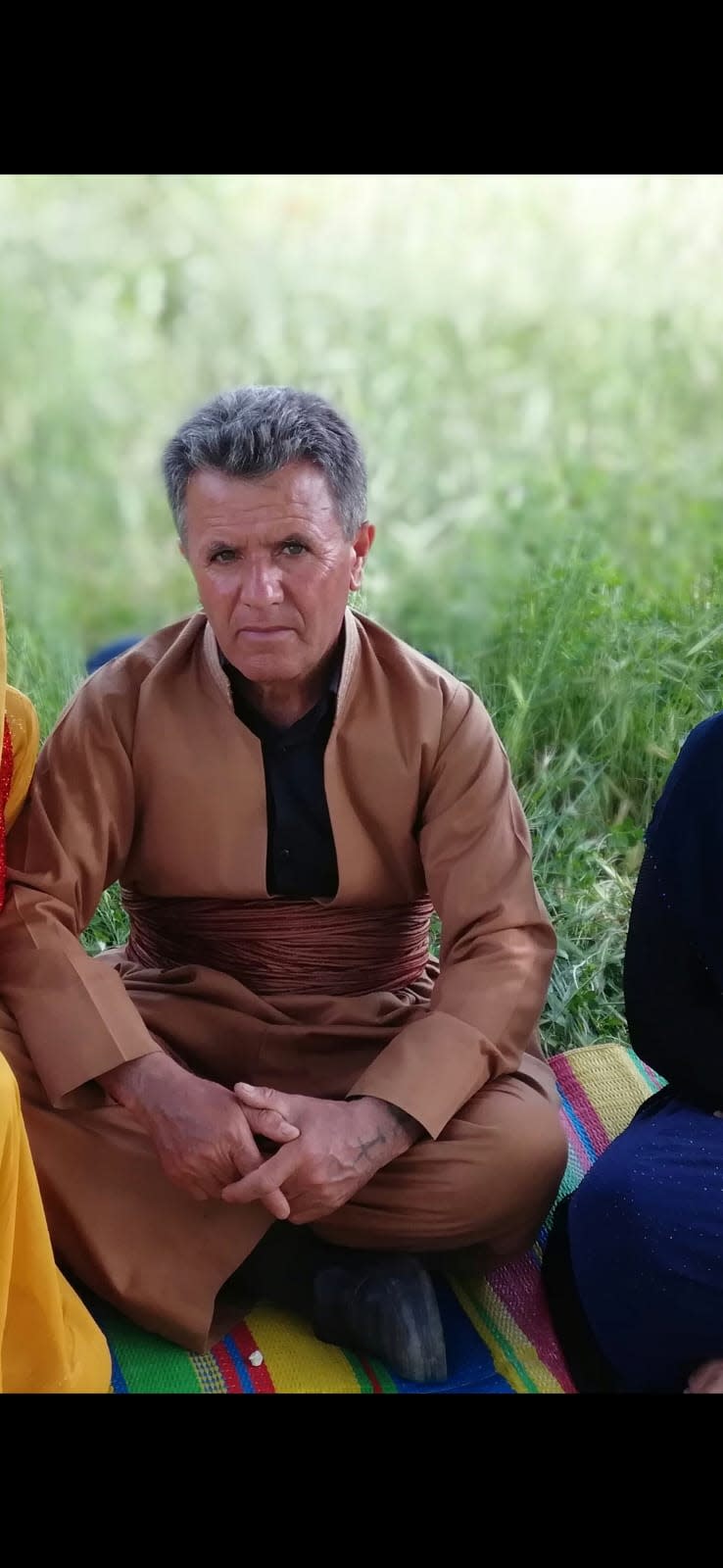
Jowhar was among several people from the town who stayed up through the night, guarding the bodies so that the regime could not “hold them hostage.”
He joined an estimated 30,000 people from the community in laying the men to rest before marching in their memory.
Though Jowhar lacked formal higher education, his son defined him as a principled, compassionate man.
“He always used to say at home, ‘Neither oppress anyone nor allow anyone to oppress you.’ He emphasized the first part more, not being an oppressor ourselves,” Fattahi recalled.
“He was not a violent or extremist person at all. He also always spoke about the injustices that the Iranian government had inflicted on everyone, and especially on the Kurdish people. He wished for a change of government, so that ordinary people would no longer have to bear the cost of living under a cruel and authoritarian regime.”
Fattahi, a nurse, was tending to wounded protesters in Sanandaj when the Islamic Revolutionary Guard Corps (IRGC) opened fire on the crowds in his hometown.
A family friend who marched alongside Fattahi’s father would later tell him how Jowhar stopped to help a young woman who had been shot and wasn’t moving. He refused to move away from her when directed to do so by IRGC members, so they shot him in the femoral region of his left leg.
“In those days, people preferred to die rather than go to the hospital because they knew that, either way, they would be taken from the hospital by the IRGC and held hostage, and ultimately they would be killed,” Fattahi said, explaining how he was stuck treating protesters in secret as his father lay at home begging those around him not to transport him to hospital.
Jowhar Fattari died of his wounds after losing consciousness due to IRGC violence
After he lost consciousness, Jowhar was taken to hospital, where he died of his wounds. Having witnessed the security forces abducting the bodies of those killed, the friends who took Jowhar for medical attention snuck his body out of the institute and buried him far from the city’s main cemetery.
Tens of thousands have been killed in the years that followed Jowhar’s death as the Islamic Republic continues to suppress dissent. Still, Amini’s name has come to represent a call for freedom and the sacrifices made in hopes of achieving it, Fattahi noted.
“‘Woman, Life, Freedom’ is not merely a slogan. It is far more complex, and at the same time, it is the simplest demand one could possibly make.” Speaking of the oppression faced by women in Iran, he said it is “beyond words.”
Describing the situation of women as “tragic,” Fattahi said, “Women are the ones who nurture and raise us, and without their freedom, we cannot expect free human beings to exist. So why should they be subjected to violence or killed because of these policies?”
The Woman, Life, Freedom movement gave women “living under repression and suffocation” an “opportunity to say ‘No’ to a fascist system that treated” them as “slaves” and “inferior to men,” he continued.
“One reason the name of Jina [her real, Kurdish name; Mahsa was her Iranian name] Amini and the Woman, Life, Freedom revolution has endured is that this revolution should not be reduced to the issue of the hijab. Women’s problems are not limited to the hijab.”
“Freedom does not simply mean having the freedom to choose whether or not to wear a hijab,” he concluded. “This is the most basic of women’s rights.”