
IDF tanks on Thursday concluded their first incursion into an area of central Gaza controlled by Hamas since the October 2025 ceasefire.
Multiple IDF sources did not deny that this added pressure might be a way to try to push Hamas into concessions relating to disarming, but also said on Wednesday that there was no expectation of a wider or longer invasion.
According to multiple US sources, there did not seem to be any strong opposition from Washington over the move even as the Board of Peace sponsored by the Trump administration has recently been more heavily critical of Israel as being uncooperative on Gaza.
It was unclear how far in advance US sources knew about the attack, though it occurred on the same day that CENTCOM Chief Admiral Brad Cooper was visiting Israeli military headquarters, suggesting that he was in the know.
No American officials publicly condemned the incident.
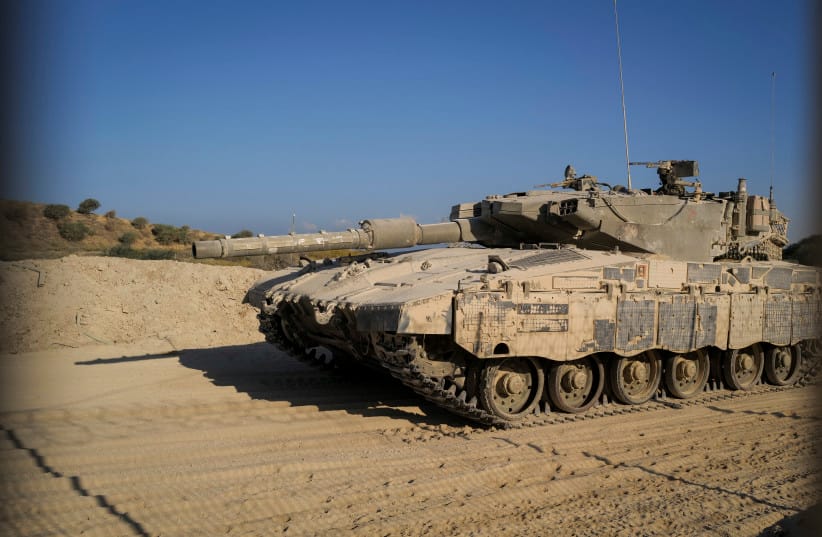
The Israeli military said its forces were targeting Hamas infrastructure outside areas that Israel controls in the enclave to "remove threats," but when asked why this operation suddenly took place now as opposed to other moments over the past year when Hamas was also being threatening, there was no answer.
There are still questions about whether the IDF may in the medium term broaden targeted ground operations against Hamas controlled areas, without holding onto that territory, if Israel feels like there is no prospect of progress of Hamas even partially disarming absent such increased pressure on the terror group.
Initially there were only reports from Gazans, with witnesses saying some Israeli tanks rolled onto the main Salahudeen road, west of the Yellow Line that marks the boundary of the two-thirds of the Gaza Strip still under Israeli control despite a ceasefire that has lasted more than a year.
The IDF announced late Thursday night that the main "threat" which it was trying to remove was an underground tunnel network which Hamas was building up in central Gaza to allow clandestine movement to other areas, coordination, and ultimately more surprise attack operations against IDF forces.
Palestinian sources claim IDF killed three people in airstrikes
They said the tanks' advance was the first ground raid since a 2025 ceasefire. An Israeli airstrike near the army raid killed one person, Palestinian medics said.
The medics said the Israeli military killed two other people in separate incidents earlier on Wednesday in Deir al-Balah and Gaza City. The military said it was not aware of any incident in Deir al-Balah.
An Israeli military spokesperson said the military was carrying out an operation targeting "Hamas infrastructure" west of the Yellow Line in central Gaza and that it had struck a militant in southern Gaza earlier on Wednesday.
Witnesses said the ongoing Israeli raid, gunfire and tank shells heard in the area forced some families in nearby shelters to flee.
Estimates were that some dozens of Gazans evacuated, though The Jerusalem Post could not independently confirm the numbers and it was unclear how long they would remain outside of their homes if the IDF has already withdrawn.
An October 2025 ceasefire halted major fighting in the Israel-Gaza war but has not stopped Israeli attacks or secured Hamas' disarmament.
Hamas calls IDF raid dangerous escalation, ceasefire violation
Israel, which says Hamas has recently been regrouping and rearming, has stepped up attacks against the Islamist group. Hamas has accused Israel of attempting to derail the US-brokered ceasefire agreement.
Hamas said the Israeli military's raid, along with the forced evacuation of homes northeast of Nuseirat camp, was a dangerous escalation and flagrant ceasefire violation, showing Israel is reneging on its commitments. Israel's military did not immediately respond to the comment.
The body overseeing US President Donald Trump's plan to end the Gaza war accused both Israel and Hamas of failing to meet their commitments to end hostilities, leaving the population of Gaza in dire conditions and the ceasefire in danger of collapse.
Reuters contributed to this report.