
Iran is avoiding a broad, direct attack on Israel because it fears Israeli strikes on senior regime figures and institutions vital to its survival, Iran researcher Beni Sabti told 103FM on Sunday.
Sabti, an Iran researcher at the Institute for National Security Studies, spoke with Ron Kofman and Prof. Aryeh Eldad following an Al Hadath report citing an Israeli security source who said that Iranian Supreme Leader Mojtaba Khamenei was not in the Islamic Republic.
“The strength of the public lies in Tehran, as we saw during the protests, and that is what Iran fears,” Sabti said, explaining Iran’s concern over a possible Israeli attack.
“The Iranian regime fears our involvement because they know that we are going straight to the center. We are targeting the most important part and focusing on senior officials.
“They crossed a threshold on Sunday. There may be elements within the Revolutionary Guards that are beginning to pick at us and provoke us, testing how far they can go in angering Israel, and woe to them. There are always rogue elements within rogue elements. It has become like Hamas and Palestinian Islamic Jihad. Let me be clear: Iran has shifted into terror organization mode.”
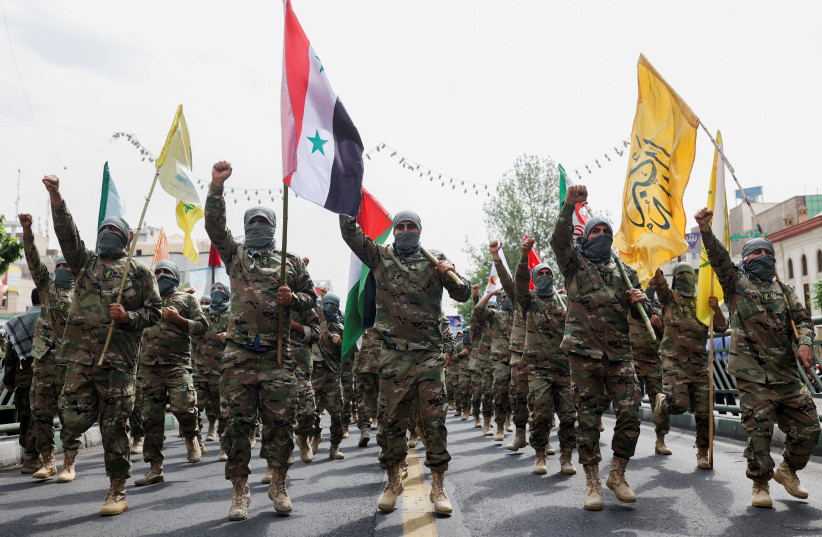
Iran refraining from broad attack on Israel
Asked why Iran was refraining from launching a broad, direct attack on Israel, Sabti said: “They know that, first and foremost, we focus on individuals, and from our familiarity with them, we truly know how to reach them, as we saw on previous occasions.
“If there are no American restrictions, we know how to do the job. We focus on facilities and institutions that are important to the regime’s survival, such as the Revolutionary Guards’ internal security headquarters.”
“There are people who do not respect the rule of law and who are truly anarchists, and the Revolutionary Guards are like that,” Sabti said. “There are people who do not respect the law and even enjoy doing so.
“A group of far-left activists, without informing Khomeini at the time, climbed the fences in 1979, seized the US Embassy in Tehran and presented the leadership with a fait accompli. They later became the nucleus of the Revolutionary Guards. That is who we are dealing with. They act, and afterward they come and say, ‘This is what happened.’
“Mojtaba, given his physical limitations and while inside the tunnel, what can he really do?”
US strikes on communications towers having severe impact
Sabti later addressed the impact of US strikes in the region.
“The public does not count, neither on this side nor for the Revolutionary Guards,” he said. “The strikes are having an impact, and they were severe. Those bridges are not functioning. They took down 116 communications towers, which is a great deal.
“In southern Iran, where everything is failing and everyone is poor, do you think they built a communications tower for the public? They built it for the Iranian Navy’s headquarters and for the Revolutionary Guards. In Iran’s periphery, no one cares about the public, and, incidentally, they do not care about the public in Tehran either.”
Sabti concluded by addressing Khamenei’s condition and motivations.
“Revenge has become the strategic issue,” he said. “When you connect that to the missiles, the nuclear program and the terrorism program, then, of course, reviving Hezbollah is perhaps the most important objective.
“Iranian blindness could still cost them dearly. Revenge has become a strategic event, something fundamental for him, because he saw his father evaporate into the air. Therefore, we may be able to exploit precisely that blindness and extremism to our advantage.”