
Nationalistic violence in the West Bank could escalate and be dangerous, President Isaac Herzog said in a letter to Prime Minister Benjamin Netanyahu, Defense Minister Israel Katz, and National Security Council Adviser Shmuel Ben Ezra on October 8.
In the letter, obtained by The Jerusalem Post and circulated in recent days to IDF General Staff senior officers, the attorney-general, and the foreign minister, he warned that continued violence could lead to a deadly confrontation between security forces and Israeli civilians, potentially triggering a civil war.
The letter followed a visit by Herzog to Judea and Samaria, during which he met with IDF commanders, police officers, and Shin Bet (Israel Security Agency) agents. He described a worsening situation marked by growing violence perpetrated by groups of Jewish rioters, alongside shortages of personnel and law-enforcement resources needed to address the problem.
Herzog called on the government to develop a coordinated emergency plan and take action to dismantle the criminal groups responsible.
He cited incidents that took place in late September in the Palestinian village of Jalud, where Israeli rioters clashed with security forces during efforts to allow a Palestinian family to return to its home.
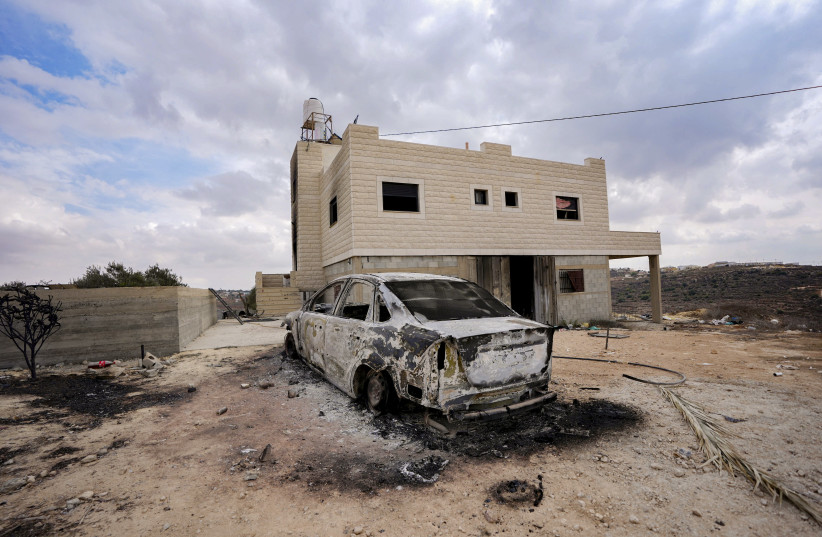
“The incident in Jalud came within a hair’s breadth of IDF forces using live ammunition against Israeli civilians or, God forbid, a Border Police officer being killed by a rock thrown at him from point-blank range,” Herzog wrote. “Who can predict how such an incident would end? The very possibility of using live ammunition against Israeli citizens or, God forbid, a fatal attack on members of the security forces carries the potential for an explosive outcome, an outcome that could lead to civil war.”
“The wave of nationalistic violence in Judea and Samaria is not stopping,” Herzog wrote. “In fact, it is intensifying, with homes being set on fire, trees uprooted, stones and rocks thrown, livestock herds stolen, and many other forms of severe violence perpetrated by groups of rioters.”
Security forces struggling with scale of West Bank violence
Security personnel operating in the area are committed to carrying out their duties but are struggling to cope with the scale of the violence, he said.
“All the soldiers, commanders, police officers, and Shin Bet personnel I met are professional and impressive people who want to carry out their duties faithfully,” he added. “However, both IDF commanders and police officers and Shin Bet personnel present a troubling picture of limited tools and a shortage of manpower.”
Several developments could combine to further aggravate the situation, Herzog said.
“With elections in Israel, the Palestinian Authority, and the United States, and with the beginning of the olive harvest season, several arenas are converging,” he wrote. “This combination of circumstances creates an especially volatile and dangerous reality.”
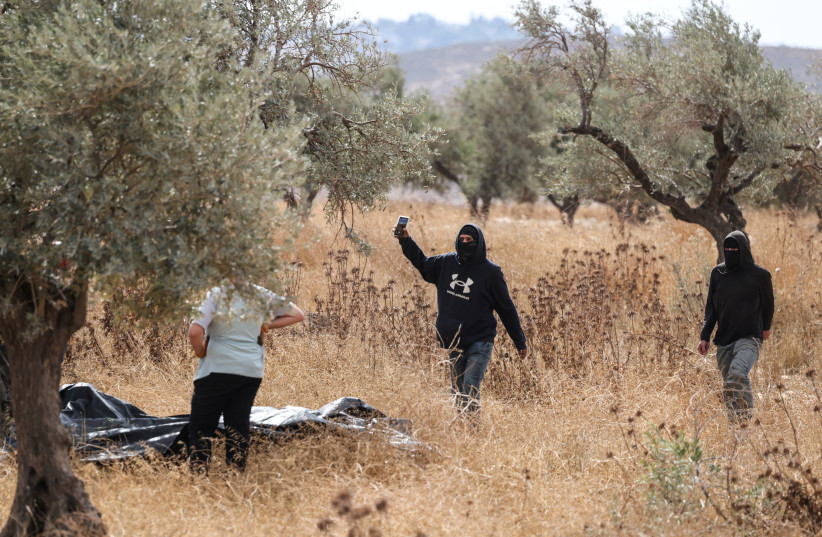
A major escalation could threaten not only Israel’s security but also its international standing, relations with Diaspora Jewry, and the economy, Herzog said.
He emphasized the moral harm caused by violence against innocent Palestinians.
Herzog distinguished between the broader settler population and the groups responsible for the violence, adding that the incidents were not isolated but reflected organized criminal activity.
“These are not isolated incidents of nationalistic crime, nor is this ‘settler violence,’ a definition that casts a stain on an entire population,” he wrote. “The reality on the ground is one of organized criminal activity by groups and individuals, some of whom are well known to the authorities. The impression is that these are criminal organizations in every sense of the word, and that is how we must treat them.”
Some of those involved come from West Bank settlements, while others come from the outside, Herzog said.
Settlement leaders should be enlisted in efforts to combat the violence, but responsibility for addressing the problem rests with the state and its law-enforcement agencies, he said.
“However, the entire State of Israel will face the consequences of a disastrous outbreak of violence on the ground, and we must use the full range of tools available to the state to dismantle the criminal organizations that are running rampant there without interference,” he wrote.
Herzog calls for use of administrative detention to stop West Bank escalation
Herzog outlined a series of measures the government should adopt.
“I therefore propose immediately formulating a comprehensive and coordinated plan to eradicate this phenomenon,” he wrote.
The proposed plan includes reinforcing security forces in the area, conducting large-scale arrests and investigations, and dismantling the criminal groups.
Herzog also called for the use of administrative detention, an exceptional enforcement measure that allows individuals to be held without criminal charges, subject to legal requirements and judicial oversight.
In addition, he proposed establishing an interministerial and interagency task force that brings together welfare, education, community, and local government officials.
Herzog said there should be discussions with the attorney-general, law-enforcement authorities, and the judiciary to improve procedures for handling arrests and the release of detainees.
“Without visible enforcement and genuine deterrence, we will face a disaster,” he wrote.
Herzog: Responsibility for curbing violence rests with Israel's leadership
The responsibility for preventing further escalation rests with Israel’s political leadership and state institutions, Herzog said.
“The responsibility placed upon us is a national and state responsibility of the highest order,” he wrote. “We must not delay it for irrelevant reasons, and the sooner the better,” he added.
Without coordinated and decisive action against the groups responsible for the violence, the situation in the West Bank could lead to deadly attacks on security personnel and an escalation with consequences extending far beyond the region, Herzog said.