
Yitzhak Ben Hebron, the last survivor of the 1929 Hebron massacre, passed away on Thursday.
Yitzhak, who was a child at the outbreak of the riots that led to the massacre, left behind a large family and a legacy connected to the Jewish community in Hebron. He was born into a family that had lived in Hebron for a long time.
In August 1929, when he was about four years old, his life changed beyond recognition.
At the height of the bloody events, Arab rioters launched a planned massacre against the Jewish community in the city. During the attack, 67 of the 800 residents of the city's Jewish community were murdered, and dozens more were injured.
Yitzhak and his family, during the attack, Yitzhak and his family found an escape route through the window of the Avraham Avinu Synagogue, and thus managed to escape the rioters who were raiding the neighborhood and escape death.
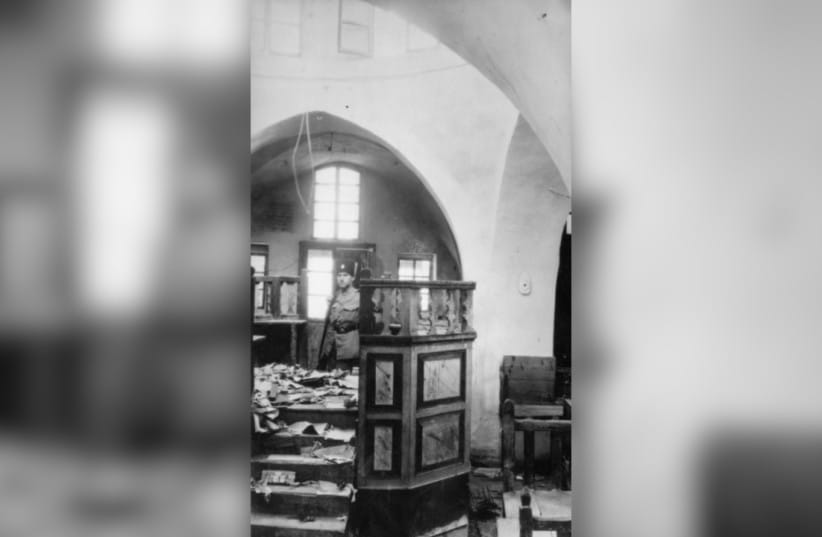
Among the survivors were many who had been protected and hidden by Arab residents. The survivors were evacuated from the city, which led to the interruption of Jewish continuity in Hebron.
Yitzhak spent adult life protecting Jews in Israel
As an adult, Yitzhak changed his last name to Ben Hebron.
In his youth, he enlisted in the Hebrew Settlements Police and served as a policeman before the establishment of the state of Israel. As part of his role, he worked to protect the settlements and later took an active part in the Israeli campaigns.
After the Six-Day War, Ben Hebron was among the first Israelis to return to renew Jewish settlement in Hebron.
His son, Amishav, was the first Jewish child born to the Jewish families who established a settlement in Hebron.
Over the years, he made sure to preserve and tell about the memory of the destroyed community.
In recent years, he has lived in Ashkelon with his family.
With the death of Yitzhak Ben Hebron, the chapter of direct testimony from the survivors of the massacre in Hebron was closed.