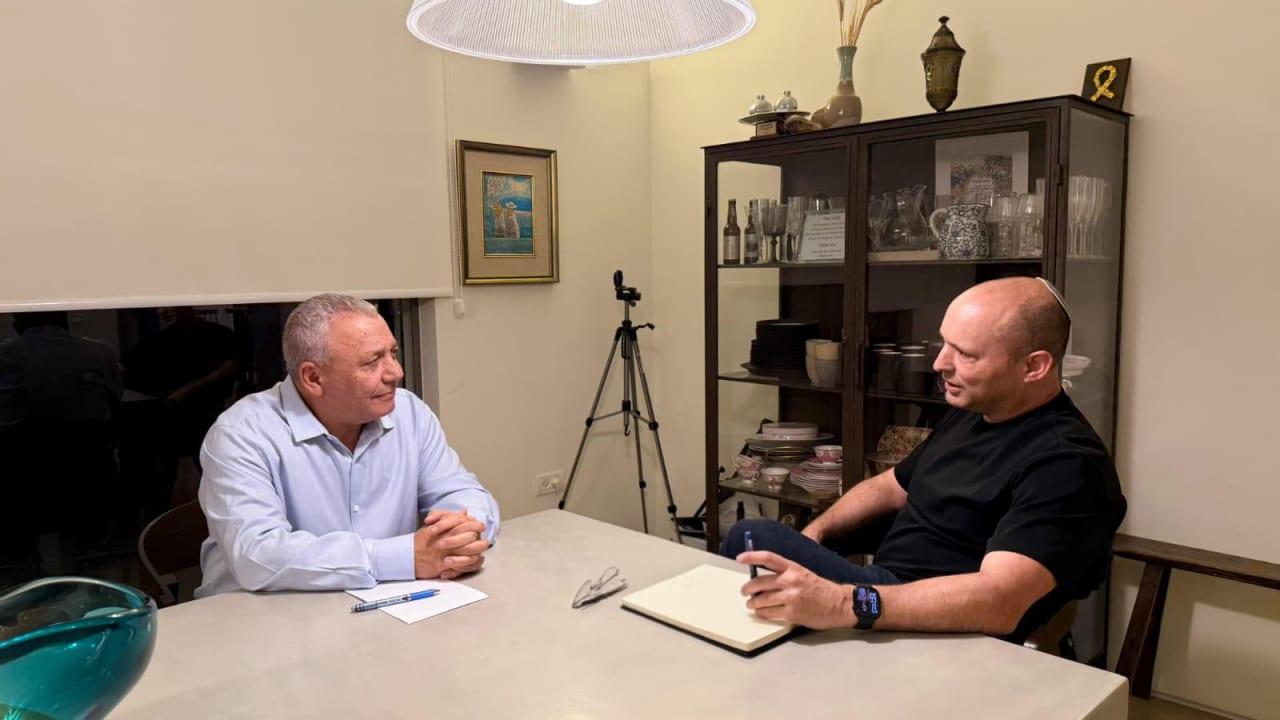
The B’Yachad party, led by former prime minister Naftali Bennett, announced on Sunday that it would recommend Yashar leader Gadi Eisenkot to President Isaac Herzog as its candidate to form the next government, ahead of the president’s consultations with party representatives beginning Wednesday.
The statement came as party leaders from both Prime Minister Benjamin Netanyahu’s bloc and the opposition bloc continued to hold one-on-one meetings ahead of coalition talks, amid a political deadlock in which neither side secured the 61 seats needed for a Knesset majority in Tuesday's election.
Until now, Yashar party leader Gadi Eisenkot had called for the leader of the largest party in the opposition bloc to become its candidate for prime minister.
However, no agreement on the arrangement was announced within the opposition bloc from Bennett or party leaders Avigdor Liberman (Yisrael Beytenu) and Yair Golan (the Democrats).
Announcing the party's support for Eisenkot, B’Yachad said Bennett had been “clear throughout the election campaign that he would respect the voters’ decision, and that is what he is doing.” The party added that Bennett had informed Eisenkot of his decision to recommend the Yashar leader to President Isaac Herzog.
By law, the president is required to consult the Knesset factions before deciding who receives the task of forming a government.
Opposition leaders compare notes
Liberman had reportedly been avoiding the phone calls of other opposition party leaders last week; however, he met with Eisenkot on Saturday evening, the Yashar party leader’s spokesperson confirmed to The Jerusalem Post.
So far, Eisenkot had held separate meetings with Bennett and Golan, but Liberman did not participate in them.
Liberman also met on Sunday with opposition leader Yair Lapid, who holds the second slot on Bennett’s list.
The election results showed that Netanyahu’s bloc maintained its lead, securing 53 seats in the next Knesset, while the opposition bloc won 48. Meanwhile, the Arab parties, Ra'am and the Joint List, won a record-breaking total of 19 seats combined.
Eisenkot’s Yashar party was the largest party in the opposition bloc, winning 21 seats, but finished behind Netanyahu’s Likud, which secured 27.
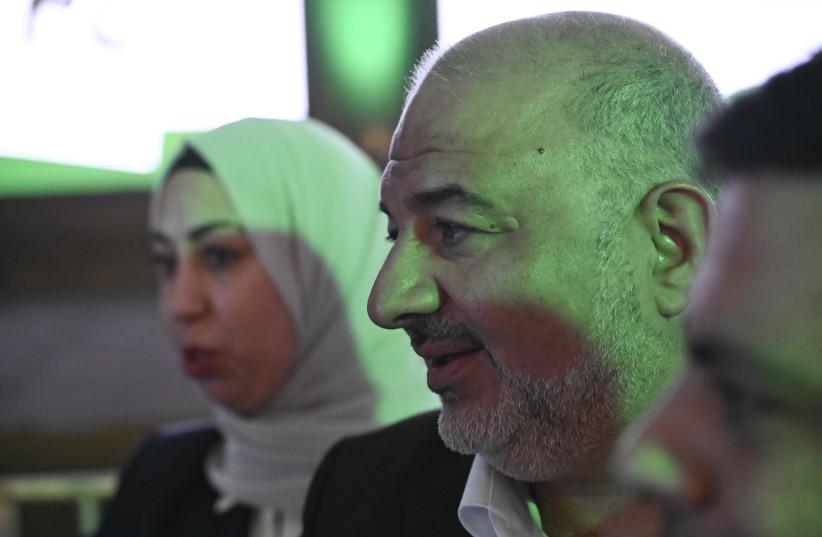
The Joint List and Ra'am are expected to recommend Eisenkot for prime minister during consultations with President Isaac Herzog, a senior Joint List official told Walla on Sunday.
Herzog on Sunday called on Israel's political leaders to accept the election results and demonstrate flexibility in coalition negotiations, warning against political entrenchment that could force the country into another election, ahead of consultations at the President’s Residence.
Counting to 61
“The election results are an established fact – they are the reality. And now is the time to tell all the leaders: Stop climbing trees and position yourselves in front of this reality," Herzog said while speaking at the state memorial ceremony for Israel's first president, Chaim Weizmann.
The Knesset is expected to be sworn in on November 10, regardless of any government or coalition talks.
Talks at the President's Residence will begin Wednesday, when Eisenkot may be the first candidate to receive the mandate from the president, giving him 28 days, with a possible 14-day extension, to form a coalition.
Along with the 48 seats won by the opposition bloc, the Arab parties' 19 recommendations would give Eisenkot 67 in total, prompting Herzog to grant him the mandate.
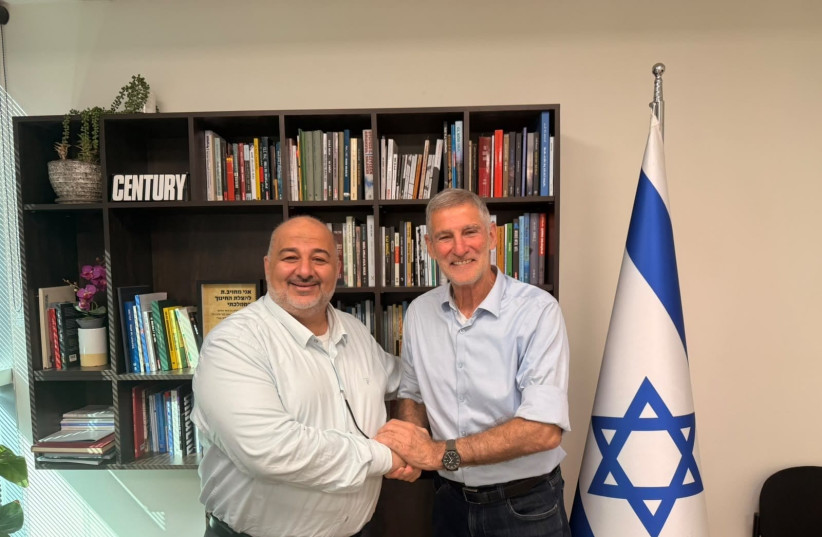
Democrats party leader Yair Golan spoke on Sunday with Joint List party leader Yousef Jabareen and Ahmad Tibi, who holds the second slot on the party's slate, Jabareen's spokesperson confirmed to The Jerusalem Post.
The three agreed to meet to discuss ways to work together going forward and are set to meet this week, the spokesperson added.
The discussion comes after Golan met with Ra'am party leader Mansour Abbas last week on Thursday.
Yair Golan has called for the opposition bloc seeking to replace Netanyahu to form a coalition with the Arab parties.
The other heads of the opposition parties had previously drawn a red line to Arab parties being part of the government, saying they are not viable coalition partners after the October 7 massacre in 2023.
The haredim weigh in
Meanwhile, the haredi (ultra-Orthodox) parties - Shas and United Torah Judaism - which have been key partners in Netanayhu’s coalition also met on Sunday ahead of coalition negotiations.
United Torah Judaism chairman MK Yaakov Asher convened with party members, where they stated that they discussed their next steps. The party has reportedly been considering who to recommend for prime minister, though no official statement on who they would support was released.
Rabbi Moshe Maya, a senior member of the Sephardic Shas party, said on Sunday that there is "no reason to rule out coalition negotiations with [Gadi] Eisenkot."
The political deadlock could ultimately lead to another election, although the parties may still reach an agreement through coalition negotiations. Other possible outcomes include a unity government among Netanyahu and members of Eisenkot’s bloc, or the formation of a minority government.
The Arab parties have expressed willingness to cooperate with the oppostion bloc to work toward replacing Netanyahu.
Meanwhile, opposition party leaders have also reportedly agreed that their first move after the new Knesset is sworn in on November 10 would be to oust Knesset Speaker Amir Ohana, a member of Netanyahu's Likud party.
The move would require a majority in a Knesset vote and could be achievable with the support of the Arab parties, bringing the potential backing to 67 seats.
Replacing Ohana would give the opposition bloc greater control over the parliamentary agenda, including votes, legislation, and committee appointments, even if Netanyahu remains in office as head of a caretaker government.
Shir Perets and Jerusalem Post Staff contributed to this report.