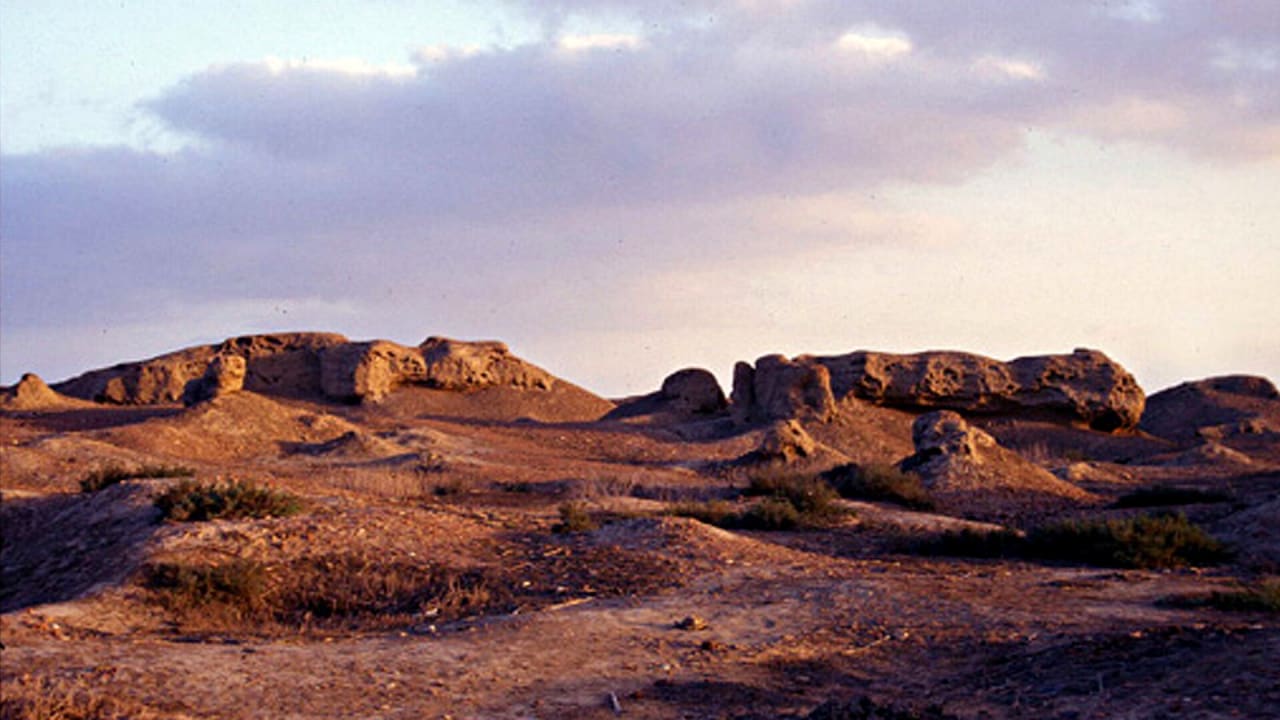
The oldest ruins of the ancient Egyptian city of Buto, dating to approximately 2,600 years ago, have been rediscovered by archaeologists testing new technology meant to aid in locating structures buried deep beneath the surface.
The complete findings were published in March in the journal Acta Geophysica.
Excavations at Buto, Buto, also known as Tell el-Fara’in or Hill of Pharaohs, began in the mid-1960s. More recently, in 2022, archaeologists discovered the remains of a hall lined with pillars within Buto’s larger temple structure.
Situated in the flood plain of the northwestern Nile Delta, the study noted that the city “protruded from the surrounding landscape, providing early residents with a haven from the annual flooding.
However, the city’s proximety to the river has led to a challenge for archaeologists working to excavate the ruins, as traditional digging methods would have teams sifting through tons of debris and struggling with groundwater in order to reach the deepest layers.

As such, archaeologists turned to newer technology, such as Sentinel-1 SAR imagery, and electrical resistivity tomography (ERT) surveys, in order to conduct a multi-pronged approach and figure out the exact location of Buto’s most ancient ruins.
Excavating Buto’s Kom C
The site holds three prominent mounds, known as Koms A, B, and C, with Kom C selected for investigation due to its history spanning the Predynastic period through the Early Islamic era.
In the first three meters of Kom C, the scans revealed a layer of broken pottery and debris dating to the late Roman and Ptolemic periods.
Pushing on, at a depth of between three to six meters deep, the scans located the remains of several structures, believed to have been from the Saite period.
Following the location, archaeologists conducted a small, targeted excavation to reach the structure, and unearthed several mudbrick buildings and religious artifacts precisely where the satellite imagery and ERT had predicted.
The artifacts included amulets of several Egyptian gods (Isis, Horus, Taweret, Bes, Anubis, and Wadjet), a bronze statue of Horus, a steatite scarab bearing the name of Thutmose III, and other limestone statute fragments.
According to the study, the finds indicate that the site had the “presence of a religious site with strong cultic and ceremonial associations, further reinforcing the interpretation of the structure as a temple from the 26th Dynasty.
"The results of this study demonstrate the effectiveness of combining geophysical measurements and remote sensing data, which gave a very accurate vision in detecting buried settlements in a complex region,” the study concluded.
"3D inversion algorithms were particularly effective in delineating buried mudbrick walls and architectural structures, significantly enhancing our understanding of site formation processes."