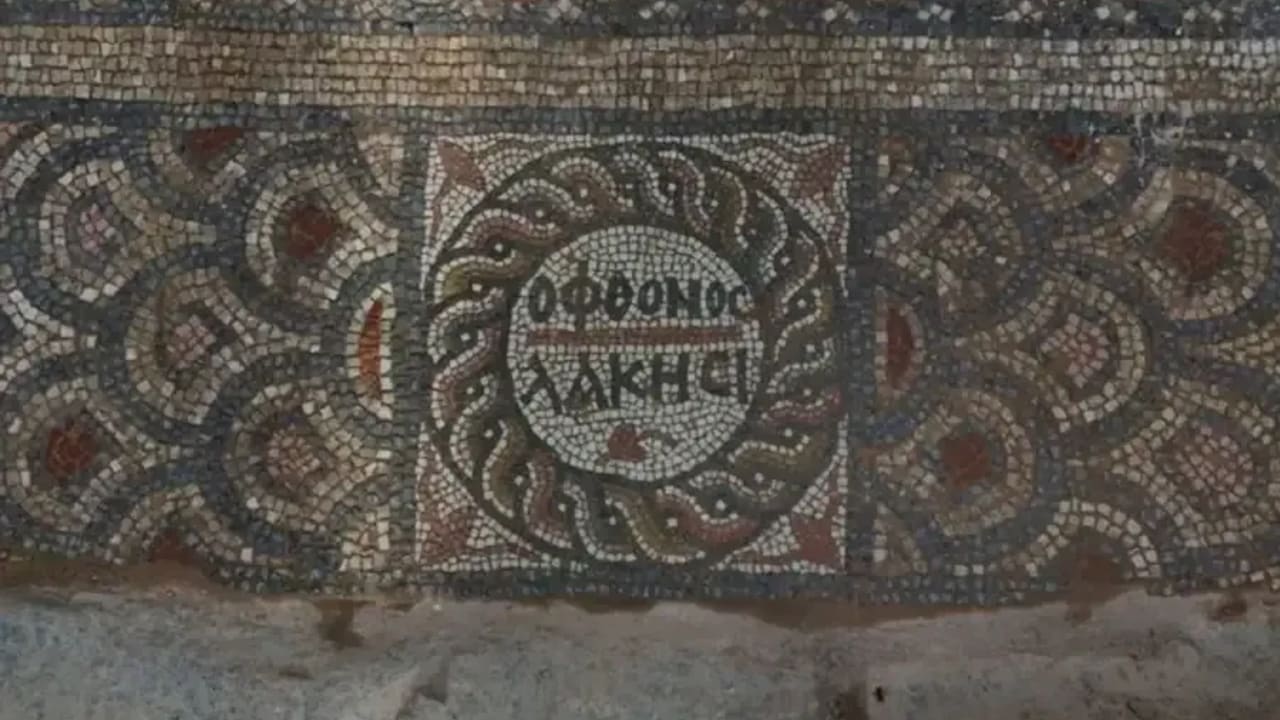
Archaeologists in Turkey have uncovered a nearly 15-square-meter mosaic in the ancient city of Syedra. It carries two striking ancient Greek inscriptions. One at a room’s threshold translates as “let the jealous burst,” a tone modern readers might compare to “haters gonna hate.” A central inscription invites residents and guests to “use it with joy” or “use it with good fortune.”
The mosaic is located in the entrance area of one of Syedra’s most important and largest residential buildings. It is a three-story mansion that remained in use from the 2nd to the 7th centuries CE. Its second and third floors were accessed from entrances on the northern side.
"The jealous"
Scholars parsing the wording of the threshold text connect “the jealous” to the idea of envy and a verb meaning “to crack” or “burst.” The formulation could be read as a pointed rebuke to ill will entering the room. The unusual phrasing has also been described as bearing a protective function against the evil eye and negative energies.
Syedra, located near Antalya, has a history stretching back roughly 3,000 years. Archaeologists involved in the project aim to recover new evidence of daily life in the late Roman Empire and early Byzantium. Researchers point to intensive construction activity in the 4th to 6th centuries CE, when time and resources were available for art and decorations despite periods of crisis and conflict, according to futurezone.de.