I was born in Borough Park in 1955 into an ultra-Orthodox family. I lived there for most of my life, except for two and a half years in Israel and two years in Tucson, Arizona.
My grandfather was one of the first kosher butchers in Brooklyn in the 1920s. He was a true tzadik. He gave meat to many people who could not afford to pay and even took in “boarders” who were homeless until he could help get them jobs so they could afford to rent their own single-room occupancies.
He rescued many homeless animals – dogs, cats, rabbits, anyone who needed a home. As a child, here and in Israel, I loved to celebrate the holidays. I remember learning about kapparot (kaporos) while very young.
Fowl treatment
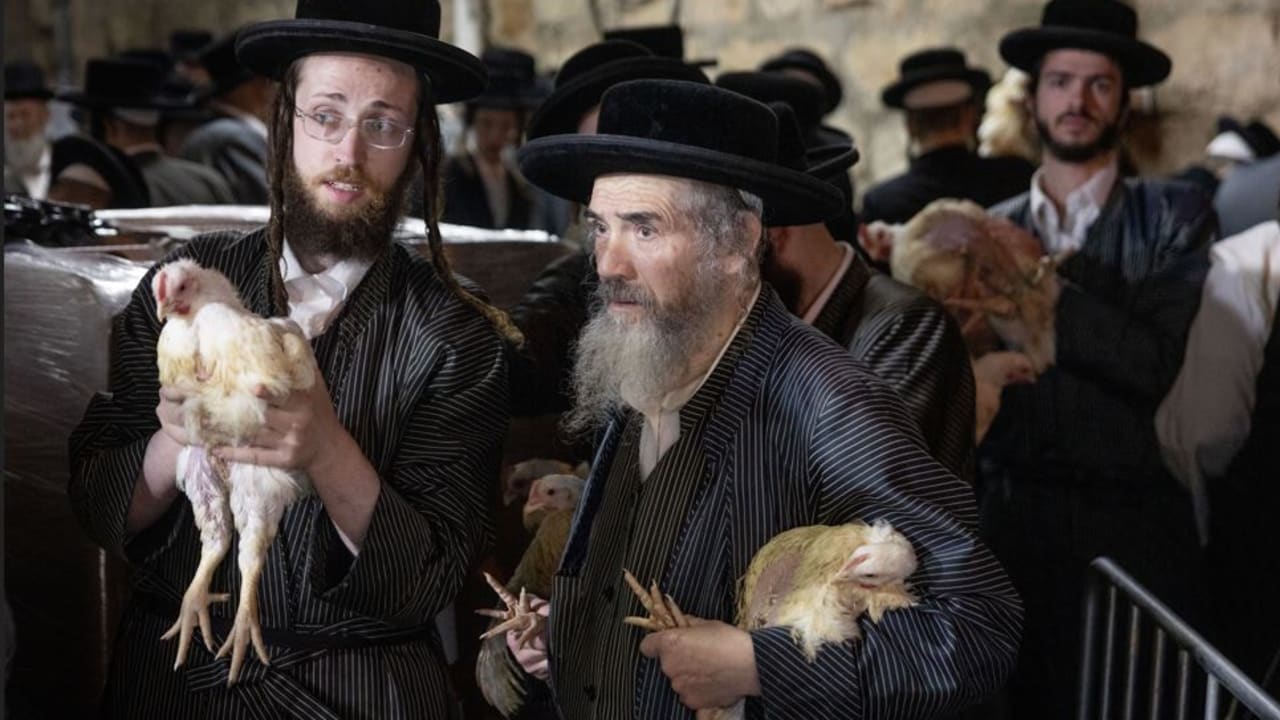
kapparot is a pre-Yom Kippur atonement ritual, not mentioned in the Torah or Talmud, in which a practitioner swings or waves a live chicken or a sack of money over his or her head, symbolically transferring their sins.
When using a chicken, the practitioner recites this passage: “This is my substitute, this is my exchange, this is my atonement. This chicken will go to its death, and I shall enter into a good, long life and peace.”

The flesh is supposed to be donated to the poor. Rabbi Yosef Caro of Spain, in his work the Shulhan Aruch, called it a “foolish custom” to be avoided, and said that money could be used instead. Rabbi Moshe Isserles, from Eastern Europe, shortly thereafter revised the work, removed the negative commentary, and encouraged people to use chickens.
My grandfather had also said that the use of chickens in the custom was unnecessary and cruel. For some reason, I had the impression that the practice had disappeared in the Middle Ages, when it started.
One day, about 32 years ago, while walking with my son to visit a friend, I had the misfortune of encountering people performing kapparot with chickens. I was horrified. Since then, I have been working with groups and individuals to encourage people to use money instead.
Still, about 100,000 chickens are used for this ritual every year in Brooklyn alone. Five- to six-week-old chickens are packed tightly into transport crates, often delivered onto streets and sidewalks the night before, and stacked 10 to 12 high.
The crates are thrown and dragged roughly, and toes and whole feet sticking out sometimes break off. They are not given any food or water, and all the chickens below the top crate are subjected to urates and feces from the chickens above them. Many die of starvation, dehydration, heat prostration or freezing (depending on the weather), or sepsis from untreated injuries. Starving birds will sometimes cannibalize the dead.
In Crown Heights, if they are unlucky enough to live, they are grabbed out of their crates by their fragile wings, which cannot support their bodies that have been abnormally bulked up for their flesh. The ligaments rip, and the bones break, creating excruciatingly painful open fractures.
People then stand in line, while still holding the chickens by their wings, waiting for their turn to hand the birds to the shohet (ritual slaughterer). After they are slaughtered, they are thrown into inverted street cones to bleed out.
The birds’ suffering does not end there. Practitioners believe that the birds are killed as soon as the throat is cut and that any movement after that is reflex.
This is not the case. It would only be true if the brainstem was cut (as in beheading). These chickens are displaying purposeful behavior, trying to right themselves, with their heads hanging to the side, and trying to fly away, while gurgling on their own blood, only to be shoved back into the cones before they are thrown directly into garbage bags, many while still alive and slowly bleeding to death.
One bird, Robin, was rescued after an activist saw a garbage bag moving and opened it up to find a bird still alive after being improperly slaughtered. The bird was rushed to an emergency animal hospital where it had surgery to repair the wound. It was rehabilitated and, years later, is still alive and thriving in a sanctuary.
This ritual is not only breaking 15 New York City and New York State laws, but also violates Halacha. “Tza’ar ba’alei hayim” is the Torah mandate that forbids unnecessary harm to animals and obligates us, when possible, to relieve their suffering.
The Torah also mandates “ba’al tash’hit,” prohibiting unnecessary destruction or waste. The Talmud says “feed your animals before you feed yourself.” These chickens do not get food or water.
People, not animals, should be held accountable for their sins
The concept of vicarious redemption is abhorrent to me. I don’t believe it’s fair to force an innocent creature to suffer and die for one’s transgressions. If someone has done something wrong, they should do whatever they can to make amends.
Using chickens doesn’t make sense. We already have Yom Kippur, the holiest day of the Jewish year, commanded in the Torah, during which we fast and atone for our sins for a whole day. Why would we need Yom Kippur if atonement was possible beforehand?
The use of chickens has been controversial through the centuries, with many great rabbis and sages discouraging it. There are 18 generations of rabbis in my family. None of them used chickens for the ritual. In fact, some didn’t do kapparot at all.
Every year, for over a decade, my colleagues and I go to the various sites in Brooklyn and feed the chickens – as many as we can reach – strips of watermelon through the crates – to give them a little comfort before they are yanked by their wings and painfully swung or waved.
We show the children how chickens should be treated. We plant seeds of compassion and water them every year. Rabbi Yonassan Gershom, a Breslov hassid, wrote the book Kapporos Then and Now: Toward a More Compassionate Tradition, describing the history of the ritual and encouraging people to use money instead of chickens.
We also rescue chickens from kapparot, some of them needing wing amputations due to open fractures. I became a registered nurse in 1979 because I can’t stand to see anyone suffer without trying to help or prevent that suffering.
I started trying to convince people to use money, instead of chickens, for the same reason. I hope people evolve and transcend the archaic and cruel practice of using chickens, and I hope it happens in my lifetime.
The writer has been a registered nurse since 1979. She has been involved in animal rights groups since the early ’80s. She served on the Advisory Committee of Jewish Vegetarians of North America, on the boards of the Medical Research Modernization Committee and the Students United Protesting Experiments on Sentient Subjects, co-organized National Animal Rights Day, and co-founded the Alliance to End Chickens as Kaporos, an offshoot of United Poultry Concerns. She is currently the education outreach coordinator with the Kaporos Compassion Project.