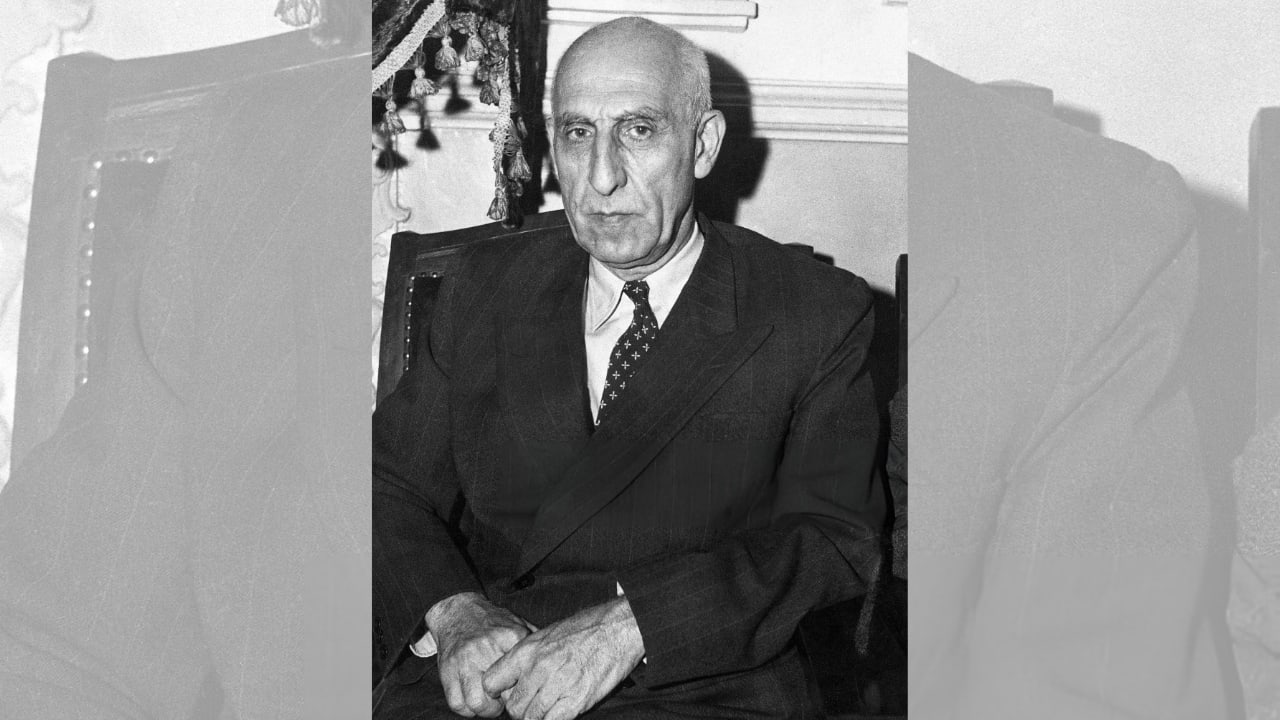
A dominant Western narrative characterizes the 1953 legal dismissal of Mohammad Mosaddegh as a coup, blames the United States for undermining Iran’s nascent democracy, and links the intervention to the eventual 1979 Islamic Revolution.
Figures such as former US president Barack Obama have frequently leveraged this oversimplified history to explain Washington-Tehran frictions.
Historical facts, constitutional law, and Mosaddegh’s authoritarian actions prove this narrative wrong. Mosaddegh’s career was characterized by constitutional subversion, political violence, and radical foreign policies that paved the way for the 1979 disaster.

The prelude to power: The assassination of Razmara
Mosaddegh’s path to the premiership was carved through radical political violence, not peaceful democratic processes. In 1950, the Shah appointed general Ali Razmara, a capable military strategist who served as chief of staff of the Iranian Army during the liberation of Azerbaijan from Soviet-backed separatists, as prime minister.
Razmara sought stabilization and pragmatic oil negotiations with the West, making him the primary obstacle for radicals. Coveting the premiership, Mosaddegh openly threatened him during a 1950 parliamentary session, shouting: “If you are a soldier, I am more militant than you, I will kill you right here (in this Parliament)!”
On March 7, 1951, Razmara was assassinated by Khalil Tahmasebi, a member of the radical Islamist militant group Fadayan-e Islam.
According to Ezzatollah Sahabi’s memoir, this was an orchestrated plot hatched at a clandestine meeting between National Front leaders, including Hossein Fatemi, a close confidant of Mosaddegh who later served as his deputy and foreign minister, and members of Fadayan-e Islam.
Following the murder, the Mosaddegh-aligned Parliament bypassed the rule of law to pardon the assassin. This violence cleared the way for Mosaddegh’s rise to the premiership.
The July 1952 riots and dictatorial expansion
Once in office, Mosaddegh targeted the constitutional separation of powers. In July 1952, he unconstitutionally demanded personal control over the War Ministry, a portfolio reserved for the crown. When the Shah refused, Mosaddegh resigned on July 16, and the experienced statesman Ahmad Qavam (Qavam os-Saltaneh) was appointed prime minister.
Qavam issued a manifesto warning the nation against demagoguery and religious radicalism: “As much as I abhor demagoguery in political affairs, I am equally disgusted by hypocrisy in religious matters.”
Qavam’s warnings were crushed by organized chaos.
On July 21, Mosaddegh’s National Front, allied with Ayatollah Kashani’s Islamist thugs and the communist Tudeh Party, mobilized violent street mobs. This bloody insurrection forced Qavam’s resignation. Returning to office, Mosaddegh weaponized mob rule to coerce a cowed Parliament into granting him sweeping emergency powers.
Decades later, Marxist-Islamist terrorist groups like the People’s Mojahedin Organization of Iran (MEK) and figures like Maryam Rajavi continue to praise the July 1952 riots as a revolutionary blueprint.
Mosaddegh’s self-coup: Subverting law and constitution
The narrative of 1953 falsely depicts Mosaddegh as the victim of a coup; in reality, Mosaddegh executed a systematic self-coup against Iran’s constitutional bodies. Armed with emergency powers, he dissolved the Iranian Supreme Court in November 1952, dismantling one of the constitution’s principal checks on executive power. Next, he dissolved the Senate.
In the summer of 1953, facing backlash over an economic collapse, Mosaddegh targeted the Majlis. He staged a rigged national referendum to dissolve Parliament. The vote mocked democratic standards, utilizing separate voting stations in different locations for “yes” and “no” ballots, exposing voters to severe intimidation by pro-Mosaddegh and communist Tudeh Party mobs.
Having destroyed the Judiciary, the Senate, and the Majlis, Mosaddegh centralized absolute authority in his hands, completely subverting the constitutional architecture of the state.
Legal dismissal and defiance
Under the 1906 Iranian Constitution, Iran was a constitutional monarchy. The prime minister was never chosen by popular vote; the legal authority to appoint and dismiss him belonged to the Shah.
Crucially, constitutional precedent dictated that in the absence or dissolution of Parliament, a crisis Mosaddegh intentionally manufactured, the Shah had the authority to dismiss the prime minister.
On August 16, 1953, the Shah’s royal decree dismissing Mosaddegh and appointing Fazlollah Zahedi as general was delivered to Mosaddegh. Instead of obeying the law, Mosaddegh launched an armed rebellion.
He arrested colonel Nematollah Nassiri, the imperial guard who delivered the decree, and deployed military forces to hold power extra-constitutionally. The events of August 19 were not a lawless coup against democracy, but the restoration of constitutional order against a defiant autocrat.
Aligning with regional extremism and antisemitism
Mosaddegh’s radicalism heavily dictated his foreign policy. A definitive example was his alignment with Amin al-Husseini, the grand mufti of Jerusalem. During World War II, al-Husseini actively collaborated with Adolf Hitler and Heinrich Himmler, championed Nazi antisemitic policies, and helped organize and recruit Muslims for the 13th Waffen SS Division, which committed atrocities.
Despite al-Husseini being a prominent Nazi collaborator, Mosaddegh sought his geopolitical blessing. In a letter to this notorious cleric, Mosaddegh wrote: “The Iranian nation, in taking this perilous step, highly requires the prayers of Your Excellency.” This liaison exposes the hypocrisy of labeling Mosaddegh a secular progressive.
This alignment directly birthed state-sponsored anti-Zionism in Iran. Before Mosaddegh, Iran recognized Israel on a de facto basis in 1950 and opened a consulate in Jerusalem. To appease Islamists and regional extremists, Mosaddegh officially closed the Iranian consulate in Jerusalem in July 1951.
He pioneered the weaponization of anti-Zionism to mobilize religious masses. Decades later, Ayatollah Khomeini deployed this exact same anti-Israel framework to overthrow the Shah, showing that the revolution in 1979 shared a direct ideological lineage with Mosaddegh’s policies.
The radical offspring: From freedom movement to terrorism
Mosaddegh’s downfall reshaped Iran’s opposition into an incubator for modern extremism. In 1961, his religious supporters founded the Freedom Movement of Iran, led by Mehdi Bazargan. Formulating an idea of political Islam similar to that of the Muslim Brotherhood, this group became the respectable face that legitimized Khomeini’s radicalism to the West during the 1979 Revolution.
Furthermore, the radicalization within the Freedom Movement directly gave rise to the MEK. With coordinators such as Ebrahim Yazdi facilitating links between these emerging factions and external networks, this faction fused Islam with Marxist guerrilla ideology, leading to decades of terrorism. “Mosaddeghism” acted as the ideological swamp that bred these extremist networks.
Conclusion
Ultimately, the conventional narrative of the 1953 coup is built on a false premise. Mosaddegh was not chosen by popular vote. He was a royally appointed official whose political rise relied on political assassinations and violent street mobilization.
Once in power, he executed a coup against the state by dismantling the judiciary and parliament, ultimately launching an armed rebellion against his legal dismissal.
By aligning with Nazi collaborators, closing the consulate in Israel, and nurturing ideological factions that birthed the Freedom Movement and the MEK, Mosaddegh did not foster democracy. Instead, his authoritarianism and ideological concessions created the very fissures from which the radicalism of 1979 inevitably emerged.
The writer is communications director to Prince Reza Pahlavi, and an Iranian journalist who previously served as editor-in-chief of news at Manoto TV, a UK-based Persian-language television network.