
The embrace US President Donald Trump is giving Turkish President Recep Tayyip Erdogan is a reminder of Trump’s transactional worldview, of Erdogan’s ambitions, and of Israel’s need to think several moves ahead.
The first: For Israel, the image of Trump walking arm in arm with Erdogan is second only to the image of US Vice President JD Vance bent over some draft agreement with representatives of Iran’s ayatollah regime at the Bürgenstock resort near Lake Lucerne in Switzerland.
Israel is dealing with the threats that remain from Iran and with the emerging threat from Turkey, including Erdogan’s grave rhetoric against Israel. In that context, the Trump-Erdogan embrace feels like a knife in the back of the nation, its leader, and everyone who buried his head in the sand and failed to understand the person now sitting in the White House.
Trump, the businessman-president who arrived in Ankara with the Qatari-gifted aircraft intended for the Air Force One fleet hovering in the background, is driven by the economy, business, and profits more than any grand commitment to democracy.
This week, he apparently began to understand that Iran is playing him. Iran has not abandoned its nuclear project, and it will not abandon it. It feels it is emerging from the war victorious. It allows itself to attack targets and violate the ceasefire during the funeral procession of former supreme leader Ali Khamenei, without being deterred by an American response.
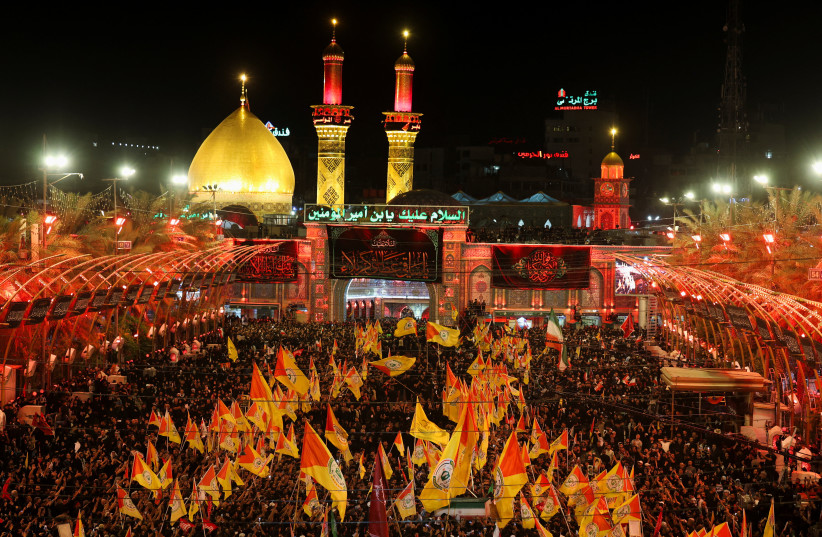
That points to the potential for renewed escalation in the Middle East and for the war to return in one form or another, against the wishes of Trump, who is trying to stabilize the economy and prepare for the US midterm elections under difficult conditions.
The main problem, however, is ours. It is close to us, threatens us, and demands our attention. Take Iran’s show of force at the opening of the funeral procession for Khamenei. To a reasonable viewer abroad, it looked more like the opening ceremony of the Olympics than a funeral in a country whose military and political leadership had largely been eliminated and whose army, weapons industries, and economy had just suffered severe blows.
The Persian people are stiff-necked. Our security challenge with them is far from over.
Erdogan’s ambitions in the Middle East
Secondly, Turkey is a highly important country for Israel. It is a military and economic power located in a strategic position between the Middle East and Europe. It controls the Bosphorus Strait and borders countries that are of great interest to us: Iran, Syria, and Iraq.
I served in the Prime Minister’s Office, the Defense Minister’s Office, and the IDF General Staff during the “golden age” of relations between the two countries. While masses of Israelis flew to all-inclusive vacations in Antalya, Israel built a broad network of ties that included intelligence, technological, military, and economic cooperation.
On daily El Al and Turkish Airlines flights from Ben-Gurion Airport to Istanbul, you could regularly find dozens of people from Israel’s defense industries. Parts of the Turkish military were upgraded by Israel’s defense industry. Joint military exercises were held in the air and at sea. We at the Defense Ministry visited Ankara more than once and saw a rosy, promising future.
Then Erdogan arrived. He sees himself as the exiled “governor of Jerusalem” and seeks hegemony in the Middle East as the restorer of the Ottoman Empire.
He set out to reshape Turkey: He dismantled Mustafa Kemal Ataturk’s constitutional legacy, imprisoned army commanders, political opponents, and journalists, and turned Turkey into a far more centralized and Islamist political project.
Now, after the removal of former Syrian president Bashar Assad’s regime and the rise of an alternative leader who is beholden to him, Erdogan may seek control in Lebanon, strengthen his ties with Iran alongside his plans with Trump, join forces with Qatar, and try to create a new and powerful alliance in the Middle East under his leadership, perhaps even with Russian and Chinese support.
In that respect, the presence of Egyptian and Saudi representatives at Khamenei’s funeral is a bad sign for us and for the United States. The relatively reassuring point is that Erdogan fears Israel’s strength most of all, and he knows it better than many Israeli citizens do.
This is a complex, dangerous, and challenging geopolitical situation. It requires wisdom, responsibility, and sound judgment in every decision and every statement. At any given moment, while preserving Israel’s core interests, Israel’s leaders must take into account the realistic possibility of renewing relations with Turkey at some stage. Just as the current upheaval occurred, another upheaval can occur as well.
In the meantime, Israel must preserve its relations with Egypt and Jordan, influence as much as possible any final agreement between the United States and Iran, should there be one, and try, together with Washington, to expand the Abraham Accords, especially with Lebanon. It must also bring the Gaza campaign to an end, as much as possible, either militarily or through an agreement.
For now, Prime Minister Benjamin Netanyahu has placed the task of encouraging emigration from Gaza in the hands of Mossad Director Roman Gofman, in the hope that he will succeed. I am an optimist with experience. In any case, we are still very far from rest and inheritance in the life of a people.
Answer to Basic Law: Torah Study
The third: This week, I met the fitting Zionist answer to the Basic Law: Torah Study, to the law preventing the arrest of Haredi draft dodgers, and to all the terrible laws that harm the IDF and state security.
That answer is Brig.-Gen. A., a 78-year-old former senior Israel Air Force pilot, former commander of air force bases, and senior El Al captain. He has already served 800 days of reserve duty as a semi-trailer driver for one of the elite units.
He leaves his brigadier-general ranks at home and comes to reserve duty with heart, soul, and a deep commitment to the state, the IDF, his children, and his grandchildren.
There are others like him, and I salute them.
Brigadier General (res.) Avi Benayahu is a former IDF Spokesperson.