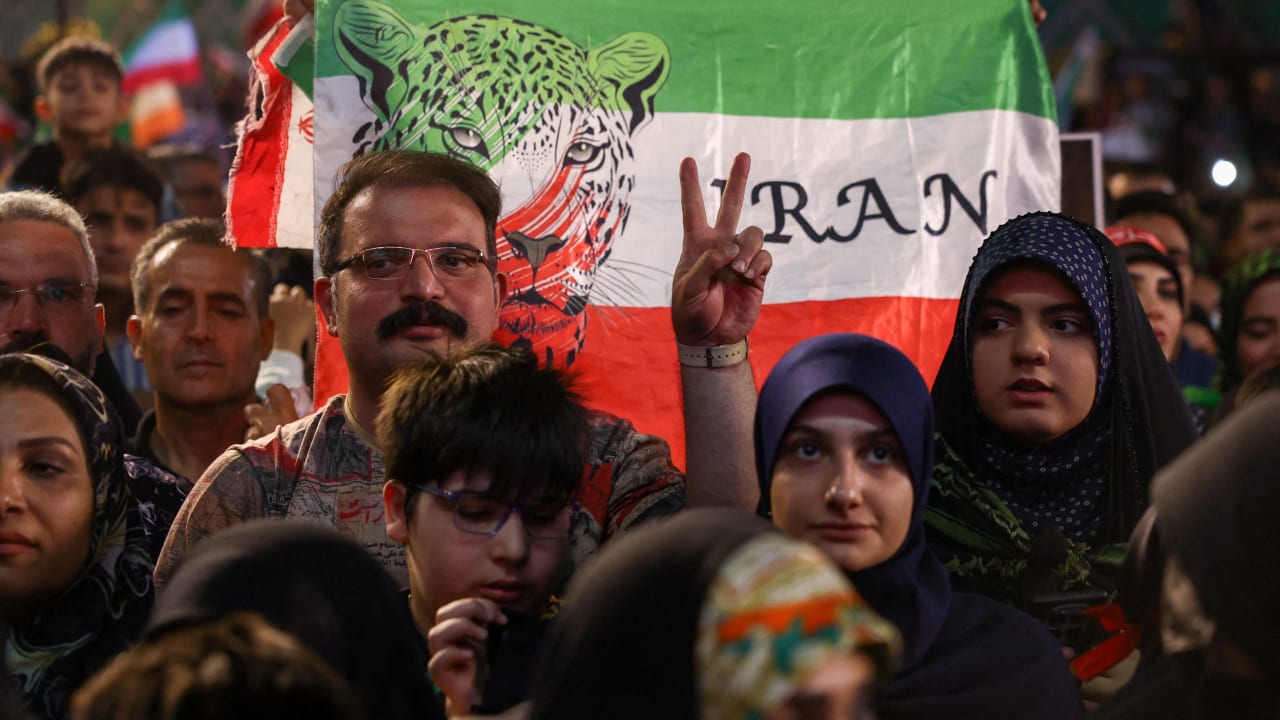
What is unfolding between millions of Iranians and FIFA’s recent decisions is not merely a dispute over symbols in sport. It reflects a deeper and longer-running conflict: a struggle over identity, memory, and the meaning of Iran itself.
At first glance, the issue raises administrative questions of flags, representation, and official recognition in international sport. But beneath the surface lies a far more profound reality.
For many Iranians, the flag of the Islamic Republic is not a neutral national emblem. It represents a political system that a significant portion of society associates with decades of repression, censorship, political imprisonment, and the systematic suppression of dissent.
The symbolism and experience of the state
International human rights organizations, including Human Rights Watch and Amnesty International, have repeatedly documented the use of lethal force against protesters and widespread violations during nationwide crackdowns, particularly since the 2022 protests.
From this perspective, the symbolism of the state is inseparable from experience. For millions, it is not simply a matter of political disagreement; it is a question of survival, memory, and trauma.

Under the flag of the Islamic Republic, many Iranians have paid an extraordinary human cost for expressing even basic demands: asking for civil rights, protesting compulsory laws, or speaking openly about political and social freedoms.
The violent suppression of protests in recent years, widely reported by international watchdogs, has deepened the sense that political expression can carry life-threatening consequences.
In this context, FIFA’s positioning has been interpreted by some Iranians as an implicit validation of a single, state-defined narrative of Iran. Whether intentional or not, such perceptions intensify an already existing divide over legitimacy and representation.
FIFA appears to have underestimated the depth of this rupture. The issue is no longer simply political disagreement between a government and its citizens. For Iranians, it is a profound civilizational and emotional fracture marked by distrust, grief, and competing narratives of national identity.
A generation has grown up not only under restricted civil liberties, but also with the feeling that their historical identity has been politically narrowed or overwritten. This has created a condition in which national symbolism is no longer shared but contested.
An identity struggle
As a result, reactions to FIFA’s decision have been deeply emotional and identity-driven. For many, the issue is not sport at all. It is whether an international institution is intentionally endorsing a narrative that defines Iran exclusively through the current state structure, rather than through its broader historical and civilizational continuity.
Over decades, the Islamic Republic has sought to redefine Iranian identity through an ideological framework. Yet for Iranians, this effort has not replaced historical identity; it has intensified a longing to reconnect with it.
Iran, in this sense, is far larger than any government. It is a civilization that has endured invasions, revolutions, and political transformations across millennia. Iranians believe that regimes come and go, but the cultural and historical idea of Iran persists beyond any single political order.
FIFA, in entering this symbolic space, has found itself in the middle of a far deeper conflict than sport or branding.
It is now entangled in one of the most sensitive identity struggles in the Middle East: Who has the authority to define a nation, the governing system associated with the violence that only a couple of months ago slaughtered over 40,000 unarmed civilians in just two days for demanding basic human rights, or the people of Iran who carry its memory?
For millions of Iranians, the answer is not abstract. It is a lived experience.
And it is why even a flag can become a fault line.
The writer is a journalist and former US-based Persian-language news editor and anchor who works in the legal field and writes on Iran’s political and social issues, including women’s rights and religious minorities, particularly the Baha’i community.