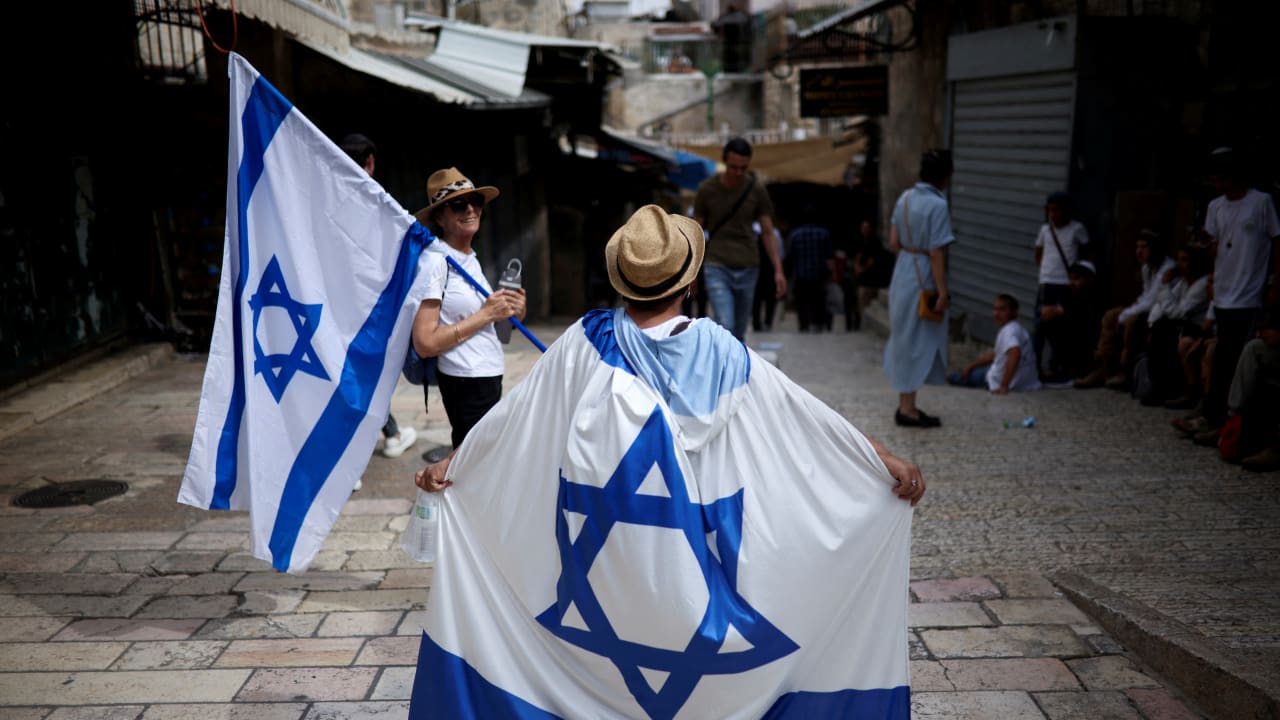
I remember 1967 the way you remember the moment everything changed. I was a young man in America, and when the news broke that Israeli paratroopers had reached the Western Wall – that Jerusalem, divided since 1948, was whole again – I felt something I could not quite name. Not relief. Not triumph. Something older. The sense that a people had reclaimed something that had been waiting for them.
For 2,000 years, Jews everywhere ended their Passover Seder with the same words: “Next year in Jerusalem.” A hope so ancient it had outlasted every empire that tried to extinguish it. On June 7, 1967, that prayer seemed, at last, to have been answered.
But here is what I have learned in the 59 years since: When an aspiration is realized, it stops being an aspiration and starts being a fact. And facts can be argued over, litigated, and turned into grievances. Jerusalem united became Jerusalem contested – not just by enemies outside but by competing visions within. This is what happens when dreams come true. The dream unites Polish Jews and Yemeni Jews and American Jews and Ethiopian Jews around a single longing. The day after, the arguments begin.
Decades after reunification
I do not say this to diminish 1967. The unification of Jerusalem was one of the great moments in Jewish history, achieved at extraordinary cost. The 55th Paratroopers Brigade – the reserve unit whose soldiers were first through the Lions’ Gate, whose commander Motta Gur radioed “The Temple Mount is in our hands” – was not a standing army. These were civilians who put on uniforms when their country needed them.
Fifty-nine years later, descendants of those same reservists put on uniforms again after October 7, 2023. They fought in Gaza. They fought in Lebanon. They operated in Syria. The spirit that carried those paratroopers through the Lions’ Gate carried their children and grandchildren through a war much longer than six days. That continuity is the answer to what Zionism actually is: not an event but a practice. Not a destination reached in 1948 or 1967 but a project renewed by every generation.
Which is why honesty requires something uncomfortable. “Next year in Jerusalem” is now, for most Jews, a statement of connection rather than longing. Jews can visit Jerusalem. Jews can live there. The Western Wall stands. The prayer seems answered.
The meaning of Jerusalem
But the deeper aspiration behind that prayer was never only about a city. It was about a world in which the Jewish people are safe – not just sovereign but secure. A world in which Israel is, as its founders believed it must be, a light unto the nations. On both measures, the work is unfinished. Jews are not safe in London, Amsterdam, Sydney, Detroit, or New York. And the aspiration to be not just powerful but good, not just victorious but just, is harder to fulfill in the middle of a war with no clean ending.
To the young Israelis who have carried this weight, I say: Your service was not just military. It was an act of national creation. Every generation has had to recreate Israel, not just defend it. You have done the defending. Now comes the building. Think what you can do to make our Jewish homeland a little better than it was before.
The question for Jerusalem Day 2026 is not whether Jerusalem is unified. It is what kind of Jerusalem it will be. What kind of Israel. What kind of Jewish future. Countries might be incepted on a certain date, but they are not built once. They are reimagined and recreated by every generation that chooses to take them on.
“Next year in Jerusalem” pointed toward a place while encapsulating an idea and a dream. That place exists. The paratroopers of 1967 gave it to us. What will we give to the generation after?
The author is a businessman and politically active philanthropist who was appointed by president George W. Bush to the US Commission for the Preservation of America’s Heritage Abroad and has been reappointed by every president since. More information about him is available on his website, harleylippman.com.