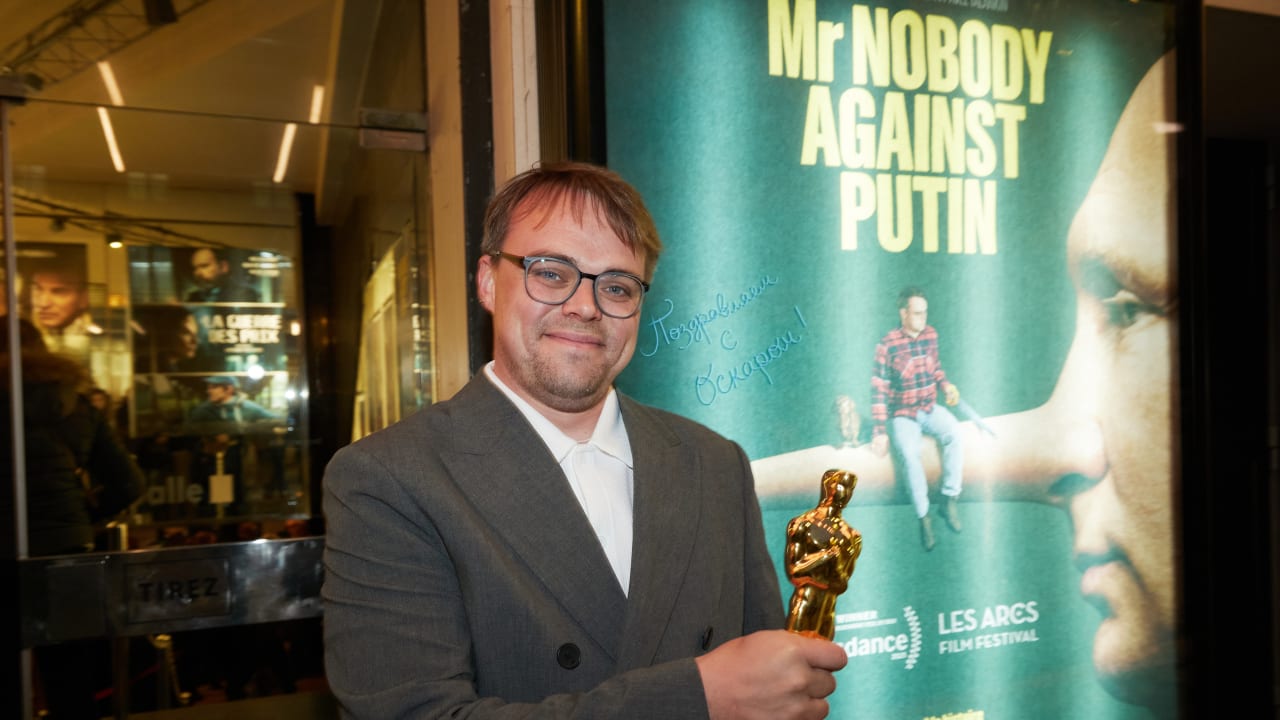
Audiences often have one standard idea of the realities of the Russia-Ukraine War on either side of the home front. In early 2022, pictures and videos of embattled Ukrainians at funerals or sleeping in subway stations made international headlines.
While some pictures and videos out of Russia were of street protests against the war in major cities like Moscow, many Western media outlets instead, showed footage of Russian troops tramping through fields or rolling into small Ukrainian towns.
Because of this, Mr. Nobody Against Putin might appear uneventful to a Western audience since it does not show the war in the way audiences have come to expect.
Instead, what we see is something far more unsettling.
We as news consumers might understand that there is passive agreement with Vladimir Putin’s war against Ukraine out of fear of prison, but that is an abstract concept that could be hard to grasp.

The headlines, again, correctly, do not focus on the quiet shifts and acceptances that everyday people make to comply with harsh government rules as they lose loved ones to war far from their homes.
The unsettling truth in Mr. Nobody Against Putin
Mr. Nobody Against Putin centers around Pasha Talankin, an ordinary man in his 30s from an unremarkable small Russian town, working as a teacher’s assistant and videographer at the school he grew up going to. His entire life is centered around this school, its students, and its staff.
His story is almost too simple, and could easily go unnoticed in the myriad of headlines about the Russia-Ukraine War. But this simplicity is exactly where the film’s power lies.
Talankin struggles with new Kremlin educational mandates at the start of the war that aim to teach the children the Russian government’s official perspective on the war. There is no room for dissent or alternative versions of the Kremlin’s recollection of current events. Students are made to memorize state propaganda, which they are later tested on.
Slowly, these lessons and after-school activities begin to take over his normal tasks. Instead of planning holiday festivities for the kids, he finds himself recording teachers reading out state-scripted lessons on the importance of the war to de-nazify and de-radicalize Ukraine. As the school’s videographer, it is his responsibility to upload this footage to a government website to prove that the school is giving the mandated lessons.
Talankin prides himself on providing students a safe place to be themselves, learn about the world, and express their ideas, but realizes that his ability to do so is rapidly shrinking. He is no longer an educator, he has become an unwilling propagandist.
The documentary captures something that many Russians themselves struggle to recognize because they have grown used to it. The behaviors, the language, the quiet adjustments of daily life under war conditions have become normalized. What is shocking to an outside viewer is, for many inside Russia, routine.
For non-Russian audiences, this film proves the indirect horrors of Europe’s bloodiest conflict since WWII: How war slowly infiltrates ordinary people’s everyday lives far from the frontlines. How the war has reshaped communities, relationships, and people’s outlook on the world without dramatic rupture. It’s now part of the background, a new normal.
This silent acceptance is at the heart of the documentary.
A peaceful small-town community gradually transforms into an extension of state propaganda - not through force alone, but through adaptation, repetition, and lack of resistance. People do not necessarily question what is happening. Many do not even realize the extent to which their environment has changed.
Here we arrive at one of the most frightening outcomes. You can avoid propaganda on television, online, or on the street - but you cannot stop going to school.
The film’s protagonist is the only figure who attempts to push back.
To someone unfamiliar with the reality in Russia, Talankin’s small forms of protest appear harmless. He plays the US national anthem sung by Lady Gaga instead of the Russian national anthem. He tells students that their teachers have been forced to tell them the contents of a scripted lesson. He even takes down pro-war window decorations at school and replaces them with a pro-Ukraine symbol.
Currently in Russia, even the smallest act of dissent against the war carries real risk.
Citizens can be imprisoned or threatened for a repost, a private conversation that gets reported to authorities, or publishing stories critical of the war.
As such, it becomes clear that Talankin is almost suicidaly brave. What may seem minor acts of dissent becomes a clear sign of quiet but undeniable courage.
Talankin’s most heartbreaking sequence is by far when he monologues to his camera about everything he loves about his country. The bitterly cold winters, the mazes of pipes from the smelly copper mills in his town, the people and their character.
With tears in his eyes, he admits that if he could, he would never leave Russia. But the love he feels for his homeland no longer appears congruent than the love he is mandated to feel.
“I might love Russia more than the regime supporters do,” Talankin says in the film. “I love my job, but I don’t want to be a pawn of the regime.”
“Love for your country is not about putting up a flag. It’s not about singing an anthem, either. It’s not about propaganda. It’s about saying ‘We have a problem.’”
As the film progresses, the atmosphere darkens.
Students leave for the front. Some do not return. Loss enters the community - a brother, a boyfriend, a son. At the same time, silence deepens. Propaganda intensifies. People begin to internalize and reproduce the system more actively - some out of fear, others out of patriotism, and some out of genuine belief. But for many, it is simply because there is no alternative.
This is where the film resonates differently for Russian and American viewers.
For American viewers, the film points out the dangers of letting militarization become a country’s identity.
Notably, Westerners are entirely unfamiliar with this type of an omnipresent government where it feels as if even your thoughts are monitored. We are blessedly unaware of the moral gumption it takes to film in the face of repression and dissolution of the home you thought you knew.
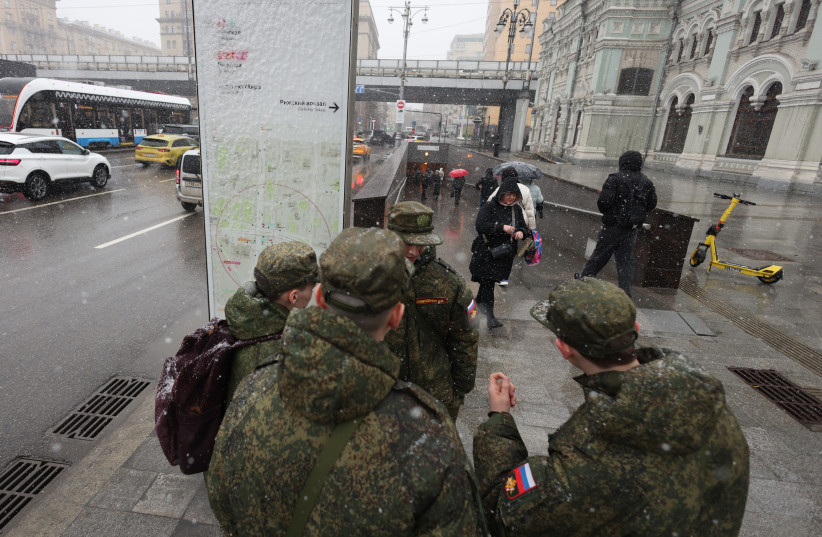
That being said, America, specifically, is now facing its own risks of having violence become central to its identity.
For example, the current US administration is trying to influence how we teach our children about war. The Trump administration’s executive order on "Ending Radical Indoctrination in K-12 Schooling” pushes schools to adopt the administration’s take on American history or risk budget cuts from federal agencies. It has since been followed by myriads of petitions or school board meetings around how parents can teach their children a glorified version of US history that ignores harsh truths about past wars.
Indeed, Trump himself has also joked about the US military “having fun” in the current war with Iran so much so that US veterans have accused the White House and the Pentagon of “memefying” it. He frequently uses messaging pushing people to be “strong warriors” for America, and waxes poetically about wars of yore.
This is obviously not the same as forcing school-aged kids to compete in hand-grenade throwing contests. But Talankin’s film shows the true decay society faces when militarization becomes a key part of a country’s identity.
For Russians, the importance of this film lies in how accurately it captures something often overlooked - the normalization of fear.
This is not a sudden transformation but a gradual process, where boundaries shift slowly until they disappear. What may seem alarming to an outside audience often does not provoke the same reaction inside Russia, not because people agree with it, but because they have adapted to it. When such realities persist long enough, they stop being questioned.
At the same time, the film highlights something equally important - the real cost of even minimal dissent. Actions that may appear insignificant from the outside carry genuine risk within Russia, which is essential to understanding the weight of the protagonist’s choices.
For us, this is not a revelation but a reflection. It is a reality that has been developing for years - a society where fear is internalized, where the state is both omnipresent and unpredictable, and where self-censorship becomes instinctive.
The parallels to Russia’s past are difficult to ignore.
Like in the era of Joseph Stalin, when people whispered in their own homes out of fear of repression, today’s reality in Russia increasingly echoes those patterns. The mechanisms may be modern, but the psychology is familiar.
That is precisely why this documentary matters.
Mr. Nobody Against Putin is not just a film - it is a record. A documentation of how war reshapes societies to make violence and civilian militarization normal. How propaganda becomes paramount to socialization, even at the expense of actual education.
And most importantly, how classrooms, conversations, and people’s personal lives are breeding grounds for
Mr. Nobody Against Putin does not rely on spectacle. It forces the viewer to confront something far more uncomfortable - the quiet transformation of ordinary people within an abnormal system.
Perhaps that is what some in Russia will struggle to fully see, because when abnormal reality becomes routine, it stops being questioned. And when it stops being questioned, it becomes almost invisible.
This film makes it visible again.
If Mr. Nobody Against Putin can serve as even a small step toward awareness, then its impact extends far beyond cinema.