Friday, February 27, 2026, was a holy day in Iran, the last day of rest for many weeks to come. The Strait of Hormuz was open, and tanker traffic was flowing freely in all directions. Oil was about $60 a barrel.
Back in Washington, it was a cool, cloudy late winter day. The price of gasoline was below $3 a gallon, inflation was falling, and the stock market was hitting record levels.
In Moscow, the economy was in deep trouble thanks to rising tariffs, dwindling trade, Western sanctions, the high cost of credit, shrinking production, falling revenues, and the high cost in rubles and lives of waging an endless war in Ukraine.
The United States and Israel went to war with Iran the next day. A tenuous ceasefire last week led to a day of unproductive negotiations and threats of more war. (Israel, opting to continue its war against Hezbollah in Lebanon, was excluded.)
“All of a sudden, the economic problems bedeviling Russia seem to evaporate,” Russian journalist Mikhail Zygar wrote in The New York Times, thanks mostly to the volatile, unpredictable leader in Washington.

The war of bombs and missiles has been accompanied by blasts of vulgarities and apocalyptic threats from
President Donald Trump if Iran doesn’t bend to his demands. Both sides are declaring historic victories, at least as they define the term. Both, of course, are wrong.
Iran’s definition is clear: the regime survived intact (even more hardline, more anti-American), the price of oil soared over $100 a barrel, they have a stranglehold on shipping by closing Hormuz, and the Great Satan didn’t get the “unconditional surrender” its leader demanded, but instead he agreed to talks.
The war is highly unpopular in the United States, which helps explain why Trump, faced with $4+ gasoline, rising inflation, shortages of fertilizer for spring planting, record low consumer confidence, and worried Republican candidates in November’s election, opted to chicken out of his threats to eradicate a “whole civilization.”
Russia benefiting from the US war with Iran
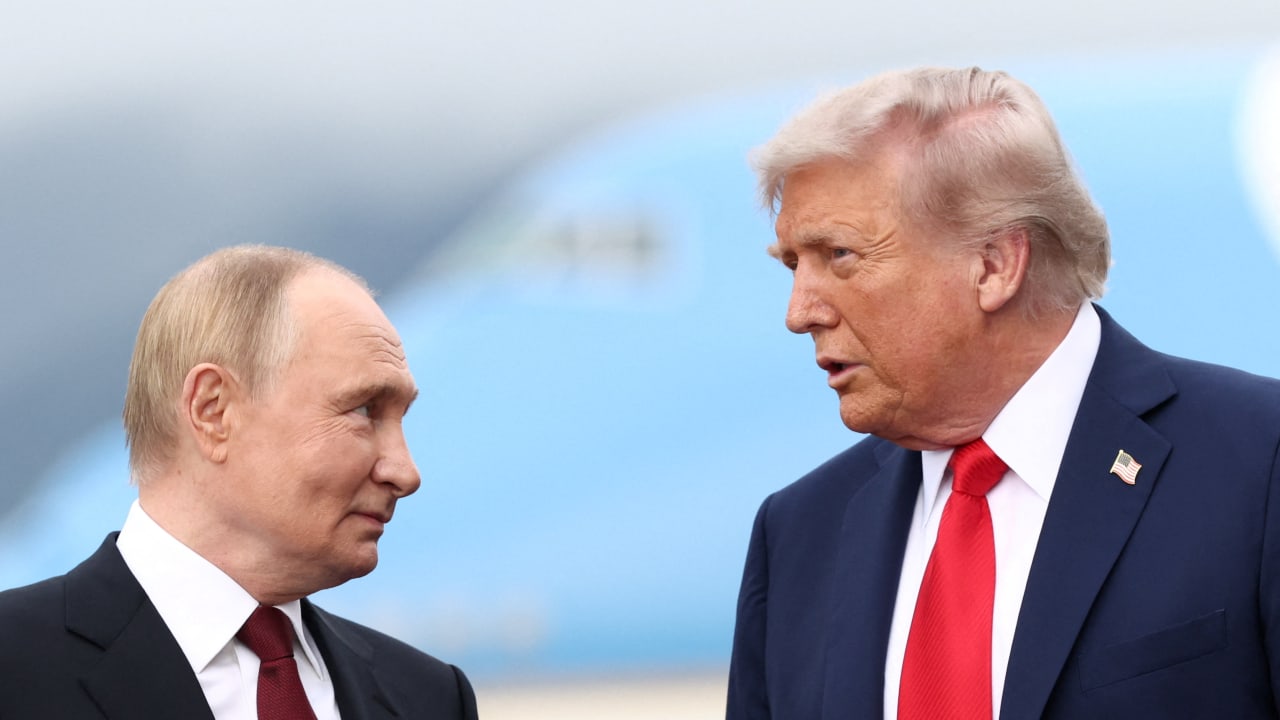
If there are any winners in such historic events, one may be Vladimir Putin, the man Trump has frequently called his “good friend.”
Russian and Soviet leaders, even the declared atheists, have long prayed for splitting America from Europe and the fracturing of the NATO alliance that won the Cold War and relegated the Soviet Union to history’s trash heap.
But now Trump may be doing that for them. He has perpetually – and falsely – accused NATO of not being there when America needed it and argued that it was unwilling to carry its own weight in Western defense.
Trump is threatening to remove some or all of the 80,000 American forces stationed in Europe, and withdraw from NATO, which he can’t do on his own, but – as he’s done with so many other constitutionally dubious actions – he may try. After threats to quit in his first term, Congress passed a law blocking the president from suspending or withdrawing without its approval.
As the chasm between Trump and NATO widens, so does Putin’s grin. And there’s more. Trump, fearing domestic backlash due to rising gas prices, suspended the sanctions on Russian oil.
Russia was getting $22 a barrel selling oil to India before the war; it quickly soared over $100. Trump’s war “rescued the Russian war economy,” said former CIA official Chip Usher.
Lifting sanctions has become a financial windfall that helps fuel Putin’s aggression in Ukraine. That includes buying more Iranian Shahed long-range drones. Oil isn’t all Putin is selling: he is providing Iran with satellite intelligence for killing Americans by targeting US warships, planes, and installations. He is also sending other assistance, and Russian contractors are providing training, weapons, and assorted services.
Jonah Goldberg writes that Trump’s decision to cut off most direct military aid to Ukraine while “lending rhetorical aid and comfort” to the Russians has led him to be dubbed Putin’s “peace envoy.”
Ukraine has been sharing with the United States and its Arab Gulf allies its experience in shooting down Iranian Shahed drones, the same kind that Russia has been firing at Ukraine.
With the world preoccupied with the Iran war, Russia has been free to pursue its war against Ukraine without any pressure for peace talks. Volodymyr Zelenskyy, that country’s president, has called for restoring full sanctions on Russia. Trump may not listen since he has a known preference for Putin and an aversion to the man from Kyiv, whom he has deemed insufficiently obsequious.
At a time when the Western alliance is threatened from within, America’s war of choice further strengthens the Russia-China-Iran alliance that will “shape the international order long after the last missile is fired,” writes Usher.
It’s not all good news for Putin. He and Trump, along with Israeli Prime Minister Benjamin Netanyahu, just lost their best friend in Europe, Viktor Orban. The autocratic Hungarian prime minister was defeated in a landslide despite US Vice President JD Vance spending two days campaigning in Budapest for the strongman and delivering Trump’s “full and complete endorsement.” Orban, with his emphasis on “illiberal Christian democracy,” has been a darling of the MAGA cult and the Conservative Political Action Committee (CPAC).
Trump and Putin share a desire to expand by conquest. The American president still wants to seize Greenland, annex Canada, control Venezuela, and Cuba is likely next.
Putin has his eyes on restoring the old Russian/Soviet empire, and Europe is nervous. Poland fears that if Russia succeeds in Ukraine, it will be next. A few years ago, I was in the Baltics, where I saw signs saying, “Visit us before Putin does.” It was no joke. A flight of NATO F-16’s flew low over Tallinn, Estonia, one afternoon, and people looked up and applauded.
They remember the Soviet Union and being its “captive nations.” They are free and democratic today and look to NATO to help them remain that way, the same NATO Trump seems determined to undermine.
Europeans increasingly see the United States as an unreliable ally, even a potential adversary, according to several surveys, and many view Trump as an unpredictable and vindictive danger, writes Serge Schmemann in The New York Times.
Trump may boast, “We are the most respected country anywhere in the world,” but the evidence says otherwise. A YouGov survey of European adults reveals a majority have a negative view of Trump, and the only leader more unpopular is Putin.
The writer is a Washington-based journalist, consultant, lobbyist, and former legislative director at the American Israel Public Affairs Committee.