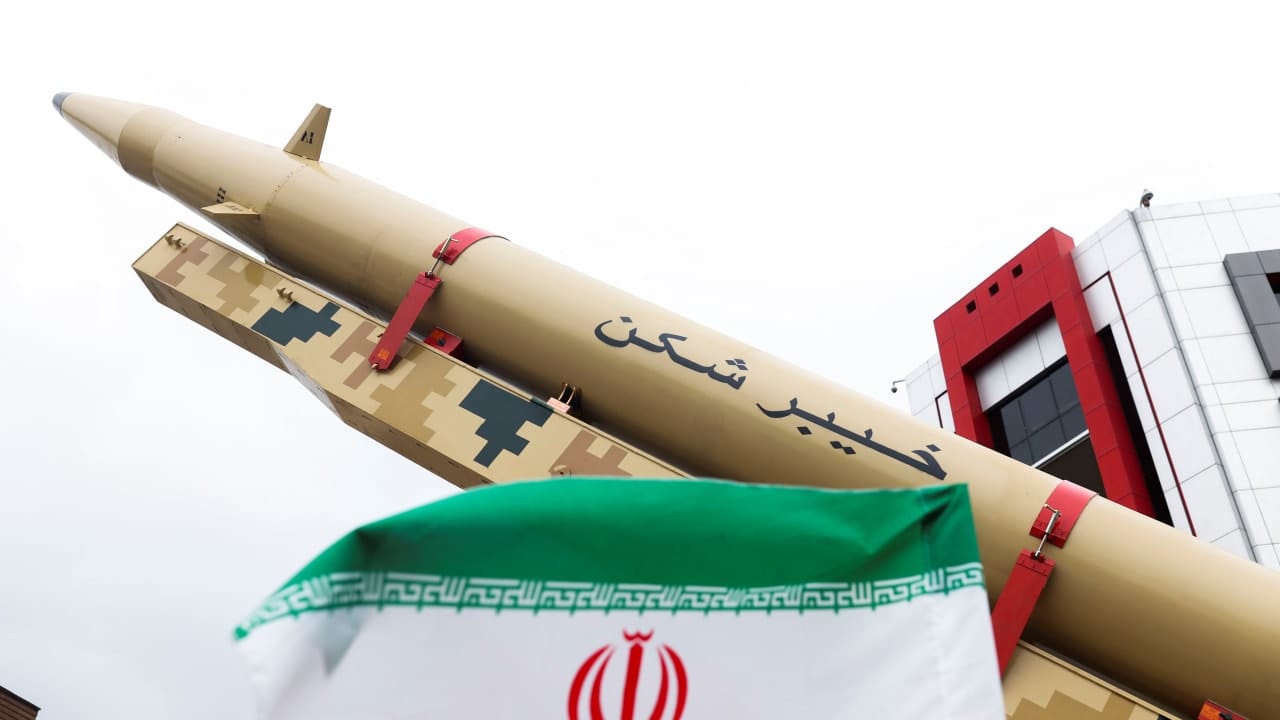
The recent operation to extract the F-15 pilot and the navigator is strategically significant. It suggests that a limited ground incursion into Iran, conducted under air cover and supported by rapid mobility, is conceivable amid political confusion within the regime and a disoriented military response.
The image of regime police firing pistols at American rescue helicopters captured their weakness starkly. It was not merely an embarrassing visual but illustrated a deeper reality: Much of the regime’s coercive presence is built on fear and symbolic control aimed at unarmed Iranians rather than battlefield competence. Against modern American and Israeli forces, regime elements cannot produce an organized defense.
Removing the uranium stockpile would eliminate the possibility of future nuclear ambitions or the construction of dirty bombs.
To minimize vulnerability and maximize operational success, the extraction operation becomes feasible only when the regime is also challenged from within. Crown Prince Reza Pahlavi, with demonstrated leadership capacity, could be the operational counterpart to a dual-track strategy: Arm Iranians to topple the Islamist regime in a nationwide uprising and extract the uranium.
Internal uprising changes the military equation
Urban warfare may be inevitable to topple the regime. The Islamic Revolutionary Guard Corps (IRGC) is already operating under severe strain after major blows from Washington and Jerusalem. That pressure has pushed the regime to rely increasingly on the Iraqi militia Hashd al-Shaabi, both as a hedge against a possible American and Israeli ground operation and as a force to suppress domestic unrest. In that environment, the decisive variables for urban conflict become organization, logistics, and the ability to sustain control.
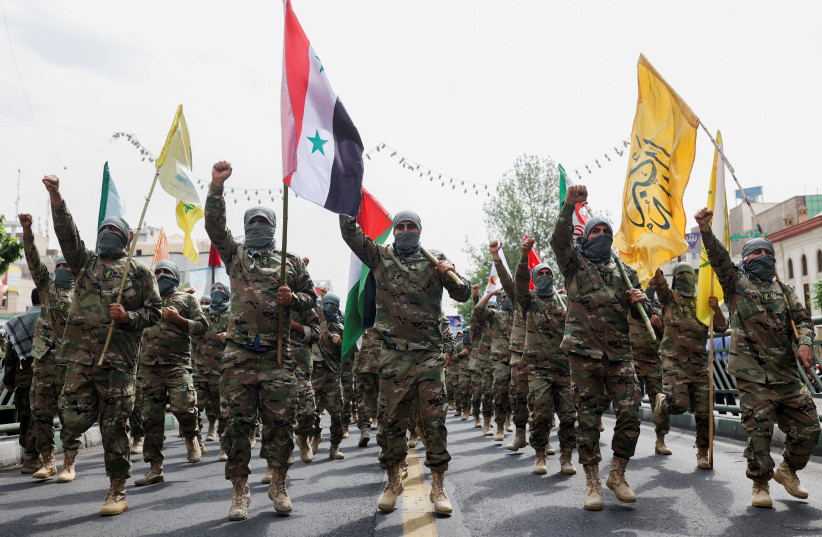
To tilt the balance decisively in favor of Iranians, Washington and Jerusalem should coordinate with Pahlavi on timing and support Iranians logistically – arming them and providing aerial and intelligence support so that when they take over the streets, they can defend themselves against regime remnants and the Iraqi militias.
An internal uprising is not secondary to a uranium-seizure mission. It is the condition that would make an otherwise extraordinarily difficult and unprecedented extraction operation viable. The deeper the regime is drawn into internal crisis, the less able it becomes to mount a coherent response to a targeted ground incursion.
At the same time, if American and Israeli forces were to move to extract the uranium stockpile – one of the regime’s last major strategic assets – the regime would be forced to redirect its attention away from domestic unrest and toward protecting that material. In effect, it would face a choice between two simultaneous existential pressures.
The first liberated city
The first city liberated from regime control would have significance far beyond its local geography. It would become the headquarters of the national opposition.
Pahlavi has stated that as soon as the first Iranian city is liberated, he would go to Iran to lead his compatriots from within Iranian borders. This is a rare capacity, similar to that of Charles de Gaulle.
The value of that arrangement lies in its organizational and psychological aspects. It would show that the regime no longer controls all urban space. It would signal to fence-sitters and power-brokers that there is a geography associated with the national opposition, and the regime’s days are numbered.
An Iranian command center operating from liberated territory is a tipping point for defections: there would be a geographic location to defect to, and from there, to fight the regime with advisors from Washington and Jerusalem and their military support.
Timing and logistics in the dual-track strategy
Success, therefore, would depend on the precise sequencing of the dual-track operation. In advance of H-hour, Washington and Jerusalem would have to pre-position arms and logistics for Pahlavi-aligned networks and current army (Artesh) defectors inside Iran.
At the designated moment, Pahlavi would issue the nationwide call for mobilization while American and Israeli special forces, operating under air cover and rapid mobility, simultaneously supported the swift liberation of a strategically vital urban center – such as a major city in Khuzestan.
Once secured, this first liberated city would become the national opposition headquarters, enabling Pahlavi to return and lead the internal uprising from Iranian soil.
The resulting nationwide uprising would force the regime to split its already strained forces between suppressing the uprising and defending strategic assets. At that point, part of American and Israeli forces would pivot from the initial support mission to execute the targeted extraction and removal of Iran’s uranium stockpile, operating against a divided and overwhelmed adversary.
This dual-track strategy follows classic principles of joint unconventional warfare and rapid decisive action.
American and Israeli special operations forces would operate in small, high-mobility teams under persistent air supremacy, providing precision close air support, real-time intelligence, and targeted disruption of regime command nodes and Hashd al-Shaabi reinforcements. The doctrinal priority is to isolate, enable, and transition, cutting external lines of reinforcement.

The embedded American and Israeli liaison and training advisory cell would remain with Pahlavi’s command in the liberated urban city to coordinate ongoing air cover, intelligence, and logistics – via a temporary joint US and Israeli base and airstrip inside Iran to support both the uprising and the uranium extraction – while the bulk of forces and necessary assets pivot to extract the uranium stockpile.
The iron rule of the economy of force is to achieve maximum effect with minimum exposure. Washington and Jerusalem would advance regime change and the extraction of the uranium simultaneously, maximizing the success of both operations.
Circumventing the Kurdish militias
This is a national-scale approach that deliberately avoids reliance on peripheral actors such as Kurdish militias, who do not offer a country-wide solution for Iran. Their relationship with the Islamic Republic has often been mixed, shaped mostly by tactical coexistence and bargaining, portraying them as opportunistic collaborators. That history makes them a weak foundation for a nationwide uprising and the subsequent Iranian boots on the ground.
Geography is also decisive. Iran is too large for Kurdish militias to project power deep into its territory or stabilize a post-regime order. A strategy built around them would substitute a peripheral actor for a national actor, increasing the risk of fragmentation – which is why the focus must remain on the Pahlavi opposition and its proven leadership capacity.
The convergence leads to success
The strategic objective is not an isolated uranium operation but the alignment of coercive pressure with internal uprising. On its own, such a mission would be riskier, harder to sustain, and less likely to produce the desired outcome. However, in combination with an internal uprising, uranium extraction becomes feasible.
That convergence is the core strategic logic: Washington and Jerusalem extract the uranium in the safest and most efficient manner possible, while the broader campaign creates the conditions for regime collapse and the subsequent durable post-regime order inside of Iran.
Siavash Gholami holds a PhD in international relations from Queen’s University. Farbod Kamali holds a Juris Doctorate from Queen’s University. David Teffaine is the director of the Israel Economic Mission to Canada. The views expressed are their own.