The war that erupted on February 28, 2026, between the United States, Israel, and the Islamic Republic of Iran has entered a phase that is less about immediate military outcomes and more about the internal transformation of the Iranian state. Much of the public debate in the West has focused on whether the regime can survive sustained military pressure. Yet what is unfolding inside Iran suggests a more complex reality.
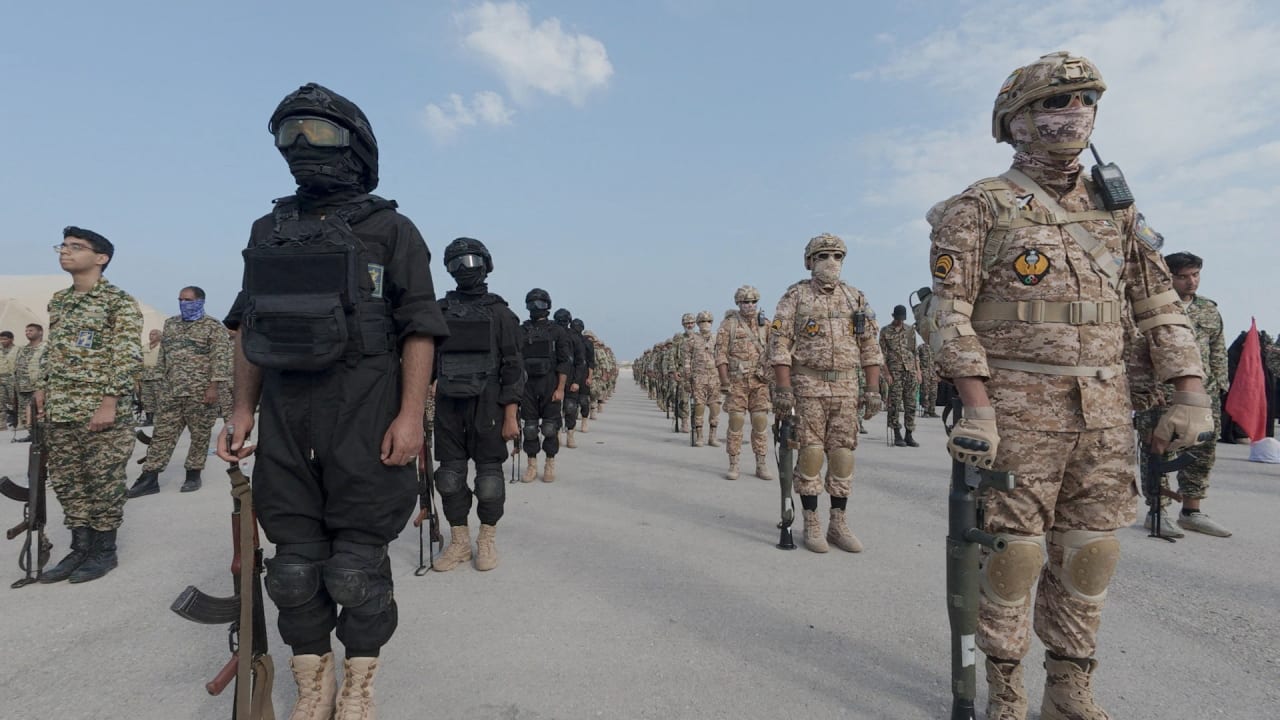
Rather than collapsing, the Islamic Republic appears to be undergoing a structural shift. Power is gradually concentrating in the hands of a hardened security elite composed of Revolutionary Guard commanders, intelligence officials, and security institutions that now dominate the political system. What is emerging is not simply a clerical regime under pressure, but something closer to a clerical-military junta.
At the same time, the internal environment of Iran is becoming increasingly unstable. The first visible indicator is that Iran today is experiencing a form of internal disarray, where signs of security and military fragmentation are increasingly apparent. The elimination of several senior commanders, repeated strikes on key operational nodes, and disruptions to command-and-control infrastructure have weakened the coherence of the regime’s security architecture.
Iran’s system was designed with layers of redundancy. Parallel intelligence organizations, overlapping security bodies, and decentralized command structures were intended to ensure survival under pressure. Yet redundancy cannot fully compensate for the loss of experienced commanders and the damage to key operational facilities. As a result, coordination has become slower and less predictable, increasing the risk of miscalculation and operational confusion.
These disruptions are occurring at a time when the regime is becoming more dependent than ever on coercion. Iran’s leadership does not view the war primarily through the lens of diplomacy or strategic compromise. Instead, it is interpreting the conflict as an opportunity to reinforce domestic control.

The second emerging reality is that the security elite within the regime appears determined to prolong the conflict, because war provides a powerful justification to eliminate internal opposition under accusations of collaboration with Israel or the United States.
Authoritarian systems historically use external conflict as a mechanism to suppress dissent. In Iran, the accusation of “cooperation with foreign enemies” has long served as a tool for silencing critics. Under wartime conditions, that accusation becomes even more potent. Political dissidents, civil society activists, journalists, and reform-minded figures can all be targeted under the broad pretext of national security.
The ideological rigidity of the Iranian regime
The ideological nature of the regime further complicates the possibility of de-escalation. A third defining feature of the current moment is the ideological rigidity of the regime itself – a leadership driven by apocalyptic beliefs, ideological absolutism, and a profound unwillingness to relinquish power, even if the price is the continued destruction of the country. The Islamic Republic’s ideological worldview interprets confrontation with external enemies not merely as geopolitical competition but as part of a historical and religious struggle.
This perspective fundamentally shapes the regime’s strategic calculations. Economic collapse, international isolation, and domestic dissatisfaction are treated as secondary concerns compared with the preservation of ideological authority and political control.
The propaganda machinery of the state plays a critical role in maintaining this narrative. Iranian state media, religious institutions, and official communication networks are simultaneously advancing contradictory messages designed to shape public perception.
A fourth dynamic now visible in Iran is that the regime’s propaganda apparatus is simultaneously amplifying two narratives: calls for “peace” and opposition to war, while also portraying the conflict as a heroic resistance against Israel and the United States.
This dual messaging strategy serves multiple audiences. For domestic consumption, the regime attempts to present itself as both a victim of aggression and a resilient force standing against foreign powers. For international audiences, the “anti-war” messaging seeks to exploit divisions in Western political discourse.
Yet beneath this messaging campaign lies a deeper strategic objective. The Islamic Republic’s leadership is acutely aware that the regional balance of power has shifted dramatically.
A fifth strategic reality is that the regime has no intention of allowing Iran to transform from a radical revolutionary state into a cooperative partner aligned with the United States or Israel.
For the ideological core of the Islamic Republic, such a transformation would represent not merely a political adjustment but an existential defeat. The regime’s identity has been built around resistance to Western influence and hostility toward Israel. Accepting a new regional order that includes normalization with these actors would undermine the ideological foundations of the system.
Recent military developments have further complicated the regime’s internal dynamics. Israeli and American operations targeting Iranian military infrastructure have demonstrated a level of intelligence penetration and operational precision that has shocked the leadership in Tehran.
Intensified domestic repression
The sixth reality emerging from this conflict is that the regime has experienced a profound sense of humiliation at the hands of Israeli and American military capabilities, and this humiliation is increasingly being redirected inward toward the Iranian population.
Historically, authoritarian regimes that experience external humiliation often compensate by intensifying domestic repression. The Iranian leadership understands that it cannot retaliate symmetrically against superior military power without risking catastrophic escalation. Instead, it seeks to reassert authority internally through intimidation and coercion.
Meanwhile, the economic consequences of prolonged confrontation are becoming impossible to ignore. Years of sanctions, mismanagement, corruption and military expenditure had already weakened Iran’s economic foundations before the current conflict began.
The seventh and perhaps most consequential reality is that Iran’s economy is approaching a state of systemic collapse, and large segments of the population understand that if this war does not ultimately lead to fundamental political change, the sacrifices and risks undertaken by Israel and the United States may prove strategically meaningless.
Many Iranians are acutely aware of the stakes involved. If international pressure eventually subsides without structural transformation inside Iran, the regime will almost certainly declare victory. The narrative of having “defeated” the United States and Israel would be broadcast across state media as proof of ideological legitimacy.
Such a declaration would not reflect military reality, but propaganda victories often matter more than battlefield outcomes in authoritarian systems.
For this reason, the current conflict must be understood not simply as a regional military confrontation but as a critical phase in the evolution of the Iranian regime itself.
The evolution of the Islamic Republic
The Islamic Republic that emerged from the 1979 revolution was originally structured as a hybrid system combining clerical authority with republican institutions. Over time, the balance shifted toward the security apparatus. Today, that shift appears to be reaching its final stage.
The clerical leadership still occupies the symbolic apex of the system, but real operational authority is increasingly concentrated within the networks of the Revolutionary Guard, intelligence services, and security institutions that dominate Iran’s political landscape.
In effect, the Islamic Republic is evolving into a system where clerical legitimacy and military enforcement coexist, but the balance between them is steadily tilting toward coercive power.
The war that began in February 2026 may therefore be remembered as the moment when the internal character of the Iranian state fundamentally changed.
Rather than collapsing, the regime is hardening. Rather than moderating, it is militarizing.
And rather than seeking reconciliation with the international community, it is preparing for a prolonged confrontation in which survival – not reform – remains the ultimate objective.
The writer is a Middle East political analyst. His latest book, Tehran’s Dictator, examines the theocratic era of Ali Khamenei (1989-2026). @EQFard