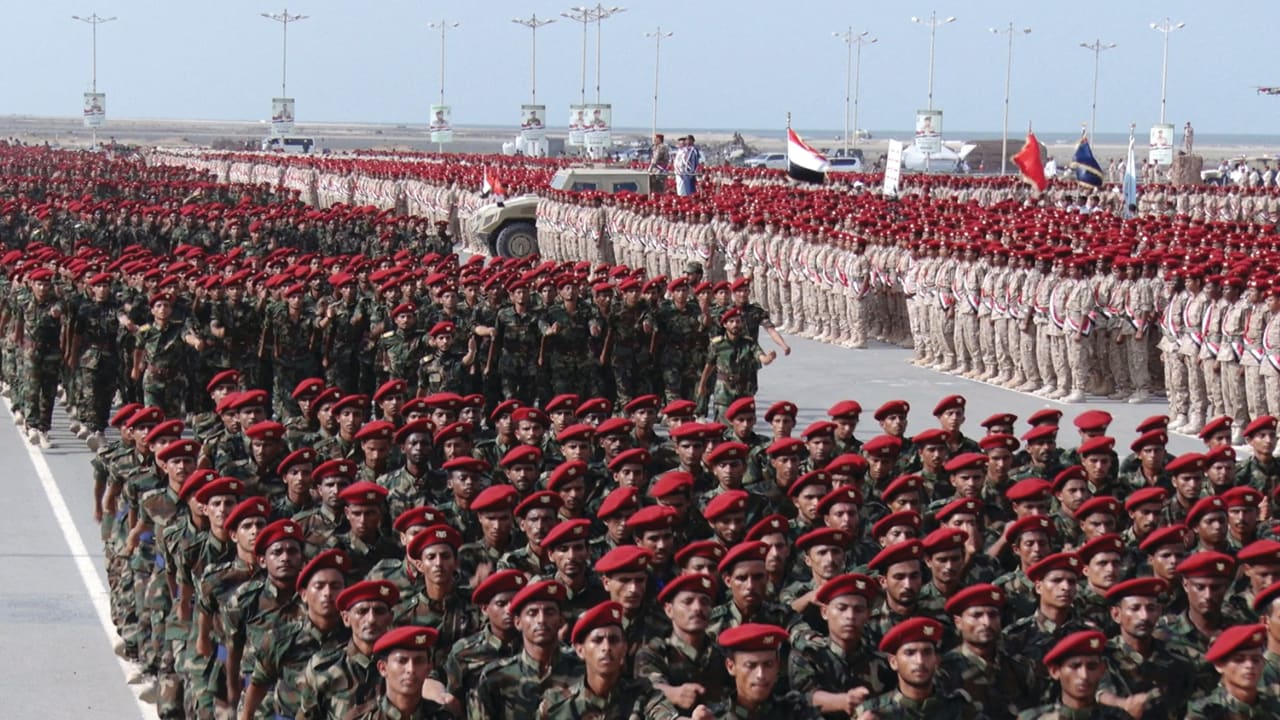
The Houthis’ decision to launch a missile at Israel for the first time since the war with Iran began is a clear, deliberate, and strategic signal. If the conflict intensifies, the Houthis are unlikely to remain on the sidelines; they could escalate further, including threatening to close the Bab al-Mandab Strait.
Despite US President Donald Trump extending his deadline for striking Iranian power infrastructure by several days, the United States is deploying additional forces while Israel targets strategic assets – all aimed at pressuring Tehran to reopen the Strait of Hormuz and ease its grip on global energy routes.
Iran, in turn, has responded with escalatory strikes against US positions in the Gulf, including a missile and drone attack on military bases and infrastructure. At the same time, Tehran appears to be bringing the Houthis into the conflict to widen the battlefield and threaten the Bab al-Mandab Strait.
The threat of the Houthis
Despite strong rhetoric and public alignment with Iran, the Houthis have so far exercised strategic restraint – likely in coordination with Tehran. Iran has effectively held them in reserve, ready to deploy when needed. With Islamic Revolutionary Guard Corps personnel present in Yemen, the Houthis operate not independently, but as part of Iran’s broader regional strategy.
The Houthis have already demonstrated their ability to disrupt the strait. Over two years of US strikes failed to fully deter them, contributing to a May 2025 truce that ensured safer passage for US vessels while leaving Israel to contend with the threat.
Since October 2023, the Houthis have targeted Israeli-linked maritime traffic in the Bab al-Mandab corridor, contributing to the closure of Israel’s southern port at Eilat and launching sustained attacks on shipping and critical infrastructure, including Ben-Gurion Airport. These operations have strained Israel’s missile defense systems and only paused following the Gaza ceasefire.
The Houthis have repeatedly struck Saudi cities and energy infrastructure. After nearly a decade of sustained military pressure, Saudi Arabia ultimately moved toward negotiations, culminating in a UN-brokered truce in 2023. However, the Houthis have continued to threaten further attacks while accusing Riyadh of advancing an “American-Israeli” agenda in the region.
By deploying the Houthis as a pressure lever, Iran opens a new and highly sensitive front. The Bab al-Mandab Strait is already a critical global choke point; disrupting it would directly impact international trade and energy flows – already under strain. At the same time, Houthi attacks on Gulf states, particularly Saudi Arabia, could add another layer of pressure on Washington.
Such actions would also further strain the US, Israel, and the Gulf, which already have burdened missile defense systems. In combination with disruptions in both the Bab al-Mandab and the Strait of Hormuz, Iran could attempt to leverage this pressure to shape the trajectory of the conflict in its favor.
The risks of Iran's strategy
Yet this strategy carries significant risks. Iran has benefited from divisions within the Western alliance – but escalation at Bab al-Mandab could have the opposite effect. Disrupting both maritime choke points would not only pressure the United States but also directly impact Europe, intensifying economic and energy concerns.
Opening the Houthi front may increase Iran’s short-term leverage, but it also raises the likelihood of broader international involvement. Rather than deepening divisions, such a move could unify Western and allied actors into a more coordinated response.
Washington’s allies have already shown reluctance to fully align militarily. Several European countries, along with Japan and South Korea, have avoided direct participation in operations to reopen the Strait of Hormuz, emphasizing instead the need for a ceasefire and a diplomatic resolution.
At the same time, the Houthis themselves face strategic risks. The rivalry between Saudi Arabia and the United Arab Emirates – along with Riyadh’s increasing tolerance – has created conditions that may allow the Houthis to consolidate long-term control over much of Yemen.
However, a major confrontation with the United States, Israel, and Gulf states could trigger significant retaliation against their leadership and infrastructure, potentially undermining these gains and straining their evolving relationship with Saudi Arabia.
Leveraging the Houthis for pressure may offer Iran additional leverage over Washington, but it also risks unifying the United States and Europe, ending Saudi restraint, and exposing the Houthis to greater vulnerability. If Iran overplays its hand, Washington could emerge as the strategic beneficiary.
The central question is whether bringing the Houthis more directly into the conflict will help Iran secure a favorable outcome – or whether it will trigger the very scenario Tehran seeks to avoid: a broader, more unified, and more determined coalition.
In attempting to manage escalation, Iran may instead be setting the stage for a far larger confrontation.
The writer is an expert from the Hebrew University of Jerusalem on geopolitical and security dynamics in the Horn of Africa.