
Just like that, an issue that generated a trillion words on television panels, billions more in print, and countless headaches has disappeared.
No, not the Iranian nuclear threat or its ballistic-missile program. Those still remain, although very much degraded.
What has suddenly – and happily – disappeared is the highly contentious haredi (ultra-Orthodox) draft exemption bill. And the reason it has disappeared is the Iran War. On Tuesday, Prime Minister Benjamin Netanyahu, who had been pushing the bill to keep the haredi parties in his coalition despite the anger it stirred across much of the country, unceremoniously said it would be shelved.
For months, the legislation hung heavy over Israeli politics. The haredi parties threatened that if the bill – which would legalize a situation in which the vast majority of haredim would not need to serve in the military – did not pass before the state budget, they would vote the budget down. That would effectively bring down the government.
Under Israeli law, if a budget is not passed by March 31, the government falls, triggering elections.
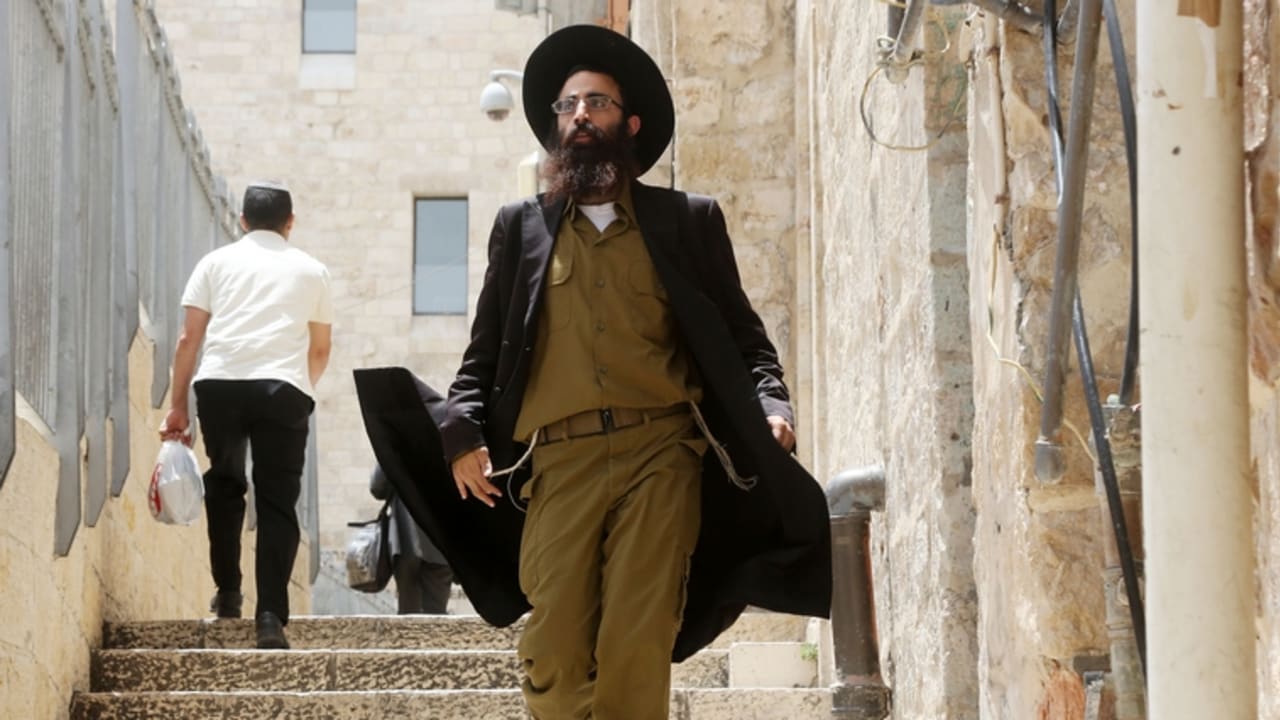
Therefore, the political stakes were enormous. But the regional stakes suddenly became even larger.
Netanyahu and Finance Minister Bezalel Smotrich this week said because of the enormous cost of Operation Roaring Lion – Israel’s campaign against Iran – an updated state budget must be passed, including billions of shekels in additional funding for the Defense Ministry.
Passing the budget would enable Israel to “win the war, provide better service to Israeli citizens in many areas, and establish a new regional order in the Middle East,” Smotrich said.
Sidelining the draft exemption law
To do that, however, something had to give, and that something was the draft exemption law.
The government is “setting aside the draft law, which will not be advanced at this time, along with several reforms for which we have not yet reached broad agreement,” Smotrich said.
Among them is Smotrich’s controversial milk reform, which also had been tied to the budget.
Both the draft law and the milk reform had become flash points of domestic friction. War is a time for unity and national responsibility, Smotrich said.
In other words, the political luxury of pushing through divisive legislation has evaporated.
Critics argue that even as the draft law is shelved, the government continues to fund coalition interests – including the haredi sector – to the tune of roughly NIS 5 billion, much of it earmarked for yeshivot.
But that figure exists largely on paper. The courts have already frozen much of the funding for haredi schools from last year’s budget, pending a new draft law.
As things stand now, the legal framework remains unchanged: With no new legislation in place, all 18-year-old Jewish males, including haredim, are subject to conscription under the Security Service Law, with criminal penalties theoretically applicable to non-compliers and funding cuts enforceable against yeshivot, even if enforcement has been uneven.
Political limbo
That legal and political limbo cannot continue indefinitely. But shelving the legislation now was clearly the correct decision.
At a time when tens of thousands of reservists are once again being called up – or as they and their families live on edge, wondering when their next call-up notice will arrive – advancing legislation now that would grant sweeping exemptions to haredim would have been unconscionable.
After 78 years, the issue of haredi military service unquestionably needs to be addressed and regulated. But pushing through a law that entrenches inequality in the middle of a war would have been the worst possible way to do it.
By postponing the legislation, the government has effectively kicked the issue down the road into the next government’s court. And that may ultimately prove beneficial.
Had the war with Iran not broken out, the legislation might very well have passed – or at least come very close. Its shelving had less to do with opposition pressure – although opposition leaders were quick to take credit – and far more to do with the wartime reality the country now faces.
Operation Roaring Lion may not yet have brought about regime change in Iran, but it already has swept aside one piece of legislation that would have enshrined into law a profound inequality within Israeli society. That already is one positive ripple effect being felt far beyond the battlefield.