
This week we celebrated Purim - a holiday that reminds us of the strength and power that women have: the ability to learn, develop, change and bring about significant impact.
Megillat Esther, read on Purim eve and Purim morning, is not just a beautiful story but also a call to the future - in our case, the near future. The election year reminds us that the time has come for a “venahafochu” (reversal of roles).
When Mordechai orders Esther to enter King Achashverosh’s contest to become his wife, Esther doesn’t want the mission. She is a young woman, a little anxious and very frightened. But she has no choice - the event is bigger than she is.
At one of the high points of the Megillah, Mordechai orders Esther to go before the king and plead for her people. She trembles with fear, perhaps even cries, and replies that anyone who approaches the king without being summoned will be put to death. But Mordechai does not relent and threatens her. His words are powerful and harsh: “Do not imagine in your heart that you will escape in the king’s house any more than all the other Jews. For if you remain silent at this time, deliverance and salvation for the Jews will arise from another place - but you and your father’s house will perish.” Esther accepts her fate, prepares for what seems like a suicidal mission, and in that moment - when she fears for her life - strength she did not know break through her. Esther puts on royal garments, goes to the king, and the rest is known: Haman and his sons are hanged, Mordechai and Esther are honored, and the Jewish people (once again) are saved from near-certain death.
Who would have thought that this gentle woman would save the Jewish people - and that she would do all of it equipped with wisdom, a smile, fancy clothes and neat makeup? These are her only “weapons,” and she used them with great success.
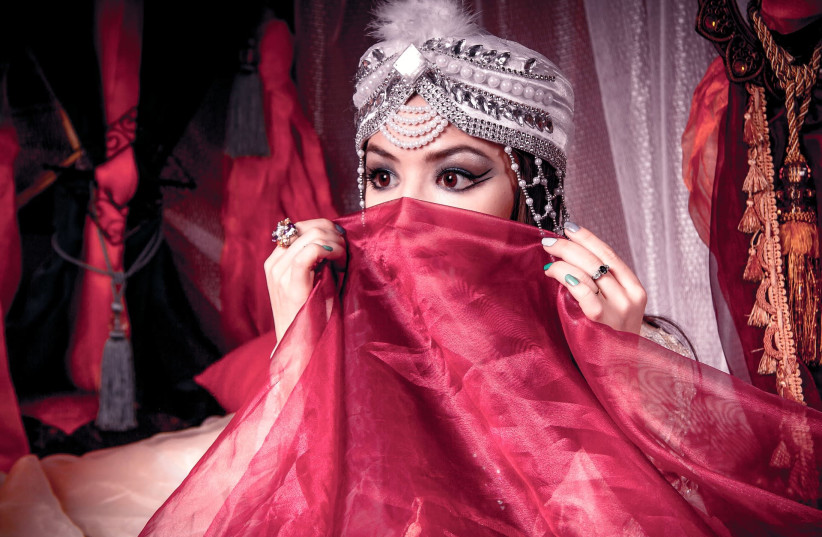
Purim reminds us that there are many ways to manage a situation. You can go into battle, talk, threaten, or - as leaders often do both here and around the world - sit and wait for the problem to solve itself. Unlike men, women throughout history often had to demonstrate far greater versatility in order to advance policy and succeed. Esther saved the people with a glamorous banquet; Yael defeated Sisera with cunning; Deborah led the nation with sharpness and blessing; Golda (Meir) founded “the kitchen cabinet.”
That’s precisely why, despite living in an era of equality and opportunities, it is still painful to discover that today, women are still not equally seated at the decision-making tables.
The gender gap in Israel
In March 2025, the Israel Innovation Authority published a report on the state of senior women in Israeli tech. The data shows that only one in six senior executives in Israeli tech companies is a woman, and only 10% of startups are run by women.
And let it be said - this is not due to lack of talent or ability. Consistent research shows that companies led by women deliver higher returns to investors. This absence is the result of structural and educational barriers that must be recognized and fixed.
Still, fewer girls than boys complete advanced math and physics in high school. Fewer women go into technological academic tracks, and some - once they enter influence networks - discover that established connections (“old boys’ clubs”) tilt in favor of men.
Purim reminds us of the strength and power that women have: the ability to learn, develop and change while moving forward and to bring about significant change. The Megillah is not just a lovely tale but also a call to the future.
We are in an election year, and this is a good time for a dramatic turning point - to include excellent and professional women on every list, in the first five and ten spots, from the beginning and not merely through quotas. Just as Mordechai knew that Esther was the “X-factor” in the struggle to save the Jewish people, so today as well, integrating women into senior roles is both an economic and strategic necessity.
It’s time for venahafochu.
The writer is the chair of Emunah - the National Religious Women's Movement in Israel.