
Every Israeli knows what it is like to run to the bomb shelter, sprinting upon hearing the sirens, waiting to hear the booms overhead, and praying everyone is alright. We knew it well last June, and we know it well only two days into Operation Roaring Lion.
When Iran launched its ballistic missile campaign during the 12 Day War last June, the country was not completely ready. Some 28 Israelis were killed, and thousands were wounded. More than 13,000 homes were damaged from 36 direct hits, and salvos of 200 or more missiles in a single day overwhelmed a population that had been dealing with Hezbollah and Hamas on and off for years.
The lessons of those 12 days were dear, and IDF Home Front Command took them seriously.
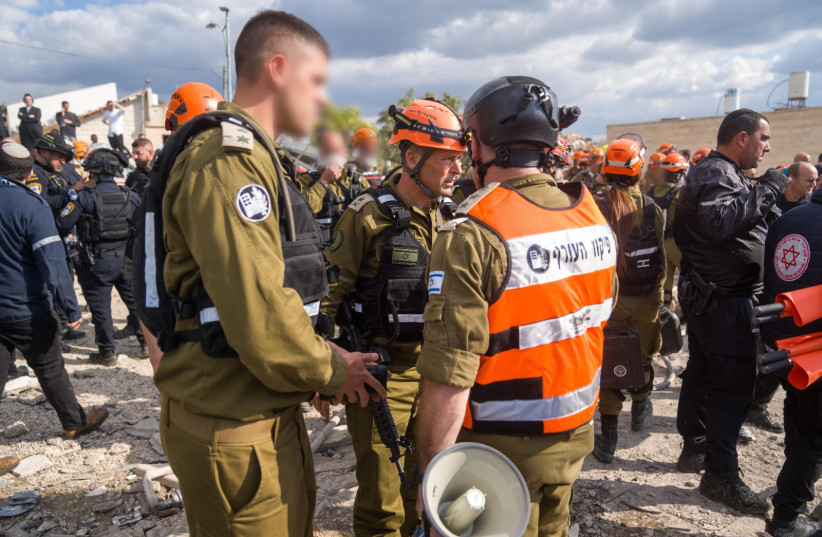
So far, Israelis in general are coping much better this time. Casualties were minimal until Sunday afternoon, when an Iranian ballistic missile killed nine people and wounded at least 20, including several children, in the Beit Shemesh area – the worst attack of the war so far.
The difference between this war and the last one is that Israel has gotten considerably better at absorbing punishment.
Israel's defense systems and protocols
Home Front Command now issues a general warning 10 to 20 minutes before a threat, followed by a siren roughly 90 seconds before impact. That window, small as it sounds, is the difference between being in the open and being behind reinforced concrete, which could save your life. It is also noticeable in bomb shelters up and down the country that those who once left after a few minutes now firmly wait until the all clear.
According to the IDF, the early warning system is functioning exactly as it was designed to.
Israel also has more rescue teams deployed across more of the country, ready to respond to large impacts.
Iran is still firing, and estimates that the war will go on longer than a few days mean we will continue along this path.
Tehran’s missiles this time have included cluster munitions, which spread across a wider area but with potentially less destructive force than conventional warheads. They remain dangerous, however, particularly the fragments from intercepted missiles, which Home Front Command has specifically warned civilians to avoid.
Most launches have come from western Iran, and Israel has not yet managed to push those firing lines eastward the way they eventually did in June 2025, when the greater distance helped to lessen Iran’s accuracy and reduced its capacity for sustained salvos. The IDF is working toward that outcome now and remains hopeful it can be achieved in the days ahead – something Prime Minister Benjamin Netanyahu promised on Sunday evening.
He dramatically stood atop the Kiyra military headquarters in Tel Aviv and declared that Israel “will intensify its attacks against Iran in the coming days.”
In the meantime, the country continues with its wartime arrangements. Schools and businesses are closed. Air travel in and out of Israel is suspended for further days, with the situation under daily review. These are the human costs that Israelis have become used to paying, and, as usual, they try to hold things together as best they can.
Maj.-Gen. Shai Kleper, who took charge of the home front in July 2025, inherited a system already shaken by war and made it more resilient, and his work is starting to show.
The National Search and Rescue Unit of Home Front Command rescued three civilians on Sunday who had been trapped beneath the rubble in an Iranian missile impact site in central Israel.
“The troops acted swiftly to rescue trapped individuals and continue to operate to save lives. Complex days lie ahead. Your mission – reach the scene quickly and save lives,” Kleper stated at the scene.
The war will still have testing days ahead, especially if the regime reaches its death throes and fires everything left in its arsenal at Israel. But Jerusalem enters this fight with lessons learned, a patient population, and a command structure that has already been tested under fire, which gives us hope that Beit Shemesh’s tragedy will be the worst of the war.