Many Iranians, as well as regional and international actors, strongly desire to see the clerical regime in Tehran fall.
Since mid-December, its brutal campaign has reportedly claimed tens of thousands of lives, while Tehran continues to expand its ballistic capabilities and empower Shi’ite extremist proxies across the Middle East, directly threatening Israel and American interests.
Yet, despite mounting internal discontent and external pressure, the regime remains entrenched. One central reason is the fragmentation and weakness of the Iranian opposition, both inside and outside the country. Why is the opposition so divided, and what would it take to overcome this most serious obstacle to meaningful change?
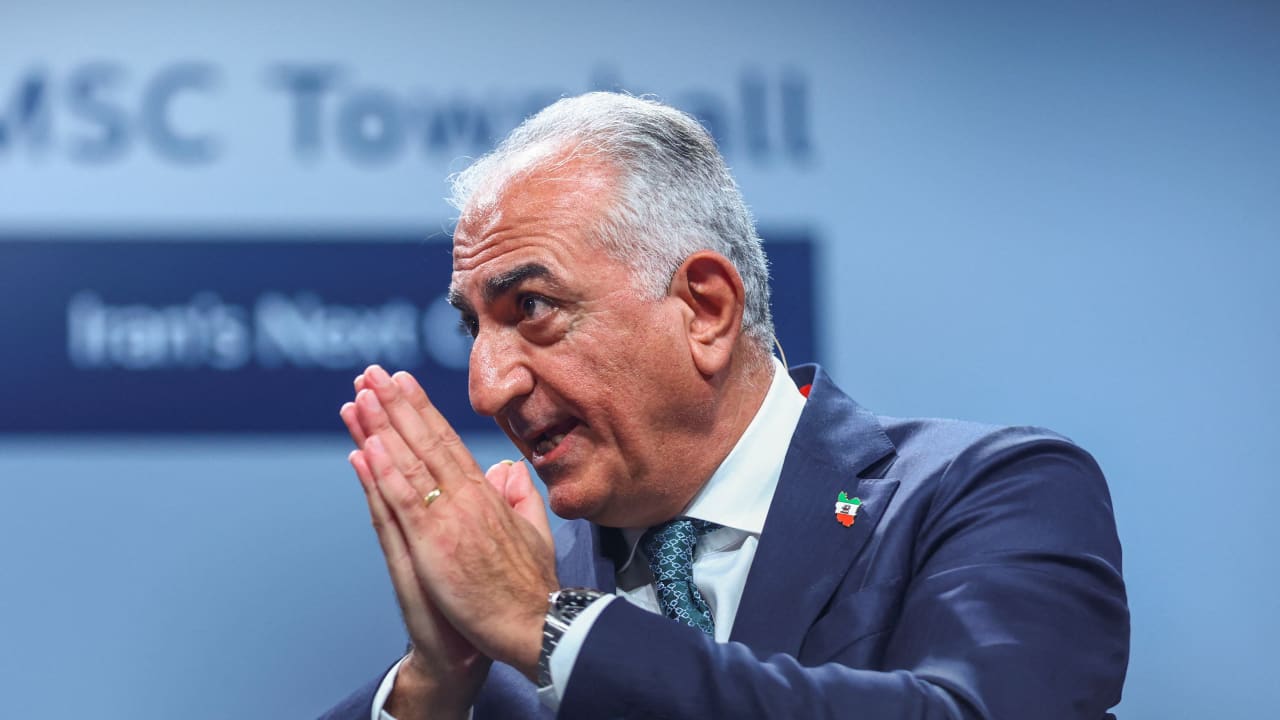
A significant factor is the polarizing role of Reza Pahlavi, son of the late Shah Mohammad Reza Pahlavi. Rather than bridging divides among Iran’s diverse political and ethnic constituencies, his rhetoric has often deepened them.
A recent message he shared on X, regarding the formation of a Kurdish alliance made up of five parties, labeled armed Kurdish opposition forces as “separatist groups” that merely claim to pursue a democratic and decentralized Iran.
However, his message highlights a more significant issue. For many Kurds, his language does not signal national unity but rather echoes the centralizing and repressive policies historically associated with the Pahlavi dynasty. For the Kurdish population, this history is not personal but collective, embedded in collective memory through decades of repression, denial of self-determination, and violent state intervention.

Two episodes in particular continue to resonate with this history associated with the Pahlavi dynasty, namely the assassination of Kurdish leader Simko Shikak in 1930 under Reza Shah and the execution of Qazi Muhammad in 1947 during Mohammad Reza Pahlavi’s rule.
Shikak led uprisings in pursuit of Kurdish self-determination and was assassinated in what many Kurds view as a calculated act to eliminate Kurdish political mobilization. Less than two decades later, Qazi Muhammad, president of the short-lived Kurdistan Republic of Mahabad, was executed after Iranian forces reasserted central control.
With their deaths, Kurdish political movements suffered devastating setbacks. These were not marginal events but symbolized a decisive confrontation between Kurdish aspirations and a centralizing, authoritarian state of the Pahlavi dynasty.
Distrust of Pahlavi leadership comes from historical experience
The legacies of these episodes continue to shape Kurdish attitudes toward the centralized authority proposed by Reza Pahlavi. Distrust of any revival of Pahlavi leadership is not simply ideological but stems from lived historical experience that demonstrated the cost of dissent and the fragility of Kurdish political achievements.
For many Kurds, centralizing nationalism is not a neutral principle but a threat to political, cultural, and linguistic rights. This historical memory profoundly shapes contemporary skepticism toward Reza Pahlavi. Kurdish actors do not evaluate him solely on his current rhetoric. Instead, they interpret his positions through the lens of a century marked by the suppression of autonomy.
They ask difficult but essential questions about whether a post-clerical Iran under his leadership would institutionalize genuine protections for Kurdish political participation, allow meaningful cultural and linguistic expression, and recognize federalism or other forms of decentralized governance as legitimate frameworks within a unified Iran. The absence of clear and credible guarantees fuels unease. Without institutional commitments to decentralization and minority rights, promises of unity can appear hollow.
These concerns also affect the broader dynamics of opposition politics. By promoting a centralized nationalist vision, Pahlavi risks alienating key constituencies whose participation is essential for any successful transition. Kurdish parties, reformist factions, civil society activists, and minority groups cannot be treated as peripheral actors. Yet, Kurdish forces are frequently labeled “separatists” or accused of serving foreign interests, narratives long advanced by regimes in Tehran, Ankara, Damascus, and Baghdad to delegitimize their demands for basic human rights and political self-determination rights in the form of federalism.
Most Kurdish factions, however, explicitly support a democratic and federal Iran rather than secession. Their proposals focus on constitutional safeguards, decentralization, and equal citizenship within existing borders.
Dismissing or mischaracterizing such positions further serves to undermine trustful cooperation between opposition groups. In this context, expectations that Pahlavi could serve as a unifying national figure are met with high skepticism in Kurdish circles. For them, unity cannot be built on rhetoric that appears to replicate historical patterns of exclusion.
These implications extend beyond Iran’s borders. Israel, the United States, and European countries have a strategic interest in a stable and democratic post-Mullah Iran. However, international support for opposition figures may require careful calibration. Support for leaders perceived as inattentive to the cultural and political rights of minoritized communities risks undermining the very stability, pluralism, and peaceful coexistence that external actors claim to champion.
Legitimacy in a future Iran cannot rest on dynastic association or personal charisma but needs to be constructed through institutional design, such as constitutional recognition of minority rights, political decentralization, protection of linguistic freedoms, and mechanisms ensuring meaningful participation in national decision-making.
For Kurds, proposals such as federal arrangements or strong local governance structures are not radical demands.
They are confidence-building measures necessary to overcome decades of mistrust. Without such mechanisms, appeals to national unity will struggle to gain traction.
The experiences of Shikak and Muhammad function as enduring reminders of the consequences of centralized authoritarian rule. Kurdish caution toward Pahlavi is therefore less a rejection of opposition politics than a demand for credible safeguards against repetition of past injustices.
An opposition movement aiming to overthrow one of the region’s most oppressive regimes cannot afford fragmentation. Representing all of Iran’s communities, including Persians, Kurds, Baluchis, Azeris, Arabs, and others, could convincingly demonstrate a viable alternative to clerical rule. Such an inclusive model might be more than a slogan and embedded in political commitments that address the justified worries and aspirations of minoritized populations.
Ultimately, the debate surrounding Pahlavi’s potential role highlights a crucial lesson: political change cannot ignore history. Any serious effort to build a democratic, unified, and inclusive Iran might confront the legacies of centralization and repression that continue to shape minoritized perceptions.
For Iran’s estimated 10 million Kurds, skepticism is rooted in this experience. Overcoming it will require more than calls for regime change.: It will require a concrete vision of governance that guarantees autonomy, participation, and equal rights within a shared national framework. Without such assurances, divisions within the opposition will persist, and the clerical regime will continue to exploit them.
The author is a research fellow in the Department of International Relations at the Hebrew University of Jerusalem. x: @dagweysi