
In Israel, we are trained from childhood to understand what “home front” means. Where is the safe room? How many seconds do I have to reach it? Are we following Home Front Command instructions during a missile alert?
For decades, that definition was sufficient. The home front was the civilian rear. The battlefront was elsewhere – across borders, in distant terrain. That distinction no longer exists.
In modern Israel, there is no meaningful separation between home front and battlefront. They have merged – physically, psychologically, and digitally.
Yet while we are nearly 90% laser-focused on “what’s next with Iran,” we may be losing sight of a quieter, deliberately engineered threat: well-financed incitement campaigns – inside the Green Line and outside it – designed to trigger unrest, disruption, and even terror from within.
Iran may be our primary strategic adversary. But it is not our only front.
The collapse of the rear-area illusion
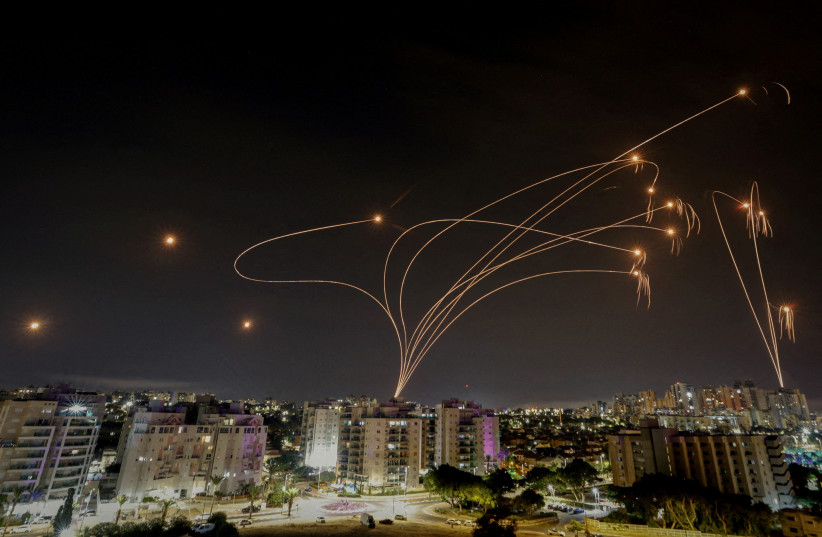
In classical warfare, the home front supported the war effort. It was protected and shielded. Today, the home front is the battlefield. Missiles can reach Tel Aviv as easily as they reach military bases. Social media can inflame Haifa as quickly as it inflames Jenin. Viral footage can destabilize Lod faster than any armored column.
In a recent conversation with a senior security professional, he summarized the asymmetry bluntly: “We’re playing checkers. They’re playing chess.”
He was not referring to tanks. He was describing narrative warfare. While Israel prepares for ballistic missiles and drones, adversaries prepare for perception manipulation, emotional escalation, and societal fracture. They understand something we are only beginning to internalize: If you destabilize the home front psychologically, you increase your chances of weakening it militarily.
Iran: The central threat – and strategic distraction
Let us be clear: Iran remains the dominant strategic challenge facing Israel. Its missile arsenal, proxies, and ambitions demand constant vigilance. Our military focus on Iran is justified.
But strategic maturity requires managing multiple fronts simultaneously. When national bandwidth narrows around one threat, other actors test internal seams. External actors do not need to launch rockets to generate instability.
They can weaponize narrative, exploit grievance, and ignite friction points inside Israel itself.
And there are moments in the calendar when those seams are historically more vulnerable.
The Ramadan risk factor
Ramadan, while sacred and spiritual for Muslims worldwide, has historically coincided with heightened tensions in Israel and Judea and Samaria. Not because of religion itself but because of converging strategic dynamics.
Five recurring factors increase volatility:
1. Elevated religious sensitivity: Jerusalem becomes a focal point of intense symbolism. Rumors or perceived provocations around holy sites – especially the Temple Mount/al-Aqsa – spread rapidly.
2. Mass gatherings and mobility. Large nightly prayers and concentrated gatherings create friction points and mobilization opportunities.
3. Amplified incitement narratives: Digital messaging often frames events as “defense of al-Aqsa,” a powerful emotional trigger.
4. Heightened identity solidarity: Ramadan strengthens communal cohesion, making confrontation easier to frame as collective obligation.
5. Historical precedent of escalation: From knife attack waves to mixed-city unrest, Ramadan has often acted as a multiplier – not initiating violence but amplifying existing tensions.
This is not inevitability; it is a risk assessment. And risk compounds when layered atop external strategic pressure.
The incitement infrastructure
Modern destabilization is scalable. Funding moves through intermediaries, informal financial networks, and cryptocurrency. Attribution is blurred. Distribution is the multiplier.
“Heavy use of Telegram,” the security official explained. “A lot.”
The mechanism is simple: A confrontation occurs, a local individual films it, and the footage is uploaded immediately – raw, unfiltered. Within minutes it spreads across aligned digital networks, and authenticity – or the appearance of it – becomes the weapon.
In economically strained environments, even small incentives can mobilize participation. “If someone is offered $50 or $100 to join a protest, that could mean food for his household.” Micro-payments produce micro-mobilizations. Micro-mobilizations scale into macro-disruption. The Green Line is not a firewall against narrative contagion. A destabilization campaign does not require majority support. It requires ignition points.
A perfect storm environment
Now consider the broader strategic picture. Iran remains in confrontation with Israel. Hamas finds itself strategically cornered – militarily degraded, under scrutiny, and facing renewed political pressure and calls for disarmament. When an organization’s back is against the wall, escalation – or encouraging unrest elsewhere – becomes a familiar tactic.
Add to that heightened Ramadan sensitivities, persistent digital incitement ecosystems, economic frustration in parts of Judea and Samaria, a global media environment primed for viral imagery, and Israeli strategic focus overwhelmingly fixed on Iran, and you end up with the definition of a perfect storm. Not because violence is guaranteed but because multiple destabilizing variables are aligned simultaneously.
The narrow definition of home front security
For years, Israeli home front messaging has centered on physical survival: Know your safe room, follow siren instructions, prepare emergency kits.
All are essential, but they are incomplete.
What happens when coordinated online calls for unrest target mixed cities? What happens when selectively edited clips circulate before facts are verified? What happens when simultaneous flashpoints stretch internal security forces while national attention is fixed outward?
The Iron Dome intercepts rockets. What intercepts rage?
Checkers, not chess
Checkers is reactive and linear. Chess is anticipatory and strategic. Israel’s military doctrine is sophisticated. Its kinetic capabilities are world-class. But in the cognitive arena, we often respond rather than preempt. We rebut, clarify, and defend. Our adversaries provoke, amplify, and frame.
They invest in emotional velocity, while we invest in procedural precision. Both matter, but one spreads faster.
Redefining home front doctrine
Modern home front security must expand beyond reinforced concrete. It must include a national cognitive defense strategy, rapid-response digital counter-incitement capabilities, media literacy resilience education, transparent exposure of foreign funding channels, coordinated messaging across security and civic leadership, and community engagement inside mixed cities.
Psychological resilience is not soft power; it is hard security. A society trained to recognize manipulation is harder to destabilize.
Prepared or surprised
Iran may fire missiles. Others may fire narratives. Ramadan may raise sensitivities, and Hamas may seek leverage.
If we are prepared for this storm – militarily and cognitively – we will succeed. If we are taken by surprise, we will pay the costs.
The home front is no longer behind the lines. It is the line. And in this era, resilience is not only about reaching the safe room. It is about ensuring that when the storm arrives – physical or psychological – the nation remains steady, unified, and strategically awake.
The author is an experienced global strategist for the public and private sectors. globalstrategist2020@gmail.com.