
Vice President JD Vance marked International Holocaust Remembrance Day on January 27 with a message honoring “millions of lives lost,” yet he did not mention Jews or Nazis.
At a time when global antisemitism is at an all-time high, omitting these two simple words is more than just a small oversight. It weakens the very purpose of the day, and given the current split and rise of antisemitism within the Right in America, it is worrying that the omission came from the vice president.
What happened is simple. The vice president posted a solemn remembrance, invoked “never again,” and paired it with commemorative imagery. But he avoided naming the Jews as the targeted victims and the Nazis as the perpetrators. Other senior officials, in contrast, referenced Jews and antisemitism directly. The omission sparked backlash online from X/Twitter users, senior Jewish figures, and even op-eds in this very paper.
The Holocaust was the state-sponsored extermination of the Jewish people by Nazi Germany and its collaborators. Saying only that “millions died” blurs the ideology, the motive, and the intended target.
Precision is not an exercise in pedantry. It is how democratic societies transmit facts to younger generations, defend truth from denial and distortion, and ensure that “never again” is anchored in what actually happened. By simply noting that people died without making a minimal effort to note these specifics, one can neither understand the circumstances that led to it nor recognize similar patterns in the future.
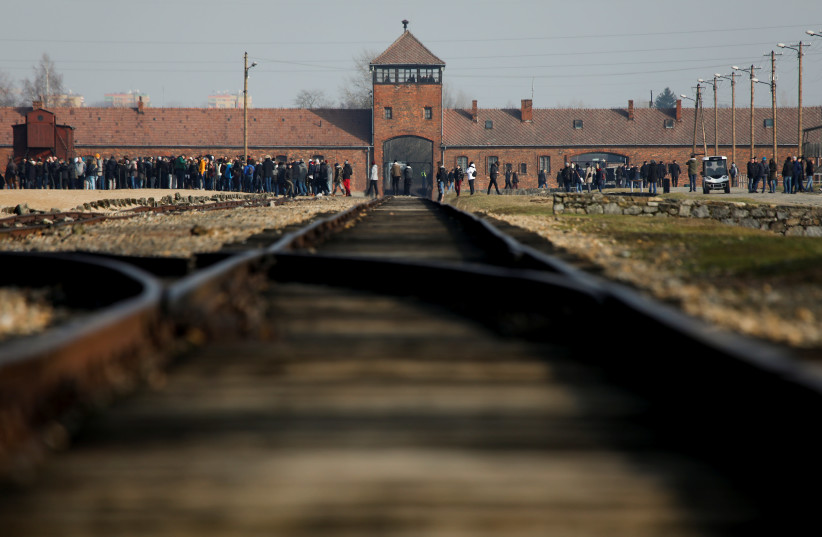
Specificity does not exclude other victims of Nazi persecution. It protects the record so that broader truths can be drawn honestly. Naming Jews and Nazis preserves both the identity of the victims and of the perpetrators.
When leaders speak plainly, they deny oxygen to minimizers and make it harder for bad-faith actors to launder ambiguity into doubt. As the aging population of Holocaust survivors reduces each year and firsthand accounts will soon not be an option, it becomes that much more important to tell the whole truth.
This isn’t a uniquely JD Vance issue, nor a Republican issue. The Jerusalem Post has made it a standard to point out these incidents as they arise on the Left and also among other news outlets. This year, the BBC also failed to say the word “Jews” during a broadcast on the day, instead saying “six million people” died.
Vance’s post was certainly not intended to be malicious, and he pledged responsibility to continue to participate in acts of remembrance. Those points deserve mention. But the minimum standard on January 27 is uncomplicated: Name the victims and name the perpetrators. Precision costs nothing, and it pays dividends in public education, communal trust, and historical integrity.
Context matters, especially now. On the American Right, there is a widening split over rhetoric about the Jews and Israel and antisemitism in general. Influential figures like Candace Owens, Tucker Carlson, and Nick Fuentes have trafficked in conspiratorial content or treated antisemitic tropes as provocation or satire, and their content is becoming more and more popular.
Now, this obviously doesn’t represent the entirety of the Right in America, nor even half of it. But this is precisely why clarity from the top is so important.
Understanding of the Holocaust is even a crucial part of current events in America as this column is being published. As protests have sparked across Minnesota over the activity of Immigration and Customs Enforcement agents and their activity in the area, Gov. Tim Walz likened some children hiding from agents to Anne Frank.
A vice president’s words help set norms for the rest of the Republican Party, which flow into school curricula, civic ceremonies, and general discourse. When the statement on International Holocaust Remembrance Day omits Jews and Nazis, it inadvertently licenses the idea that specificity is optional. It is not. The essential lesson of the day depends on it, and those who would distort history depend on its absence.
Leadership in a tense climate demands more, not less, precision. The plain sentence that should have been said is the sentence that must be said now: Six million Jews were murdered by Nazi Germany because of antisemitism. From that fact flows the universal obligation to resist hatred, defend minorities, and teach the truth without fear.