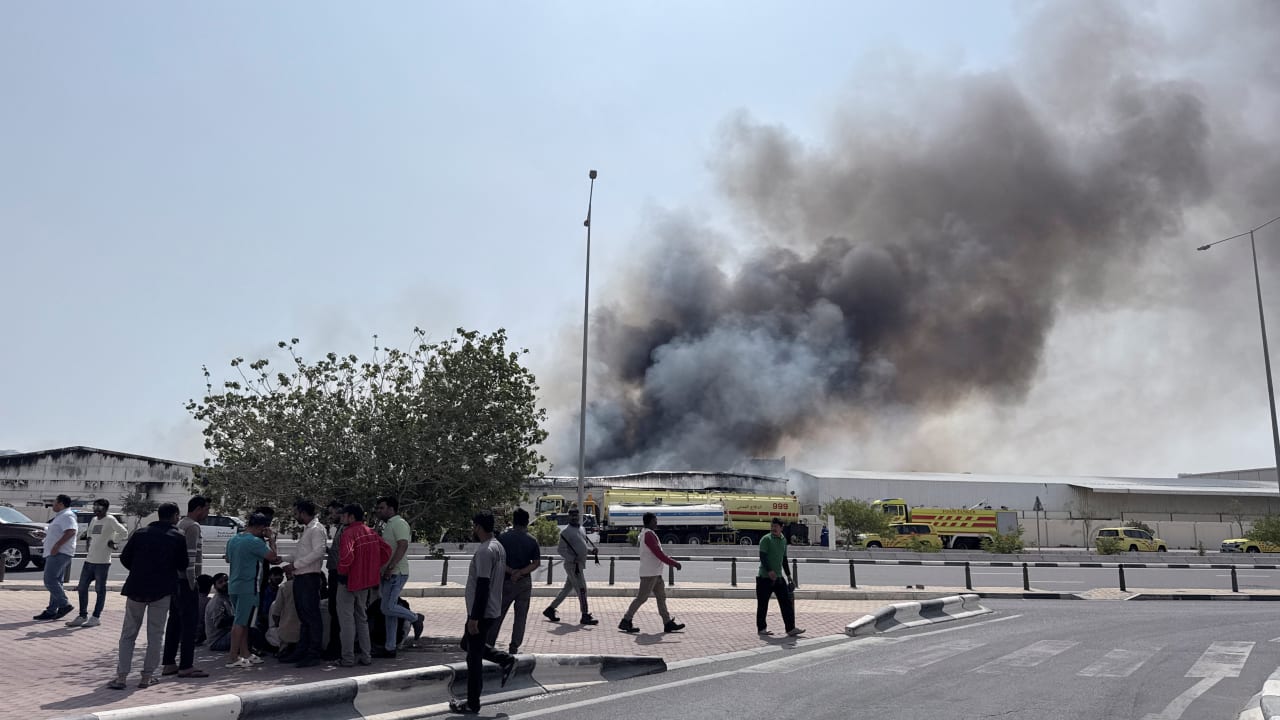
The temporary ceasefire announced earlier this month between the United States, Israel, and Iran may have halted active firing, but for Qatar, the war left deep scars.
An extensive report by the New York Times revealed that the Gulf state suffered fatal blows to its economy and is in a state of "strategic shock."
During the conflict, Qatar faced no fewer than 700 Iranian missile and drone attacks targeting US bases on its territory. Although its air defense systems intercepted most of the threats and no civilian casualties were reported, the impact on the local economy was devastating.
The local tourism industry collapsed completely, Qatar Airways planes were grounded, and many foreign residents fled the country.
The hardest hit of all was felt by the Qatari energy industry. The state-owned energy company was forced to shut down liquefied natural gas production at its main site, Ras Laffan, as it became clear at the beginning of the war that it was impossible to safely export goods through the Strait of Hormuz. In mid-March, the site suffered a direct Iranian strike that caused enormous damage.

Qatari Energy Minister Saad al-Kaabi estimated in an interview with Reuters that restoring the site could take up to five years. He said Qatar's annual revenue loss is estimated at $20 billion, a huge sum that accounts for about 37% of the total government revenue expected for this year. "This situation has set the entire region back twenty years," Al-Kaabi admitted in frustration.
The Qatari crisis is also making waves around the world, posing a real threat to energy supplies to countries as far away as Italy and Japan.
A severe shortage of helium - a gas critical to the chip manufacturing industry and the operation of medical imaging devices- is also looming, as Qatar produces more than a third of the world's supply.
Qatar faces political influence crisis
On the political level, senior Gulf officials have also faced major challenges.
In recent years, Doha has sought to buy favor from US President Donald Trump through ostentatious gestures. It started with the gift of a Boeing plane to Trump, continued with real estate deals to build branded golf courses, and went so far as to promise a whopping $1.2 trillion in investments during a Trump visit to Qatar last May.
However, Qatar has not been able to achieve sufficient influence. According to the NYT, the recognition that Israel has a much greater influence on Trump's decisions than Gulf leaders has ruffled some feathers.
Dina Esfandiari of Bloomberg explained that it was a real "slap in the face" for them to discover that their influence is significantly inferior to Israel's.
Farouk Sosa, a senior economist at Goldman Sachs, summed up the situation and noted that while the deep pockets of the government in Doha will likely allow it to absorb the immediate economic blow, the big question that remains is whether Qatar's reputation as a safe and reliable haven for investors and international businesses in the Middle East has been lost forever.