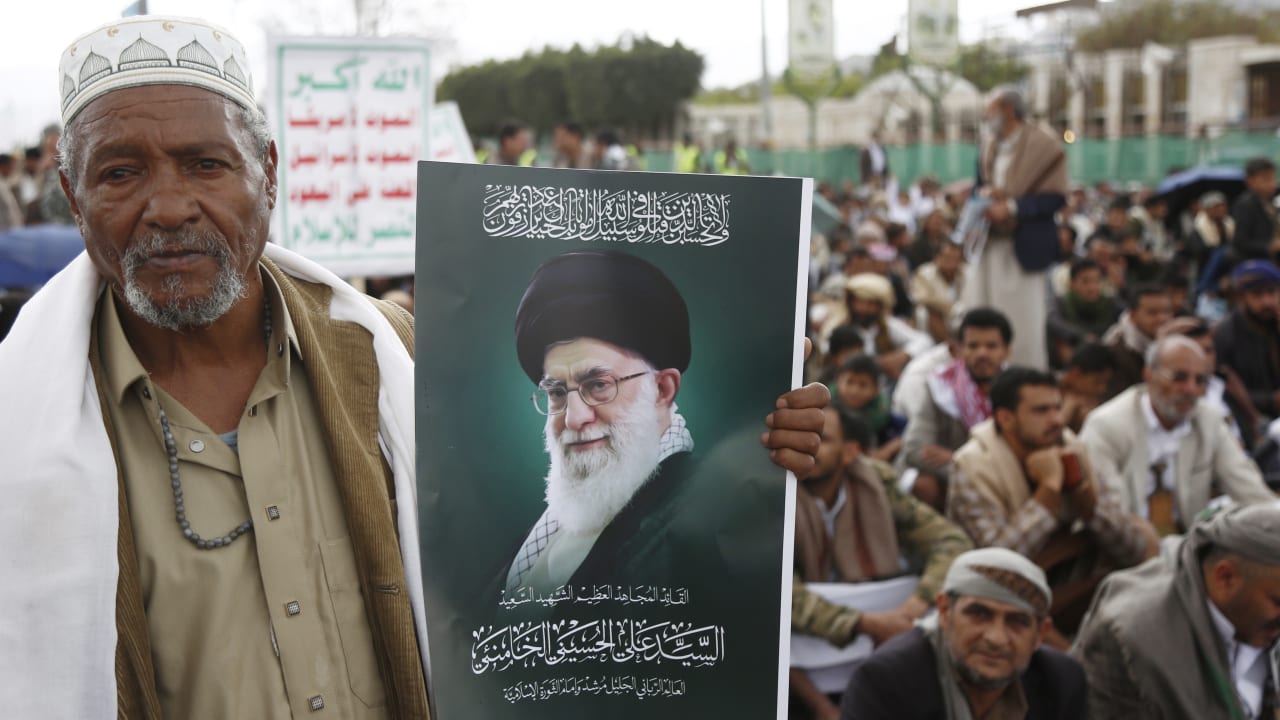
The Houthis have made a calculated decision to limit their involvement in the Iran-Israel conflict to just protests and angry condemnations, but may soon be pressured to carry out some symbolic actions against the Jewish state or American interests in the region, Yemen expert Inbal Nissim-Louvton, from the Open University and the Moshe Dayan Center at Tel Aviv University, told The Jerusalem Post on Tuesday.
Nissim-Louvton explained that the Houthis operate with a very different relationship to Tehran than other proxy groups. While Hezbollah has sworn allegiance to the Ayatollah as part of the Velayat-e Faqih (Guardianship of the Jurist) doctrine, the Houthis maintain focus on their domestic affairs in Yemen.
“The relationship is different. So I think the Houthis felt – I’m not sure if ‘obliged’ is the correct word – but they don’t see one of their purposes as saving the Iranian regime to begin with,” she explained. “When they joined the war here [in Israel], they said that they were trying to help Palestinians… That was their goal, and as we know, they didn’t do that [join the conflict] solely for the purpose of helping the Palestinians, but for their own gains.”
While Hezbollah emerged during the Lebanese Civil War, primarily in response to Israel, the Houthi movement developed in the 1990s as part of a Zaydi revival in Yemen, driven by opposition to domestic political conditions as well as growing Saudi religious influence.
Nissim-Louvton explained that joining Iran’s ‘Axis of Resistance’ helped the Houthis gain support and increase their power inside Yemen, especially against the anti-Houthi forces. “It was first and foremost for serving their own agendas,” she commented, adding that the terror group may owe Iran for the material support, but is not obligated to sacrifice for it.

In contrast to Nissim-Louvton, Avraham Levine from the Alma Research and Education Center said that the destruction of Israel, the United States, and the Jewish people was the central mission of the Houthis, as is explicitly expressed in the Sarkha (political slogan): “Allah is the greatest. Death to America. Death to Israel. Curse upon the Jews. Victory to Islam.”
“I don’t think there’s an option that the Houthis can’t do anything. Therefore, they’re not doing anything…. I think there’s option one: there’s too much US power here, and the Houthis don’t want to start a war with the US beyond what they already have,” Levine theorized. “And option number two: They’re waiting, and Iran is purposely sort of holding them as the reserve unit.”
Unsure of what the benefits of holding the Houthis in reserve could be, Levine noted that there was one point in the two-year Israel-Hamas War when it was the only proxy still launching attacks against the Jewish state.
Internal disagreements in Houthi movement
Nissim-Louvton noted that since the Arab Spring in 2011, there has been a divide within the Houthis’ movement over the extent of Tehran's influence in the Houthis’ territory – especially given that Tehran and the Houthis follow different forms of Shia Islam.
Israel’s existence, while frequently condemned and bemoaned by Houthi leadership, is not central to the terror group’s purpose, and so they “understand that they probably have more to lose than gain” if they join Iran’s “Ramadan War,” Nissim-Louvton continued. Israel and the US would likely respond far more heavily than they had in the past, and Saudi and Emirati forces may be inclined to step up their own conflict with the Houthis.
“I think it also was a clear signal for the Houthis that the Saudis may not be as patient this time as they were before with the Houthis,” Nissim-Louvton noted, speaking on the December flare-up with the coalition forces.
In contrast to analysts and diplomats who spoke to Reuters and suggested the Houthis had carried out individual attacks on targets in neighboring states or were waiting for an opportune time to strike, Nissim-Louvton predicted that the terror group would eventually be compelled to take some limited action, in the form of a symbolic attack.
“As the war continues, it’s going to be very difficult for them to maintain the position that they are taking now. If you look at their website and what their leaders say and what members of the Supreme Council say, it’s all the rhetoric… they say all the right things, but there’s no action added to it, and so I think that they are, in this way, much more pragmatic and clever,” she said.
“But then, every day that goes by and the war continues, it’s going to be more difficult for them to justify not going into, not taking part in this war.”
Citing the lack of real action from the Houthis during the 12 Day War in June, Nissim-Louvton predicted the Houthis would make only a symbolic attack. “At the end of the day, whatever they do in the region or towards Israel or any Western powers has to be translated into gains inside Yemen,” she highlighted.