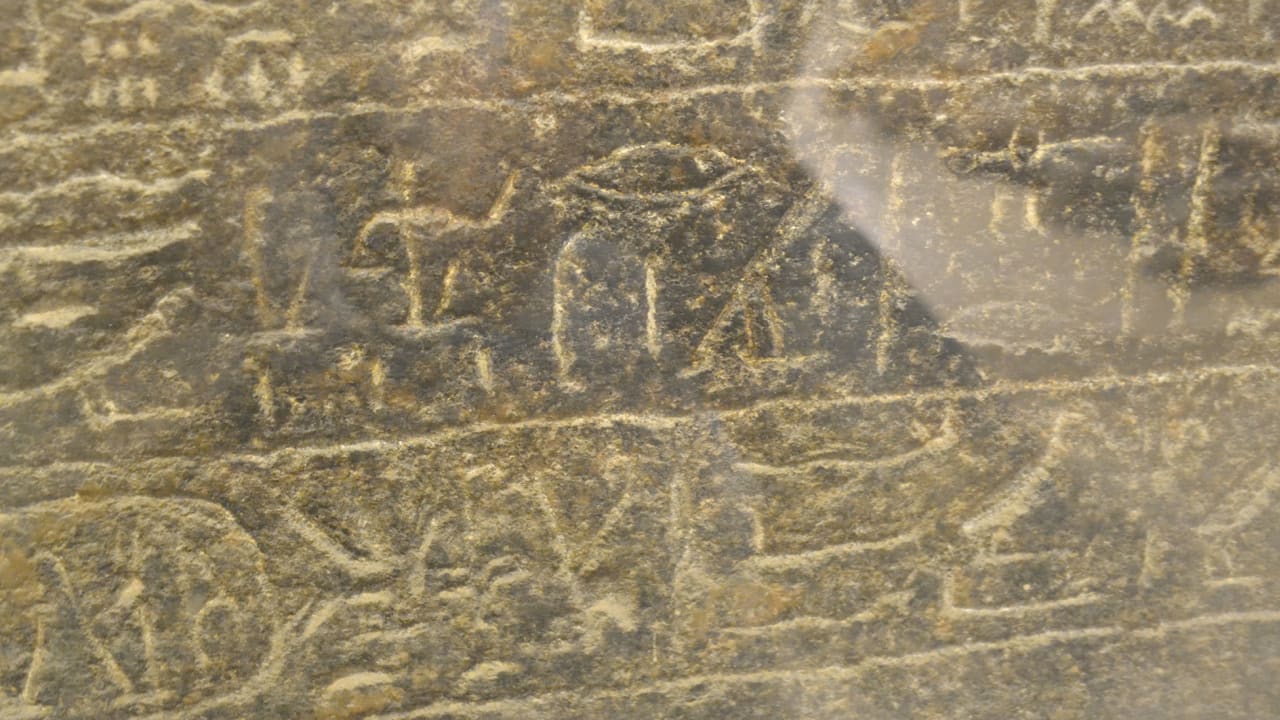
With Pessah right around the corner, it is the season when we return to the telling of the Exodus from Egypt. We read the same texts we have read since childhood, recite the same passages, and ask the same questions. What most of us are missing, year after year, is the Egyptian perspective.
Echoes of Egypt: A Haggada, by Rabbi Dr. Joshua Berman, a professor of Bible at Bar-Ilan University, is built on a claim that scholars of the ancient Near East (Middle East) have long recognized but that has never before reached the Seder table – that the Exodus story is a theological argument, conducted in Egypt’s own symbolic language, against everything Egypt stood for. To understand what was being argued, we need to know what Egypt actually claimed.
In ancient Egyptian iconography, the heka (“crook,” a staff with a hooked top) is the emblem of royal sovereignty.
In reliefs and monuments spanning 3,000 years, the pharaoh holds the heka in his left hand, resting it upon his shoulder. The image encodes a specific claim: Pharaoh is the shepherd of his people; he holds them as a shepherd holds his flock, his dominion is cosmic and therefore unchallengeable.
The Torah does not step outside Egypt’s symbolic world. It enters it and seizes the crook.

When God commands Moses to perform the signs before Pharaoh with his own staff (heka), every Egyptian in the throne room understands what is being held and what is being claimed.
On the page of Kadesh (kiddush), alongside “asher bachar banu mikol ha’amim” (“who has chosen us from among all peoples”), there is an image from an Egyptian pillar depicting the Egyptian god Ptah and Pharaoh Senusret I, carved in identical proportions, face-to-face, locked in intimate embrace.
For 3,000 years, this is what “divine chosenness” looked like in Egypt. One man is elevated by the gods above all others; his authority is rooted in the structure of the cosmos.
But in Kadesh, the choice is not of a king. It is of a people.
Painting from the Tomb of Rekhmire
In Maggid (story of the Jews leaving egypt), when the Haggadah reads the verse about how Egypt embittered our ancestors’ lives with clay and with bricks, Rabbi Berman places a painting from the Tomb of Rekhmire, dated to the period of Israel’s sojourn: Workers are making mudbricks, a taskmaster is standing to the right of center, and a slave is bent beneath a yoke. “Va’yemararu et chayeihem b’chomer uv’lveinim.” The painting is 3,000 years old. The words have been said every Pessah since Sinai. They belong on the same page, and they always did.
At Maror, the author stops at the Haroset. The halachic requirement that it contain something resembling straw, he shows, connects directly to Exodus 5: Pharaoh’s deliberate withholding from the Hebrew slaves of the straw needed to create the bricks is a calculated act of political oppression, designed to fracture Israelite leadership, scatter organized resistance, and render their labor futile. We have been eating haroset every Pessah, yet perhaps we did not know that the straw in it was a memory of a specific act of oppression that is 3,000 years old.
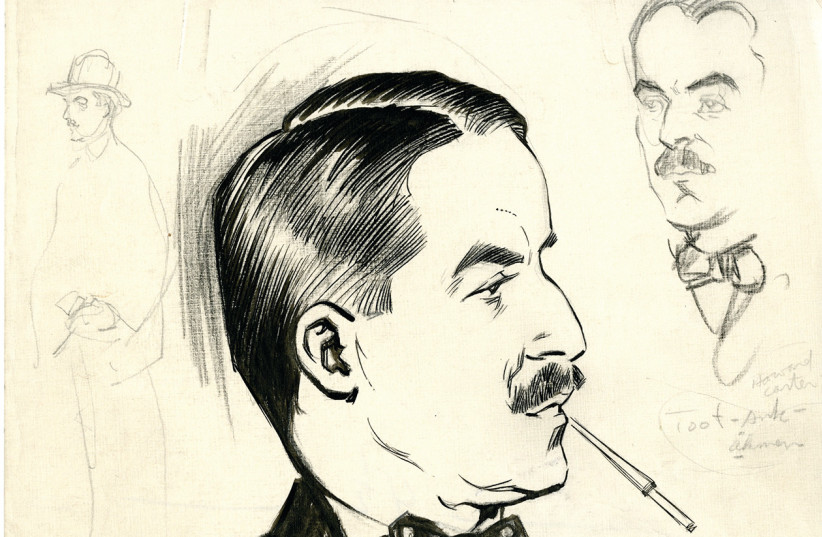
At Hallel, “et lo hameitim yehallelu Yah” (“it is not the dead who praise God”), there is Howard Carter’s 1922 photograph of the interior of Tutankhamun’s tomb, where 5,800 artefacts were prepared to follow the pharaoh into the afterlife.

Egypt organized its entire civilization around the theology of death, around the premise that kings remained kings within it and that the proper response to mortality was to furnish the passage.
The psalm being sung at that moment of the Seder is a direct refutation. It was direct when it was first sung. This Haggadah makes it direct again.
Rabbi Berman is more rigorous than most popular biblical scholarship about the distinction between parallels that establish a shared conceptual world and allusions that require demonstrating conscious literary borrowing.
He does not always maintain this distinction cleanly, and some sidebars reach further than the evidence strictly warrants. But the essential argument does not stand or fall on proving intentional borrowing.
Israel emerged from within a civilization with a specific theology of power, divinity, and human worth.
The Torah entered that civilization on its own terms. The argument between them is what the seder has been recounting every year. Echoes of Egypt shows you the other side of the argument.
Koren has produced the book with the visual seriousness the thesis demands, image and text in genuine conversation rather than illustration and caption. The heka appears when the Haggadah reads “with signs: this refers to the staff.” The Tomb of Rekhmire appears when the narrative reaches clay and bricks. The haroset commentary, when it comes, tells you something about straw you will never forget.
Pessah is right around the corner. For as long as most of us can remember, retelling the story of the Exodus, b’chol dor vedor (“in every generation”) has been an instruction we knew we were supposed to fulfill and rarely could. This Haggadah gives that instruction somewhere to stand.
ECHOES OF EGYPT:
A HAGGADA
By Rabbi Dr.
Joshua Berman
Koren Publishers Jerusalem
156 pages; $30