
Prime Minister Benjamin Netanyahu released a pre-recorded press statement on Monday evening, in which he stated that he would not allow Israel’s enemies to dictate the state’s security paradigm.
“Israel has the full right to defend itself, and it will use that right as much as needed,” the prime minister said, adding: “I say this to you as I say it with respect and appreciation to my friend President [Donald] Trump.”
Netanyahu also indicated that he was in contact with the US president.
“I told Trump: ‘Together, we will bring safety to the North.’”
Defense Minister Katz warns any attack on Israel's North 'will result in an attack on Dahiyeh'
Israel will continue to attack the Beirut neighborhood of Dahiyeh if Hezbollah continues to attack Israel's northern region, Defense Minister Israel Katz said earlier on Monday afternoon.
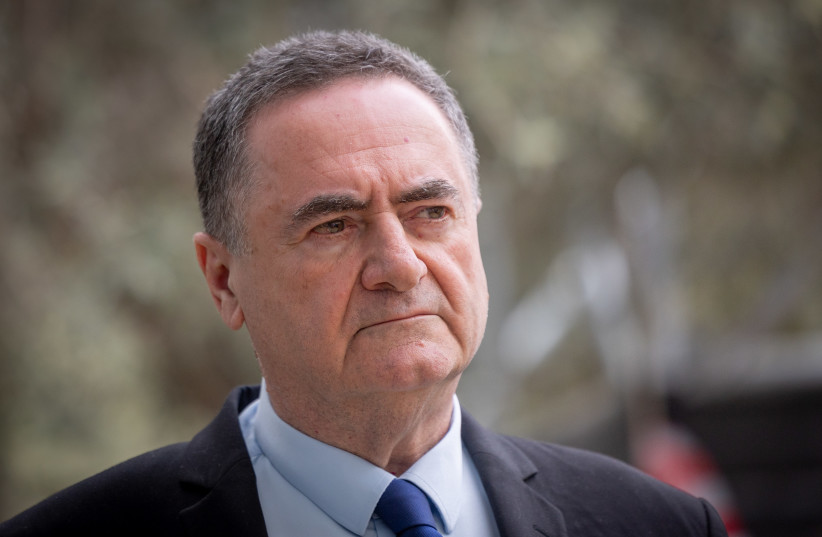
"We reject Iran's threats outright," Katz added. "Any attempt by Iran to use ties with Lebanon to attack Israel will be met with great force."
Smotrich reportedly proposes attacking 20-30 buildings in Dahiyeh for every Iranian missile
Finance Minister Bezalel Smotrich, on Monday, reportedly proposed to the Security Cabinet that Israel strike 20 to 30 buildings in Beirut's Dahiyeh for every Iranian missile launched towards Israel.
Dahiyeh is a suburb south of Beirut where Hezbollah has a strong presence. The IDF struck Dahiyeh on Sunday, which Iran used as a trigger to begin launching waves of missiles toward Israel on Sunday evening.
The apparent logic behind Smotrich’s plan is that striking Beirut in this manner would affect Iran’s calculations with regard to the Islamic regime’s connection to Lebanon.
Additionally, destroying 1,000 to 2,000 buildings in Dahiyeh would strengthen security and create a deterrent for years to come within Lebanon.
Direct hit damages houses in West Bank, hospitals move underground
Meanwhile, a direct hit from an Iranian missile damaged four houses in a West Bank town on Monday morning as Iran launched several waves of missile attacks on Monday morning, following an earlier rocket launch by Yemen’s Houthis.
No injuries were reported, according to the local regional council.
“The incident ended in a great miracle,” said Samaria Regional Council head Yossi Dagan, “but it illustrates the urgent need to strengthen protection in the communities.”
Following instructions from the Health Ministry and IDF’s Home Front Command, Sourasky Medical Center’s Ichilov Hospital in Tel Aviv, the Galilee Medical Center in Nahariya, and Tzafon Medical Center in Poriya have shifted into emergency protocol, moving their operations underground and into protected spaces.
“We are prepared to provide the best and safest medical response to the residents of the North, and we will continue to do so under any scenario and situation,” Galilee Medical Center Director Prof. Masad Barhoum said.
IDF Chief of Staff Lt.-Gen. Eyal Zamir and senior military officers are orchestrating and commanding strikes from an Israel Air Force bunker, the military said on Monday morning, adding that it is “alert and ready for continued action on all fronts against those who threaten the State of Israel.”
Following Iran’s strikes, the Islamic Revolutionary Guard Corps (IRGC) on Monday claimed that it had targeted the Tel Nof and Nevatim IAF bases in response to Israel’s strikes on Iranian territory and in memory of their dead from the 12 Day War in June 2025, according to Iran’s IRGC-affiliated Tasnim News Agency.
An IRGC spokesperson told Tasnim, “This operation was carried out in response to the child-killing Zionist regime’s missile aggression against several radar sites in three parts of the country.”
Amichai Stein contributed to this report.