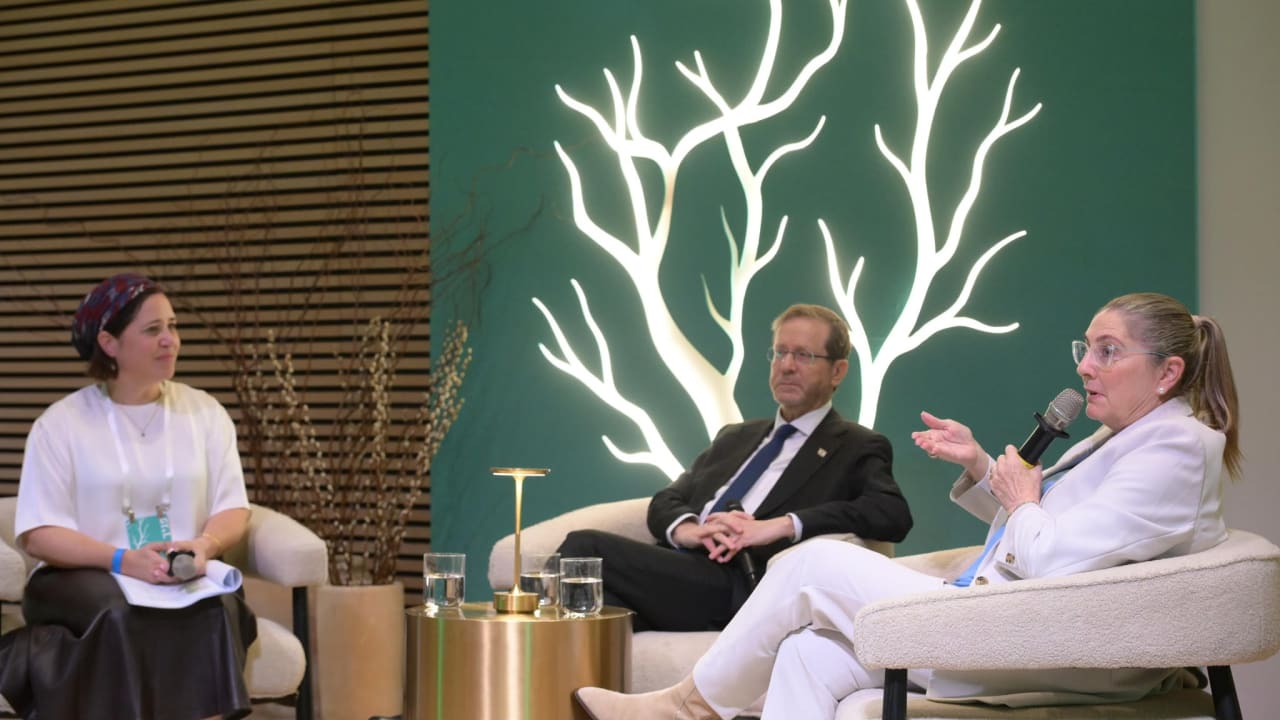
Jewish community leaders from across Israel gathered in Jerusalem on Thursday to discuss work that often extends well beyond teaching or leading prayers: helping people feel they belong, supporting them through difficulties, and finding support for themselves as well.
The Honey Foundation for Israel’s 10th-anniversary gathering at the Van Leer Jerusalem Institute brought together 53 incoming fellows and alumni working with communities that differ in religious practice, language, and age.
“A single person cannot hold a community all on their own,” said Shira Marili-Mirvis, the foundation’s Israel CEO. “They need people.”
Founded by Bill and Amy Lipsey, who also attended the gathering, the foundation supports Jewish spiritual leaders through stipends, mentoring, and professional training.
In an interview with The Jerusalem Post ahead of the event, Marili-Mirvis described its approach as supporting people whom communities already turn to for leadership. The demands on them include teaching, prayer, and accompanying people through grief, uncertainty, or difficulties at home.
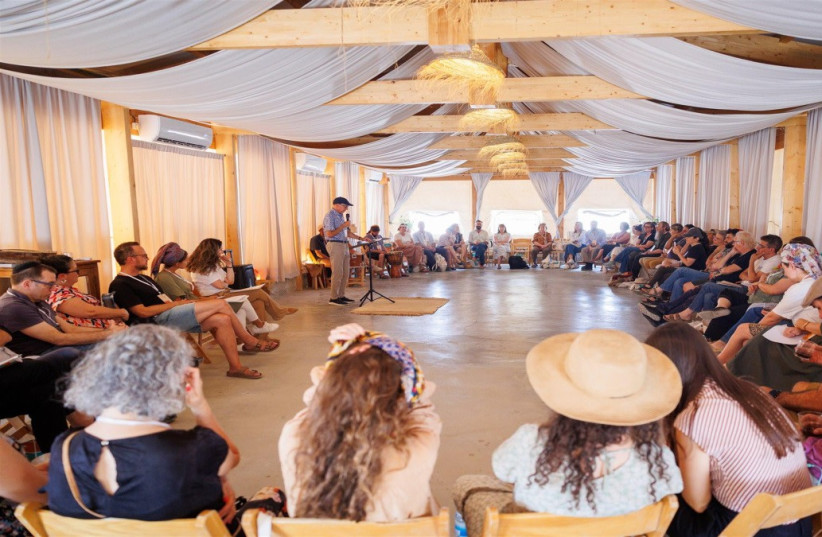
Rare in realm of Jewish leadership
The variety of communities represented in the room was also a starting point for her conversation with President Isaac Herzog and his wife, Michal.
“This view is rare in the realm of Jewish leadership,” Michal Herzog said, who described a wider spectrum of Jewish identity than the categories she had grown up with.
“It used to be just religious or not religious,” she said.
Herzog recalled learning Talmud during her secular upbringing, as well as learning to read the distinctive Hebrew typeface used for Rashi’s biblical commentary. Those studies were part of knowing her culture and history without being understood as an attempt to make her more religious, she said.
Herzog lamented the loss of that familiarity, describing an education in Jewish texts that had belonged to her secular world, too.
President Herzog emphasized the need for dialogue, both among those in the room and in Israeli society more broadly.
“The aim is not uniformity, but an understanding of the ground rules for working together,” he said. “There is deep distrust in the system, and steps need to be taken to build trust.”
“We need to know how to talk; that’s not something of a political nature,” he added.
The discussion turned to what it means for people to feel that their difficulties are being seen.
Michal Herzog spoke about how she and her husband on Wednesday had visited Kfar Manda, where Lina Qassem Zidan was killed in a grenade attack while shopping for sweets. At the site, the president urged any incoming government to make combating crime in Arab society a top priority and stressed the need to protect citizens’ rights.
At Thursday’s gathering, Michal Herzog described people applauding during that visit. She understood it as gratitude for their presence and for the recognition of what the community was facing.
When the conversation turned to political leadership, President Herzog urged leaders to put aside their egos and reach compromises. Referring to his recent consultations with the Knesset factions, he said: “I asked hard questions, because they all need to lose some ego.”
Michal Herzog offered her own observation about political leadership, recalling the faction heads assembling for a traditional photograph with the president. Everyone in the group was a man.
“Wow, there are so many women here,” she said.
“I agreed that there should be more women,” her husband said.
Two community leaders who spoke with the Post at the gathering, both named Esther and both based in Netanya, described their own work building and supporting communities.
Seeking to provide love, support
One said her Russian-speaking community had begun with 10 women and grown to about 400 people. Many had arrived in Israel in recent years because of the war, while others had been in the country for three decades.
She described a community that could be quite insulated, whose members nevertheless needed to feel connected and to belong. Shared Shabbat gatherings and trips were among the ways she brought people together.
“Love and support,” she said, describing what she sought to provide.
The other Esther works with a community of older English speakers in northern Netanya, which is also trying to attract younger members. She described a substantial search for spirituality over the past few years.
For her, Thursday’s gathering was a chance to learn from people whose communities and religious lives were different from her own and to build relationships that would continue afterward.
“I’m here to learn,” she said. “We’re all different, but we’re partners. This is a connection we’ll carry for years to come.”