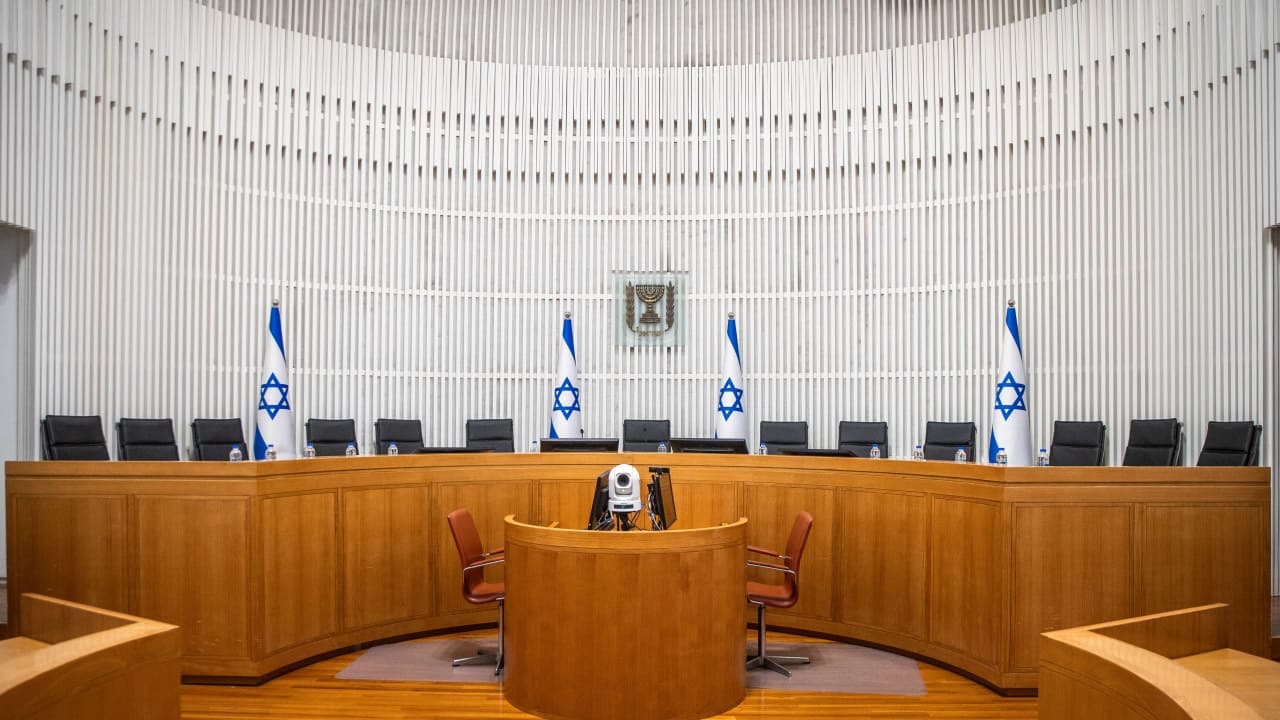
The High Court of Justice on Sunday proposed a framework under which Yehuda Eliyahu’s appointment as head of the Israel Land Authority would be canceled, and the selection process returned to a reconstituted search committee.
Justices Yael Willner, Ofer Grosskopf, and Khaled Kabub gave the state, Eliyahu, and the petitioners 48 hours to respond to the proposal.
Under the proposed framework, the government’s decision to appoint Eliyahu would be rescinded. The search committee would be reconstituted with two members replaced, would reinterview Eliyahu and the two other leading candidates, and could decide whether to consider additional candidates.
The court said that any interim appointment would have to be made under the applicable rules, but did not decide whether Eliyahu could serve as acting head of the authority while the renewed process is underway.
The hearing concerned three petitions against Eliyahu’s appointment, which was approved in May by Prime Minister Benjamin Netanyahu, Finance Minister Bezalel Smotrich, and Construction and Housing Minister Haim Katz.

A central issue was Eliyahu’s connection to Smotrich, one of the ministers involved in appointing him. Government representatives did not dispute that there had been a political connection between the two, but they argued that its political aspect belonged to an earlier period.
Hearing concerned three petitions against Eliyahu’s appointment
The judges stressed that they were not questioning Eliyahu’s qualifications in general.
Rather, they questioned whether the search committee had adequately established that he had the exceptional qualifications required to justify recommending him, despite his connection to an appointing minister.
The state argued that Eliyahu had ranked first among the candidates and had a 4.2-point lead over the next-ranked finalist.
The justices, however, questioned whether the scoring showed the clear and substantial gap needed to support the conclusion that Eliyahu really stood out from among the other candidates.
Grosskopf noted that, depending on how the views of certain committee members were treated, other candidates could reach similar scores.
Willner said the question was not whether Eliyahu was somewhat stronger than the other finalists but whether the gap was sufficiently clear to establish special qualifications.
The court also focused on the committee’s decision to ask Eliyahu alone to provide further detail on his experience after it had initially considered presenting three ranked candidates to the appointing ministers.
Willner said that, if the committee had not been convinced from the outset that Eliyahu had clear special qualifications, there was difficulty in allowing only him an additional opportunity to elaborate on his credentials. Kabub similarly questioned why the other finalists had not been given the same opportunity.
Judges raised concerns over the composition of the search committee
The judges separately raised concerns over the composition of the search committee, including possible conflicts involving two of its members. Willner said the appointment process had “quite a few flaws,” and added that some “that cannot be overlooked.”
The state maintained that the committee had acted properly and that Eliyahu had been found to be the strongest candidate. Eliyahu’s counsel argued that any difficulty could be addressed by returning the matter to the committee rather than setting aside the appointment outright.