
Dozens of Ultra-Orthodox rioters arrived at the Tunnel Checkpoint on Sunday and began blocking traffic routes and disrupting the checkpoint’s routine operations.
Border Police officers from the Jerusalem periphery unit and Jerusalem District police officers are operating at the scene.
Protests by Ultra-Orthodox groups have become more frequent in the past week following mass arrests at a riot that occurred outside the home of Supreme Court Justice Noam Sohlberg on Wednesday night, in violent response to his order to intensify arrests of draft evaders.
Extremist protesters caused significant property damage by smashing windows, damaging his car, and attempting to break into Sohlberg's house before attempting to flee the scene.
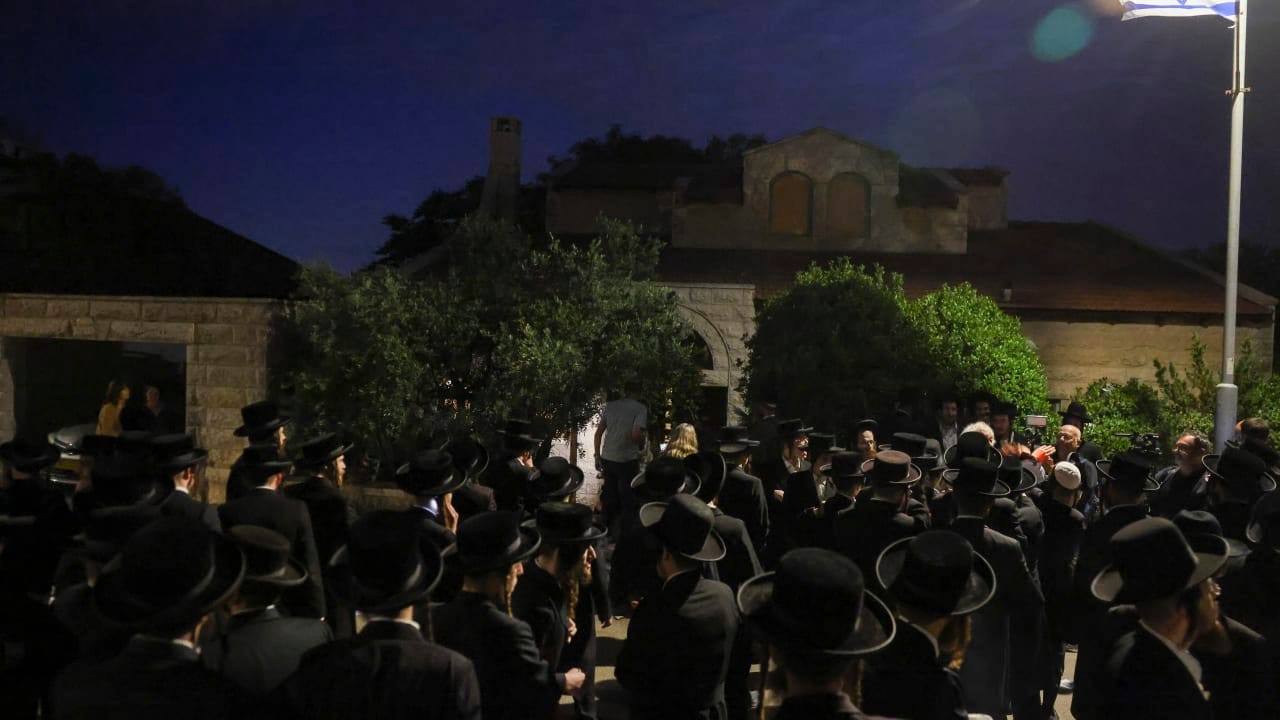
Police arrived at the scene shortly after and began detaining dozens of individuals for disorderly conduct.
On Sunday, the arrested protesters were brought before the Jerusalem Magistrate's Court, where 52 of them had their detentions extended by four days.
Two other protesters were sentenced to full house arrest until Thursday, and forbidden from coming into contact with anyone else involved in the affair.
There was also an additional arrest made on Sunday of someone suspected of being involved in the riot. The suspect, a man in his 20s from Beit Shemesh, was taken for questioning.
Anti-draft protests at boiling point
Over the past few weeks before the riot, anti-draft protesters harassed police officers in their homes and blocked major highways in defiance of the draft.
The violence comes as pressure on the coalition to pass a draft-evasion law and prevent the Knesset's dissolution has reached a boiling point.
When the existing draft framework expired in June 2023, the legal context that had allowed thousands of eligible haredi young men to avoid the draft disappeared, leaving them in limbo.
This brought the issue before the High Court of Justice, which has ruled that the government must advance a new framework.
Sohlberg, the target of the rioters, authored a key ruling on the matter in November 2025, writing that the state must move without delay to formulate an effective enforcement policy against haredi draft evasion, including meaningful criminal enforcement and broader economic and civil measures.
This opened the door to more petitions against widespread benefits, including in daycare and education, as the broader case continued to focus on criminal enforcement of evasion.
Sarah Ben-Nun and Shoshana Baker contrubited to this report.