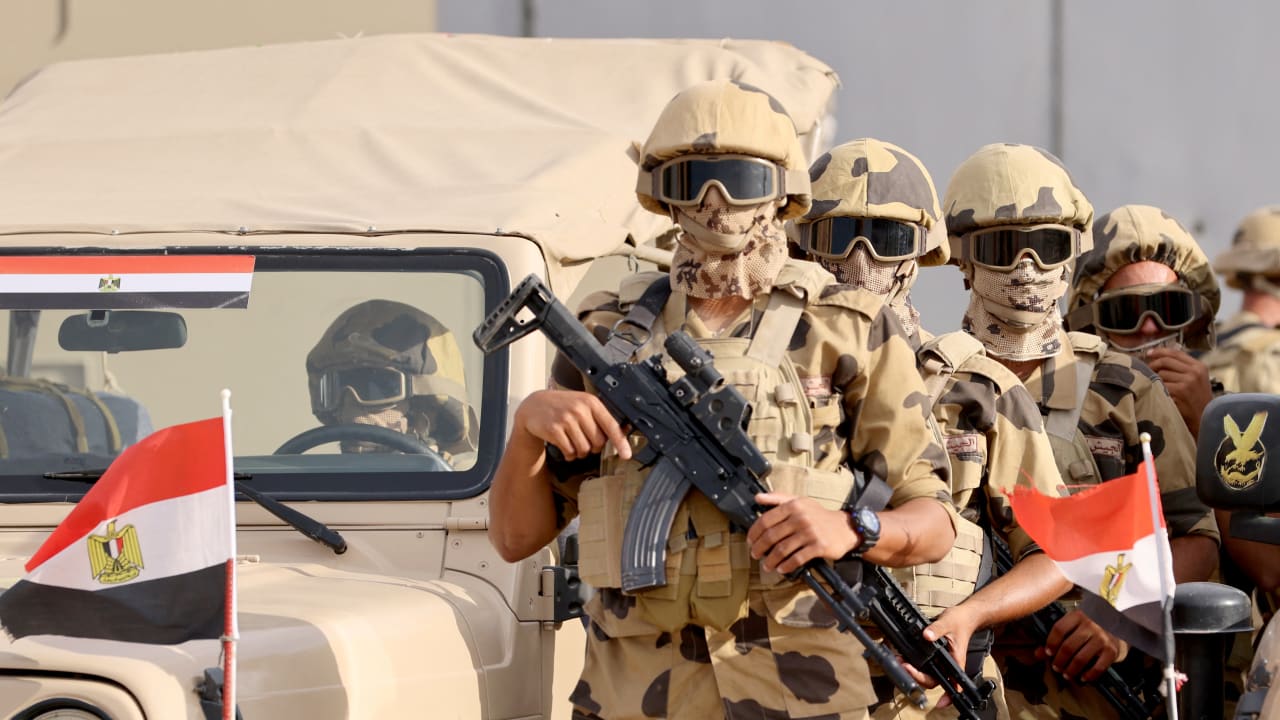
Egyptian technical military teams, including advisors, trainers, and officers, are reportedly preparing for the deployment of troops to Somalia, in the first such move since the signing of a joint military cooperation agreement between the two sides in 2024, The New Arab reported on Friday.
This potentially important development comes as Pakistan and Turkey may also be deploying forces to Saudi Arabia to support the Kingdom’s defenses against the Houthis.
The report at The New Arab says the deployment to Somalia could come “in light of bilateral security and military cooperation between the two countries and within the African Union Mission, widely known as AUSSOM.” It also comes as Turkey has forces in Somalia. However, despite the support, this has not stabilized Somalia enough.
The report added that “the Egyptian troops will reportedly be positioned in the Ceelcade region which used to house the Cisiley Airfield on the immediate northern outskirts of Mogadishu, within the Middle Shabelle region - in the low-lying semi-arid coastal hinterland just north of the Banaadir administrative boundary, around 400 kilometers from the nearest point to Ethiopia's shared border with Somalia.”
Any deployment could tip the balance of power in the Horn of Africa. In early October, Egypt reached out to leaders in Eritrea, Sudan, and Somalia. Egypt is concerned about the spiraling military conflicts that are taking place to the south of Egypt. It’s worth understanding this. Egypt’s military met Somali Defense Minister Ahmed Moallim Fiqi in September.

Houthis advance to Bab el-Mandeb strait, target Saudi airports
This all comes amid many developments. On one side of the Red Sea, the Houthis advanced in September to the Bab el-Mandeb strait. Then Saudi Arabia backed a Yemeni government offensive against the Houthis. Now the Houthis are targeting Saudi airports. Riyadh is a friend of Egypt.
Egypt and Somalia have four other major conflicts. Ethiopia's conflicts involve the federal government in Addis Ababa, led by Prime Minister Abiy Ahmed, and several regional movements. The most devastating recent conflict was the Tigray war, fought from 2020 to 2022 between federal forces and their allies, including Eritrean troops, and the Tigray People's Liberation Front (TPLF). On September 21, seven rebel groups in Ethiopia formed a new alliance. Egypt has opposed the Ethiopian Grand Ethiopian Renaissance Dam.
In Sudan, Egypt backs the Sudanese army. The army is fighting a civil war. The US has tried to push for a ceasefire and banned Sudan from the UN General Assembly. Sudan's civil war began in April 2023 between the Sudanese Armed Forces (SAF), commanded by General Abdel Fattah al-Burhan, and the paramilitary Rapid Support Forces (RSF), led by Mohamed Hamdan Dagalo, commonly known as Hemedti.
The SAF represents Sudan's established military institutions and is associated with the internationally recognized state authorities. The RSF emerged from paramilitary networks linked to the Darfur conflict and has developed its own military, economic, and territorial power. Support for both sides fuels Sudan's conflict. For instance, Sudan’s military accuses the UAE of backing the RSF. This conflict has likely destabilized Ethiopia.
Meanwhile, in Somalia, the government is fighting terrorist groups such as al-Shabaab. Somalia’s government also doesn’t control most of the country. Israel recognized Somaliland in December 2025. Puntland also operates as an autonomous state. Egypt sending forces could change things in Somalia and also potentially affect Ethiopia. It could also change Eritrea’s calculations.
Libya split between Turkey-backed GNU, Egypt-backed Haftar
Libya, a bit farther away in North Africa, borders Egypt and Sudan. As such, it also has a role to play.
In western Libya, the Tripoli-based Government of National Unity (GNU) is one part of the mosaic of the country. In eastern Libya, Field Marshal Khalifa Haftar commands the Libyan National Army (LNA), also known as the Libyan Arab Armed Forces. His coalition controls much of eastern and southern Libya and is aligned with the rival eastern-based political authorities.
In the past, Turkey backed the GNU while Egypt, the UAE and others backed Haftar. In September, The New Arab reported that Saddam Haftar, Khalifa's son, went to the UAE for meetings. Whether true or not, what these reports indicate is intense interest in the Horn of Africa by media in the Gulf.
These four conflicts - Sudan, Somalia, Libya, and Ethiopia - are increasingly interconnected. Ethiopia's renewed fighting and tensions with Eritrea threaten wider instability in the Horn of Africa. Sudan's war involves cross-border armed networks, while Somalia's security depends partly on neighboring countries' military commitments. Libya remains influenced by competing interests from the Mediterranean, the Gulf, and elsewhere. Any change in the balance could reverberate to the Red Sea, the Eastern Mediterranean, and the Indian Ocean.