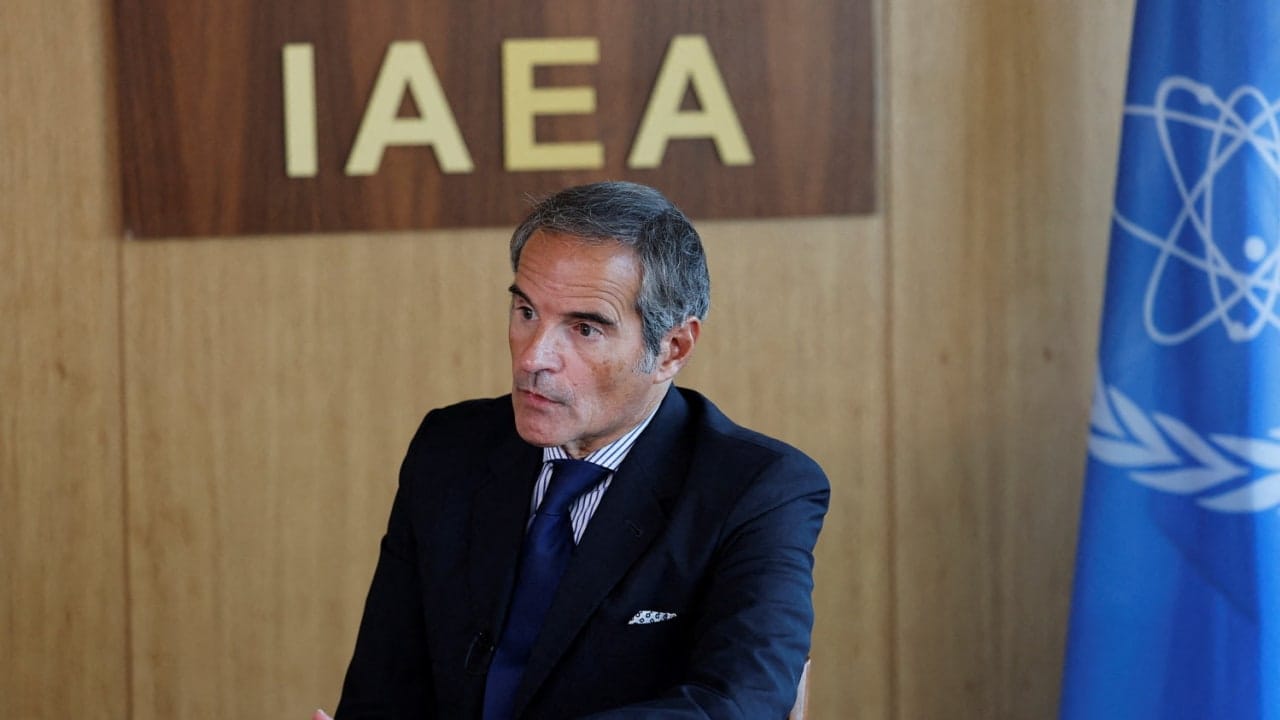
The decades-long norm against the spread of nuclear weapons, and the system of international inspections designed to prevent it, may be under strain, said International Atomic Energy Agency (IAEA) Director-General Rafael Grossi in a recent interview with Frontline.
“We see countries and political decision makers talking quite clearly about more nuclear weapons, sharing nuclear capabilities, nuclear weapons,” Grossi said, adding that the situation could create a scenario in which more states could begin “evaluating the possibility of having nuclear weapons.”
Grossi’s comments come as the agency’s cooperation with Iran has again been disrupted amid renewed conflict in the region.
The IAEA has said it has not been able to access several key Iranian nuclear facilities following strikes during the 12-day war in June 2025, including sites at Natanz, Fordow and Isfahan.
“Iran had not been giving-for quite some time-the access to places,” Grossi told Frontline.

He said Iranian officials' lack of cooperation with the agency “led us to a place or a position where we lost the necessary continuity of knowledge to be able to confirm that everything in Iran was in peaceful use.”
What difference does the IAEA actually make?
The IAEA is responsible for verifying that nuclear programs are used for peaceful purposes. Its inspectors monitor nuclear material, conduct on-site inspections and report findings to member states.
The agency operates under safeguards agreements linked to the Nuclear Non-Proliferation Treaty, which requires non-nuclear-weapon states to declare nuclear material and accept inspections.
IAEA states its operations provide essential safeguards designed to verify that nuclear material is not diverted from civilian use.
The agency does not enforce compliance, but reports its findings to member states and international bodies, including the United Nations Security Council (UNSC).
Grossi has said that safeguards and inspections remain central to preventing the spread of nuclear weapons.
In recent remarks, he has described safeguards as “an essential component” of efforts to prevent nuclear proliferation in a time when international norms have been strained.
His comments in the Frontline interview also addressed concerns about the broader global arena, including the presence of nuclear-armed states involved in ongoing conflicts.
“We have more and more nuclear weapons in the world, and we have more countries possessing them,” Grossi said.
He warned that the international system depends on continued cooperation from states to function effectively.
The IAEA’s verification work relies on access to nuclear facilities and cooperation from governments, allowing inspectors to monitor nuclear material and activities over time.
With a breakdown in cooperation that has existed for the last half-century and more conflicts igniting, Grossi fears that this “delicate moment” could lead to “more nuclear weapons"and more states racing to acquire them.
“it is essential that we highlight and commit ourselves to a system which is based on legal commitments, a system of inspections, and a cooperative arrangement.”