During a two-day span just before and after Independence Day, I rode the buses of Jerusalem nine different times. When I could not find a bus to a locale where I needed to go, I walked about four kilometers. It was my only way, at this point in my life, that I could get ready for Lag Ba’omer.
The holiday is an interesting one, when the 33-day of the Omer count is reached.
Some people go to Meron near Safed to remember Rabbi Shimon bar Yochai, his life, and his students who came with their bows and arrows subterfuge to study with him in the cave where he lived as a fugitive.
In 1964 my wife, Rita, of blessed memory, and I made our way from Tiberias, where we had a room in a small hotel, to Meron on our motor scooter, arriving at 11 at night.
There were many people there, though not like the overwhelming crowds in this modern spiritual period. Naturally, men and women were separated. Echoing inside, then a crowded cave, serious praying never ceased.
We experienced spiritual moments as two young observant Americans in their 20s. But for me and Rita, the most exciting moments, as we stood there in Meron, were the bonfires, which reached high into the sky. People were singing and dancing with fervor.
We left around 2:30 a.m., when the haircutting ceremony, upsherin in Yiddish, began. It was a quick ride back to our hotel in Tiberias for the rest of the night. Next morning, it was off to Jerusalem, since we still had classes, with vacation in the distance.
For me when growing up in Atlanta, Georgia, Lag Ba’omer had a special flavor – Jewish games in a local park, and then all was moved to the large grounds of the Jewish Community Center on Peachtree Street.
In Atlanta, our federation director, Ed Kahn, was inspired by the Maccabiah Games created in 1932 in Israel (called Mandatory Palestine at the time ). From 1933 until 1950, the Maccabiah was a great event for the youth of our Atlanta community.
Forty years ago, the wife of a scholar whom I knew called me. She asked if I wanted to hear about what happened when the first Maccabiah was held and who were some of the unusual guests from abroad. Forty years have come and gone, and here is that tale.
A Zionist sports story
In Western Europe, Eastern Europe, the US, and Canada in the early 1930s, there were hundreds of athletes in the Jewish sports clubs. To better understand this, take a look at the Genesis Prize Foundation’s film Jews in Sports.
Because in Palestine in the early 1930s many sports clubs existed and there were many more worldwide, the pressure built up through the World Zionist Organization to have a “Jewish Olympics.” Many Jewish leaders participated, such as Tel Aviv mayor Meir Dizengoff, a great horseman.
Tel Aviv, the only fully Jewish city, was selected as the site for the first Maccabiah Games in 1932. A stadium was built, and many people planned to come. Since it was still the British Mandate, all visitors to the country had to get a visa.
An Israeli scholar, 40 years ago, discovered what else occurred at the games. Documents in the Jewish Agency archives show that many of the Jewish visitors had another plan to enrich their visit to Eretz Yisrael.
Since the quota for olim had been cut by the British, the Maccabiah offered a great opportunity to come but not leave. After many of the Jews arrived in the country, they just “disappeared.” The actual number was 5,000.
Most interesting for me is that Henrietta Szold spoke at the opening ceremony. I quote her words frequently because I never knew how significant athletics were to her as a Zionist.
“You who have come hither to celebrate this on the holy soil, the first Maccabiah,” she began before the assembled 25,000 on March 29, 1932. “You have demonstrated that you understand the need and the value of restoring stunted faculties.”
Then she explained her sense of what was happening. “Your slogans, your aims, and your achievements proclaim that you have discovered in Israel’s storehouse a neglected truth: that the soul that would be strong and sane and noble must be housed in a body that is vigorous and healthy and well proportioned and upstanding.”
She looked out over the crowd, especially the athletes, in formation by country, and continued. “You express with peculiar emphasis the truth we all accept – that the return to the land is the opportunity for return to normal humanity. Normal humanity is not a disembodied spirit but an aspiring spirit encased in solid flesh and vivified by fast-coursing blood. We salute you as apostles of the normal.”
I’m not sure how many understood her, since she spoke in English, but she had made her point.
The bonfires on Lag Ba’omer today are smaller, which was not the case when we made aliyah almost a half a century ago.
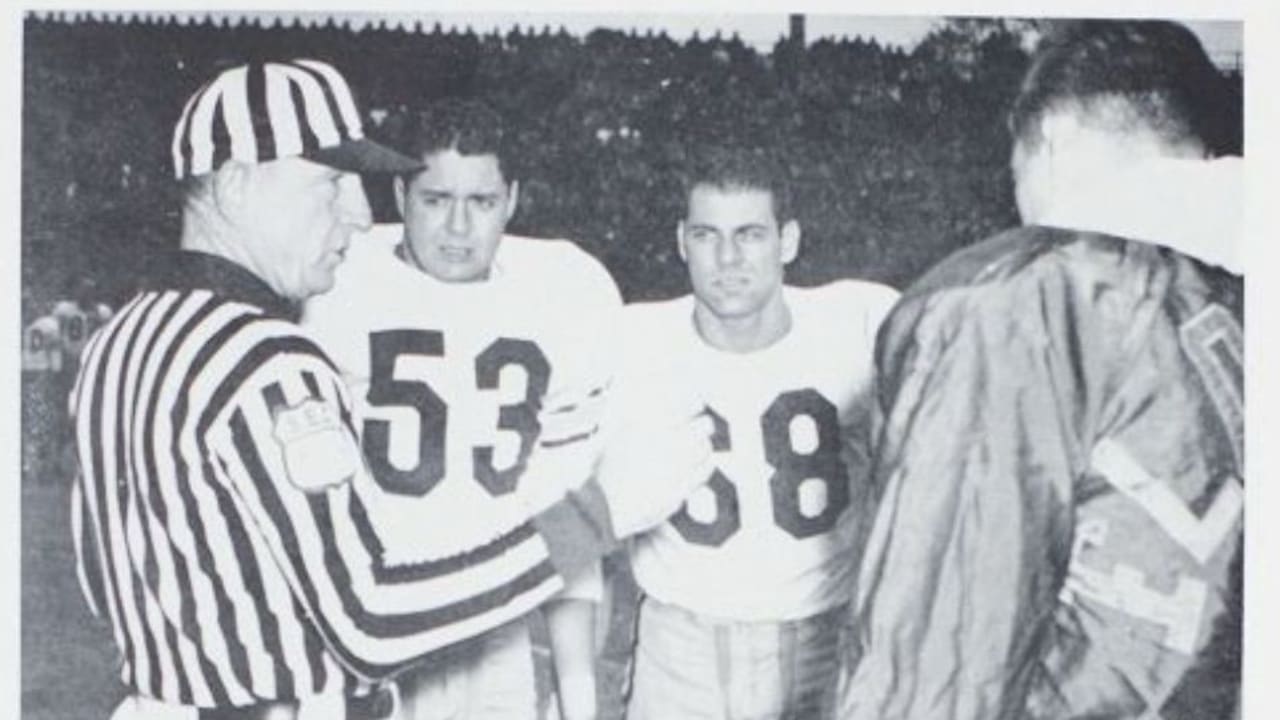
What continues to inspire me, as on every Lag Ba’omer, is that I personally know Larry Frank of Atlanta. He was one of the greatest Jewish athletes in the US, an All-American lineman at Vanderbilt University in Nashville, Tennessee.
Rather than play professional football, he returned to Atlanta and married Lois Lubin of Florida. Together they built a family of four sons. One made aliyah and is a noted citizen of Jerusalem, along with his wife, Lynne, and their three children.