
The Board of Deputies of British Jews and the London Jewish Forum have launched a new five-year £1.5 million project funded by the National Lottery Community Fund to address structural antisemitism and inequalities in the health sector that impact the Jewish community.
The award will establish and provide five years of core funding to create the Jewish Health Equality Partnership (JHEP).
JHEP will work on tackling health inequalities caused by structural antisemitism and will collaborate with its partners to improve the understanding of Jewish health needs.
This represents the most significant investment to date in tackling health inequities affecting Jewish communities in England.
“We are hugely grateful to the National Lottery Community Fund for their support,” said Board of Deputies Vice President Karen Newman.
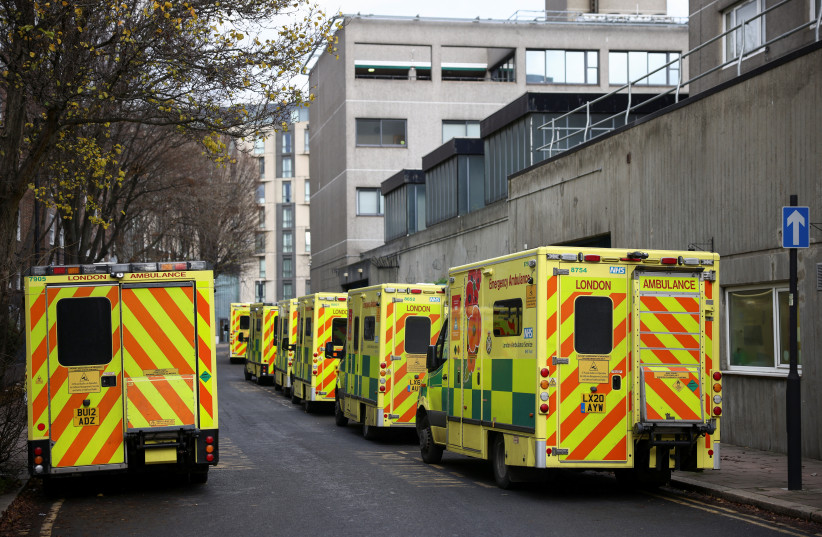
Five-year commitment to transformative work tackling antisemitism, discrimination
“This five-year commitment will be transformative to our work, helping us tackle antisemitism, structural discrimination, and other issues impacting healthcare outcomes for the Jewish community.”
Amanda Bowman, the co-chair of the London Jewish Forum, said, “No one should experience prejudice when assessing healthcare or working within the health system, and this partnership will turn greater understanding of Jewish health needs into practical action that improves people’s experiences of care.”
The project also comes at a time when the difficulties faced by Jewish patients and healthcare professionals are increasingly coming to light.
Last month, the UK government advisor on antisemitism Lord John Mann published a groundbreaking review of antisemitism in the NHS.
Mann heard that Jewish people in the NHS experience “routine ostracism,” with Jewish staff being the only religious group in the latest NHS Staff Survey to report rising discrimination from colleagues rather than falling, resulting in some considering leaving the NHS.
Antisemitism impacts patients
He found that antisemitism extended to patients, too, as some Jewish patients reported they did not want to come in for treatment or put off receiving important care.
“It is well-evidenced that racism is persistent in the NHS,” Mann said, adding that “the case for taking action to combat antisemitism and other forms of racism in the NHS is clear.”
This week, the independent NHS Maternity Review by Baroness Amos found that Jewish women and families, along with other minority groups, have experienced discrimination in the NHS.
The report, for example, cites an incident where a member of staff told a Jewish family that “Jewish people are sneaky.”
BJ Woodstein, co-founder and spokeswoman for Shifrah, a group of Jewish birth workers, said the review was “a damning assessment of how challenging and even dangerous it can be for Jewish staff and patients to engage with the NHS.”