
The United Kingdom has successfully tested a new British‑built interceptor missile system that can neutralize drones and low-speed missiles. A development that officials say will strengthen protection for both UK forces and Gulf partners against the growing threat of Iranian drone attacks.
The trial, which took place in Jordan, comes several weeks into the ceasefire that follows a month-long war by Israel and the United States against Iran.
The missile system, known as Skyhammer, is produced by Cambridge Aerospace, a UK start‑up founded by military veterans. The interceptor was designed specifically to counter the Shahed family (Shahed 131, 136, 236) type of low‑cost, explosive‑laden drones that have been used in conflicts across the Middle East and Ukraine. It has a range of 30 kilometers and can reach speeds of up to 700 kilometers per hour before crashing into the Shahed.
EDR Magazine provided additional information about the Skyhammer, saying that the front section of the interceptor has an X-band radar seeker with a blast-fragmentation warhead behind it.
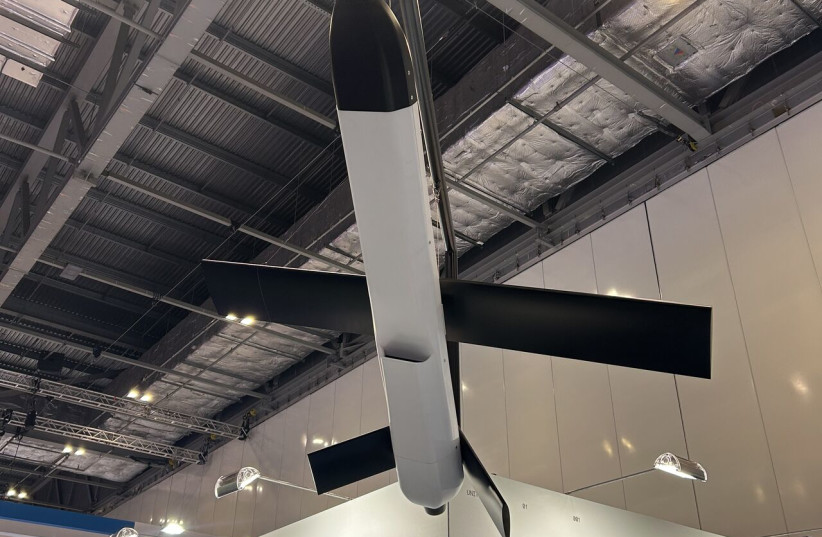
Cambridge Aerospace was founded in late 2024 and the Skyhammer began development by January 2025. Six weeks later, the company carried out initial flight testing of the interceptor. The company said that the system has “undergone continuous, iterative testing on a weekly basis” and has successfully neutralized drone targets with autonomous platforms identifying, tracking and taking out aerial threats.
The UK’s Ministry of Defense signed a multi‑million‑pound contract with Cambridge Aerospace less than two weeks before the April test.
The test took place in demanding desert conditions at a defense development site in Jordan, operated by Deep Element. The conditions in Jordan were similar to Gulf environments, where Iranian Shahed drones struck numerous strikes during Operation Rising Lion, aka Epic Fury.
“We have proven that our interceptors are not only cost-effective but also highly capable and will be able to counter the rising threat posed by aerial attacks,” Steven Barrett, CEO of Cambridge Aerospace noted.
UK Minister of State for Defense Readiness and Industry Luke Pollard, who witnessed the demonstration, said the system shows how quickly his country’s defense industry can innovate in response to lessons learned from recent conflicts.
“This week’s successful trial of Cambridge Aerospace’s Skyhammer interceptor missiles in Jordan is a perfect example of a UK start-up innovating, with the backing of this government, to deliver cutting edge technology,” he said.
Regional visit
The trial of the missiles coincided with a regional visit by Pollard, who met leaders in Kuwait and Jordan to discuss security cooperation and ongoing threats from Islamic Republic missile and drone activity.
His visit included meetings with Kuwait’s Minister of Defense Sheikh Abdullah Ali Abdullah Al‑Salem Al‑Sabah, as well as senior Jordanian military officials, notably Maj.-Gen. Yousef Alhnaity, chairman of the Joint Chiefs of Staff. Discussions focused on regional security, the Strait of Hormuz, and continued defense cooperation.
Pollard also thanked UK and partner‑nation personnel for their work defending civilian populations and critical infrastructure during Iranian attacks prior to the current ceasefire.

The Skyhammer contract is expected to create more than 50 new jobs and support 125 existing roles in the UK, according to the Ministry of Defense. Barrett said the system was both cost‑effective and highly capable, offering partners a rapidly deployable air‑defense option.
“We welcome the support of the UK Ministry of Defense as Cambridge Aerospace looks to protect the UK and its partners with high-performance, rapidly deployable air defense systems,” he said.
EDR Magazine said that the current production capacity is in the low hundreds with Cambridge Aerospace aiming to be able to produce thousands.
The first batch of Skyhammer missiles and launchers is scheduled for delivery to the UK Armed Forces in May, with additional units to follow within six months. The Ministry of Defense has also established a new task force within the National Armaments Director Group to accelerate export licensing and support Gulf partners seeking UK‑made defense systems.
The UK has flown defensive missions over Jordan and other regional partners in recent months, aiming to protect British interests and assist allies facing Iranian drone and missile threats.