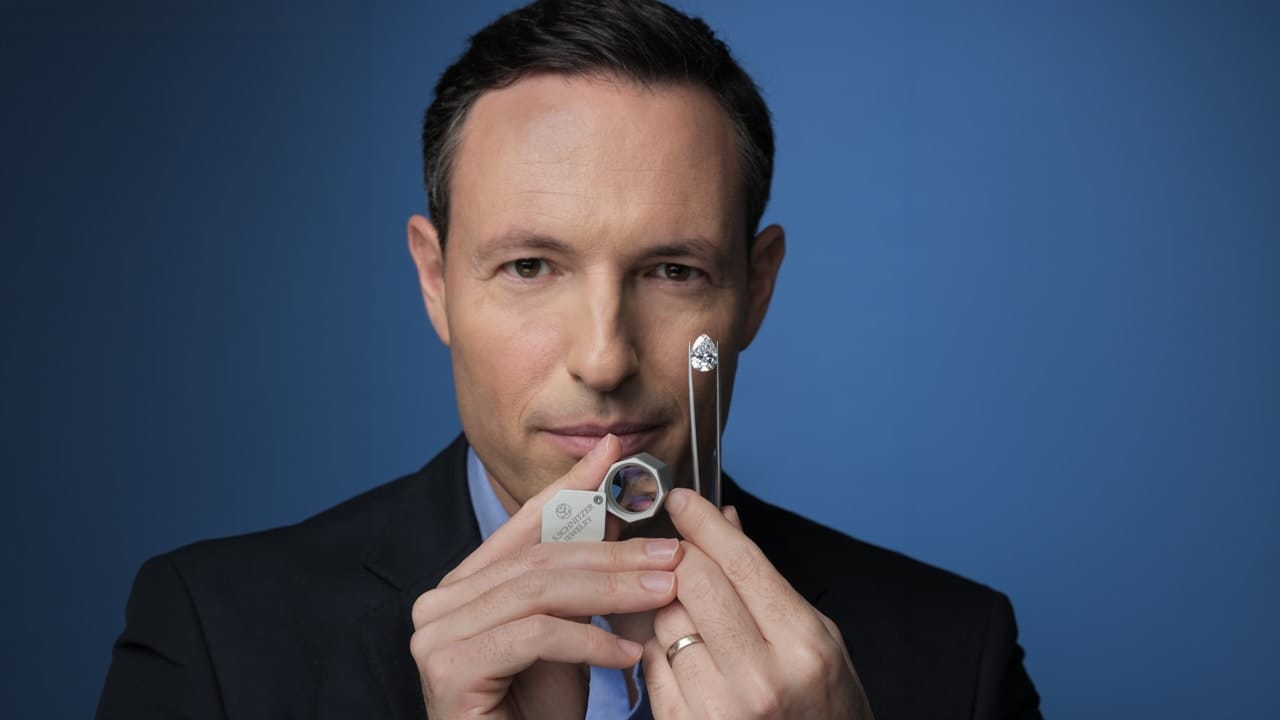
‘If you’re a people person, this is the place for you,” says Shai Schnitzer with a smile. The affable, 47-year-old president of S. Schnitzer Diamonds Ltd. sat with the Magazine to discuss the state of the diamond industry, his candidacy for president of the Israeli Diamond Exchange (IDI), the country’s principal diamond trading organization, and his work as Lithuania’s honorary consul in Israel.
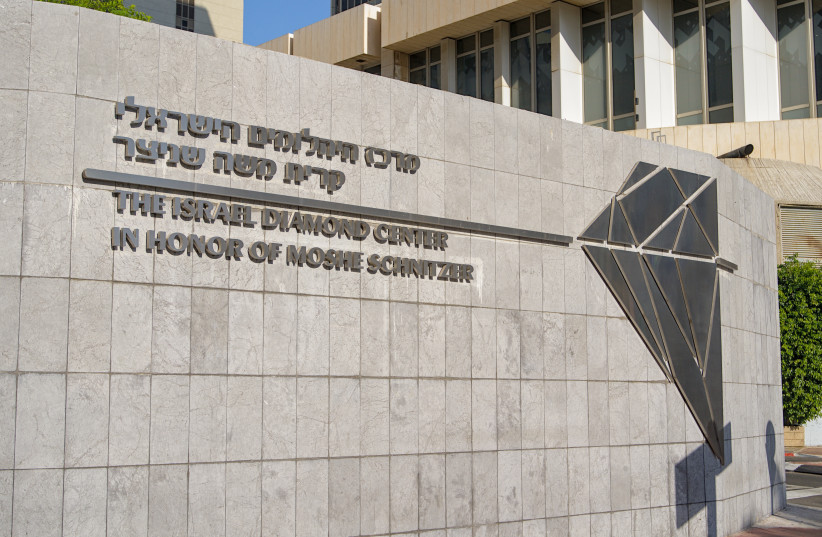
Schnitzer’s late grandfather, Moshe Schnitzer, established the family firm in the 1950s, was one of the founders of the Israeli Diamond Exchange, and served as its president for 26 years. His father, Shmuel, the firm’s current CEO and chairman, served as both president of the Israeli Diamond Exchange and as IDI (Israeli Diamond Institute) chairman for ten years.
Though Schnitzer was never compelled to join the family business, he was always drawn to the diamond industry for its emphasis on personal relationships. “It’s a lot of walking down the corridors, the aisles of the booths of the exchange, meeting people, getting into the thick and thin of things, and asking, ‘What’s going on in the market? How is everybody doing?’”
He spent his summer vacations working in the family office, and decided to make diamonds his career so that he could make his own mark on the family business by modernizing things and bringing it into the 21st century.
“Every generation needs to bring something new to the table,” he shares.
He began to travel around the world for the firm, visiting Africa and other centers where diamonds are produced. “When we sit here and see them at the table, that’s one thing. But when you go to the source, and you see how diamonds are produced, how they benefit diamond-producing communities, and the good that diamonds bring to the world, you get the whole picture,” Schnitzer explains.
He began working in polished diamond trading and rough sourcing, and has been active in a number of hi-tech companies, some of which are connected to the diamond trade.
Over the past eight years, the firm has launched its own diamond jewelry brand, designing and producing diamond jewelry sold directly to consumers. Schnitzer’s wife, Tal, is active in this area of the business.
Today, the firm’s diamonds are sold throughout the world. The company is very active in Japan and the Far East, as well as the US, and has offices in Ramat Gan, New York, and Hong Kong.
Reflecting on the challenges of running a family business, Schnitzer notes that such enterprises are common in the diamond industry.
“You need to run in two dimensions – the business dimension and the family’s personal dimension. I enjoy working with my father every day. I have learned from my grandfather, and now from my father. My grandfather was a true people-person.”
Schnitzer consults with his father daily. “I truly enjoy seeing him in the office, working with him, speaking together always, seeking advice. It’s a two-way street because I bring to the table the innovations, the new things to the market.
“I enjoy the crossroads of diamonds, technology, and finance. He brings a lot to the table with his vast experience in diamonds and diamond politics.”
While he values speaking with his elders to learn from their experience, Schnitzer says the diamond industry has changed a great deal in recent years, dating back to the COVID-19 pandemic in 2020. Since then, interest rates have risen, keeping dealers from holding significant diamond inventory because of the added costs. Prices have gone down.
Lab-grown diamonds have also challenged the diamond business. These are made in a laboratory rather than formed naturally underground. Scientists recreate the conditions in which diamonds grow, producing stones with essentially the same chemical composition, hardness, and appearance as mined diamonds.
Schnitzer says these have taken some market share from natural diamonds, but points out that the two systems, natural and lab-grown diamonds, are looking for a balance and a way to coexist because, ultimately, they are two different products.
Another issue confronting the Israeli diamond industry is the 12.5% tariff on importing diamonds into the US. This has had a major impact on the Israeli diamond industry, says Schnitzer. “Imposing a tariff of 12.5% changes the whole equation,” he says. “At the end of the day, the entities paying the tariff are the exporting companies, but the American consumer will pay the price for that, because the goods will get more expensive.”
The Trump administration’s broad tariff policy makes sense in some sectors, he adds, particularly where imported goods compete with American industries. But diamonds are a different case.
The US is not a diamond-producing country, so imported diamonds do not compete with a domestic diamond-mining industry. Tariffs on diamonds, therefore, do little to protect American production, he says.
Schnitzer also questions the rationale for imposing reciprocal tariffs on Israel, which does not levy tariffs on American goods. He notes that the US administration has largely justified its tariff policy as a response to duties other countries impose on US exports.
According to figures from the Diamond Controller’s Office, cumulative exports from the beginning of 2026 through the end of June totaled just $2.4 billion, the lowest figure in the industry’s history, and tariffs are a contributing factor.
Tariffs are one reason Schnitzer is running for president of the Diamond Exchange, with the election scheduled for November 11.
“The tariff situation has brought me to take a step forward and say, ‘Let’s do something for the betterment of society and the business environment in Israel and the Israel Diamond Exchange, which is very dear to my heart.
“It’s not only about business. It’s also about protecting our industry and livelihoods within the Israeli ecosystem. I believe in my strength, connections, and power to help the Israel diamond industry in this very tough period.”
He says Israel’s diminished role in the American diamond market has contributed to a decline in the flow of both rough and polished diamonds – a trend he believes must be reversed. Resolving the diamond tariff issue, alongside an agreement that supports the industry, could help attract new businesses and international companies to the Israel Diamond Exchange and restore growth.
Addressing tariffs will require cooperation with Israeli bodies, American trade organizations, and the US administration,” he explains. At the same time, the industry must work with the Israeli government to create clear regulations and a business environment that supports the diamond trade.
Schnitzer notes that Israel competes with diamond centers around the world, and must offer foreign investors and companies compelling reasons to operate here. A favorable tax environment, simpler export procedures, and clear regulations would help make Israel a more attractive place to do business.
If elected, Schnitzer also plans to use his extensive real estate experience, including 13 years at a publicly traded company, to support the Diamond Exchange’s real estate development plans in Ramat Gan.
Beyond the world of diamonds, Schnitzer serves as Lithuania’s honorary consul in Israel. A foreign government appoints honorary consuls to represent its interests in a particular city or region, usually on a part-time, unpaid basis.
They typically promote trade and cultural ties, help visiting delegations, and provide limited assistance to citizens of the country they represent. Their authority and duties vary, and they generally have fewer diplomatic privileges than career consular officials.
Schnitzer – whose grandmother was born in Lithuania – began helping Lithuanian businesses connect with Israeli companies and navigate the local market, after meeting Lithuania’s ambassador to Israel several years ago.
He adds that Lithuania and Israel have strong diplomatic relations. As honorary consul, he uses his diplomatic contacts to support Israel’s diamond industry and is trying to use these connections to resolve the tariff issue.
“I find that this cross-existence or coexistence of these two roles is something really beneficial,” he says.
Having spent more than 40 years in the diamond industry in all aspects of the business –selling, trading, polishing, and designing jewelry – I ask Schnitzer what customers value above all. The answer, he responds quickly, is trust.
“They value long-term relationships – connecting with people, gaining their trust, and keeping these relationships going forward. We’re not looking for a sale. We’re looking for a relationship.”
What is the most important lesson Schnitzer has learned from those who came before him in the diamond business? “Listen to people,” he says. “When you ask somebody how they’re doing, or what’s up, wait for the answer and remember it. People today don’t listen.
“When my late grandfather asked someone how they were doing – whether a prime minister or a diamond polisher waiting by the elevator – he paid attention to their answer. If they mentioned that their mother was ill, the next time they met, he would ask, ‘How is your mother doing?’
“That ability to connect with people is the most important part of this business.”